
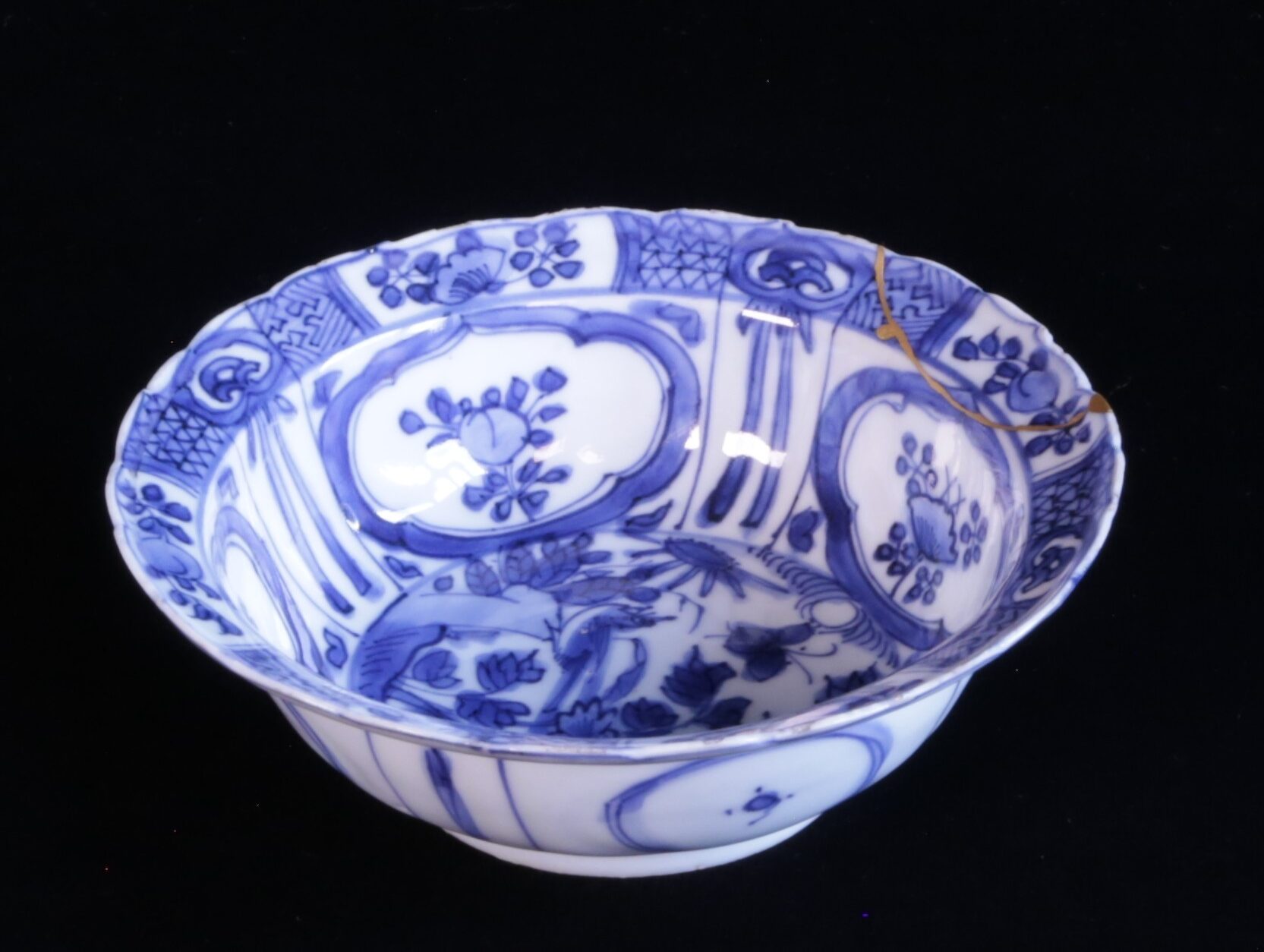
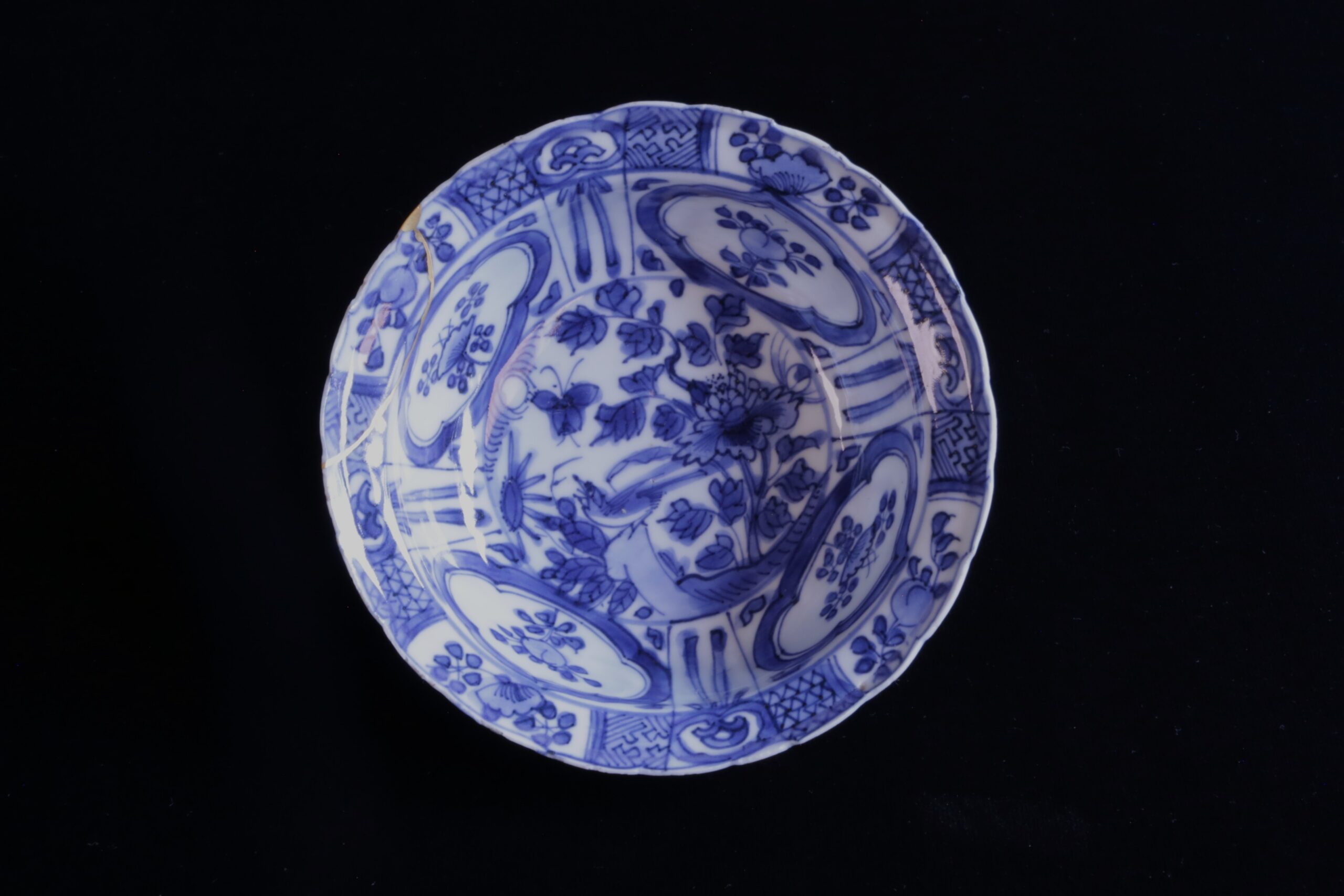
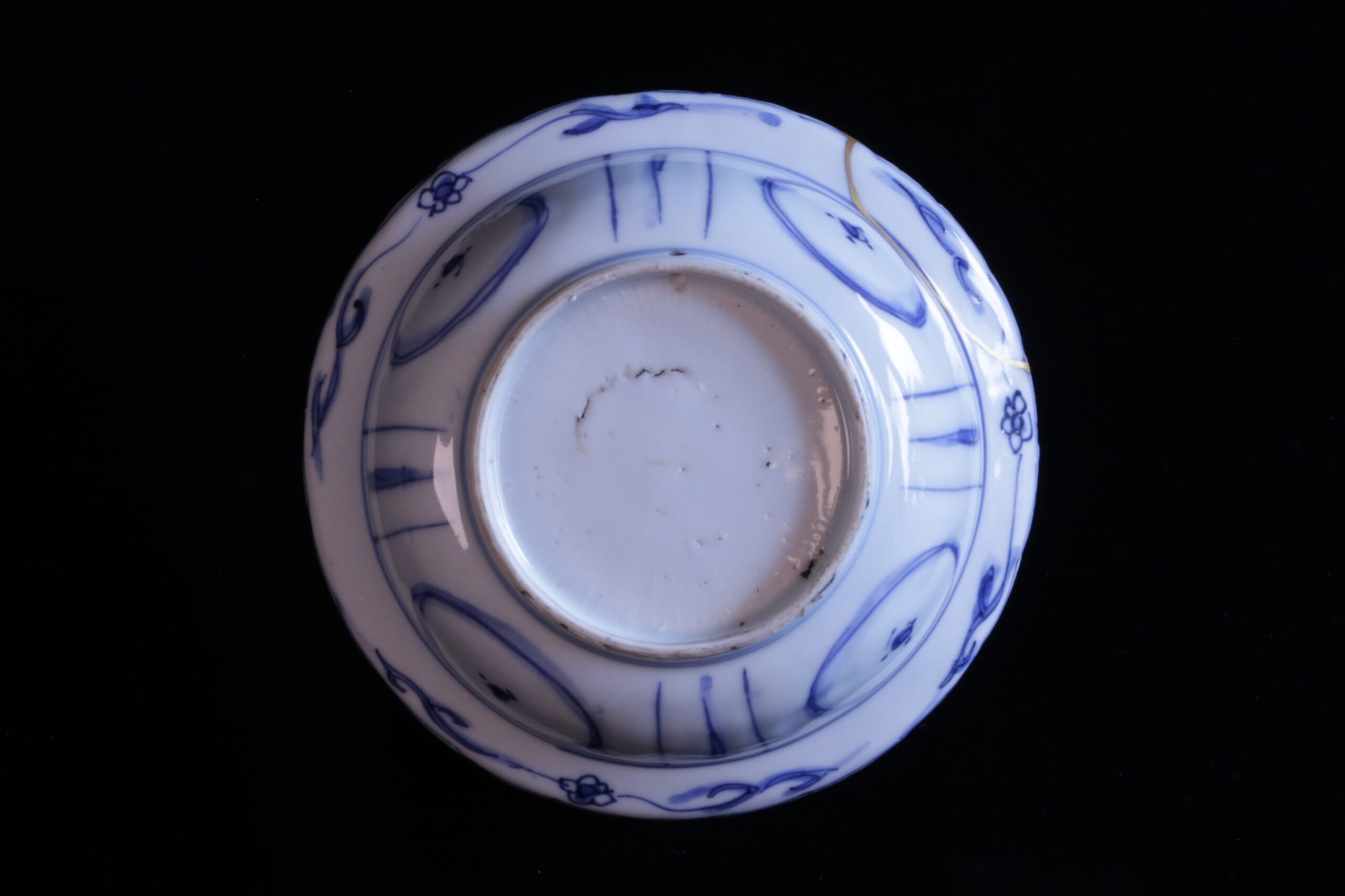
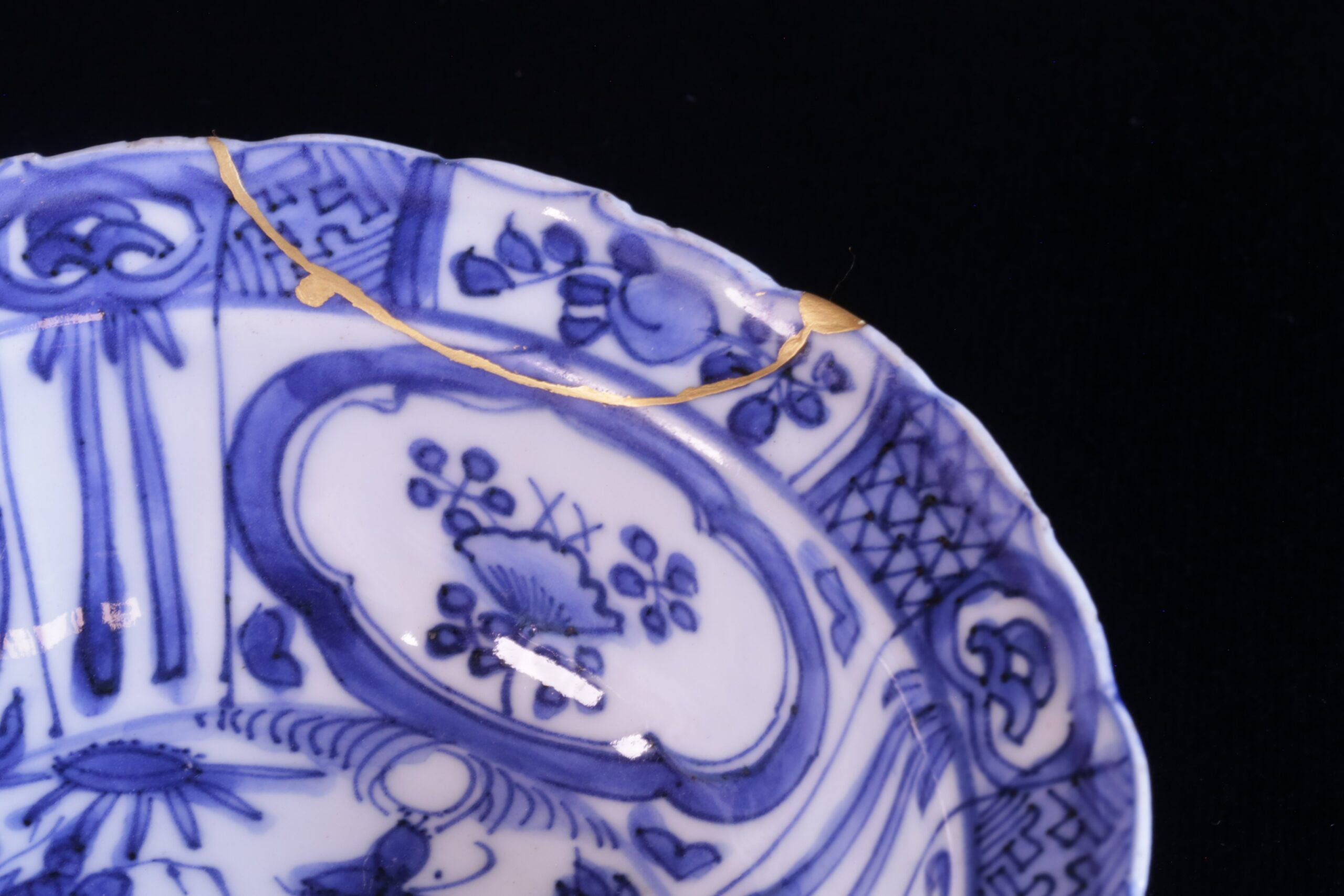
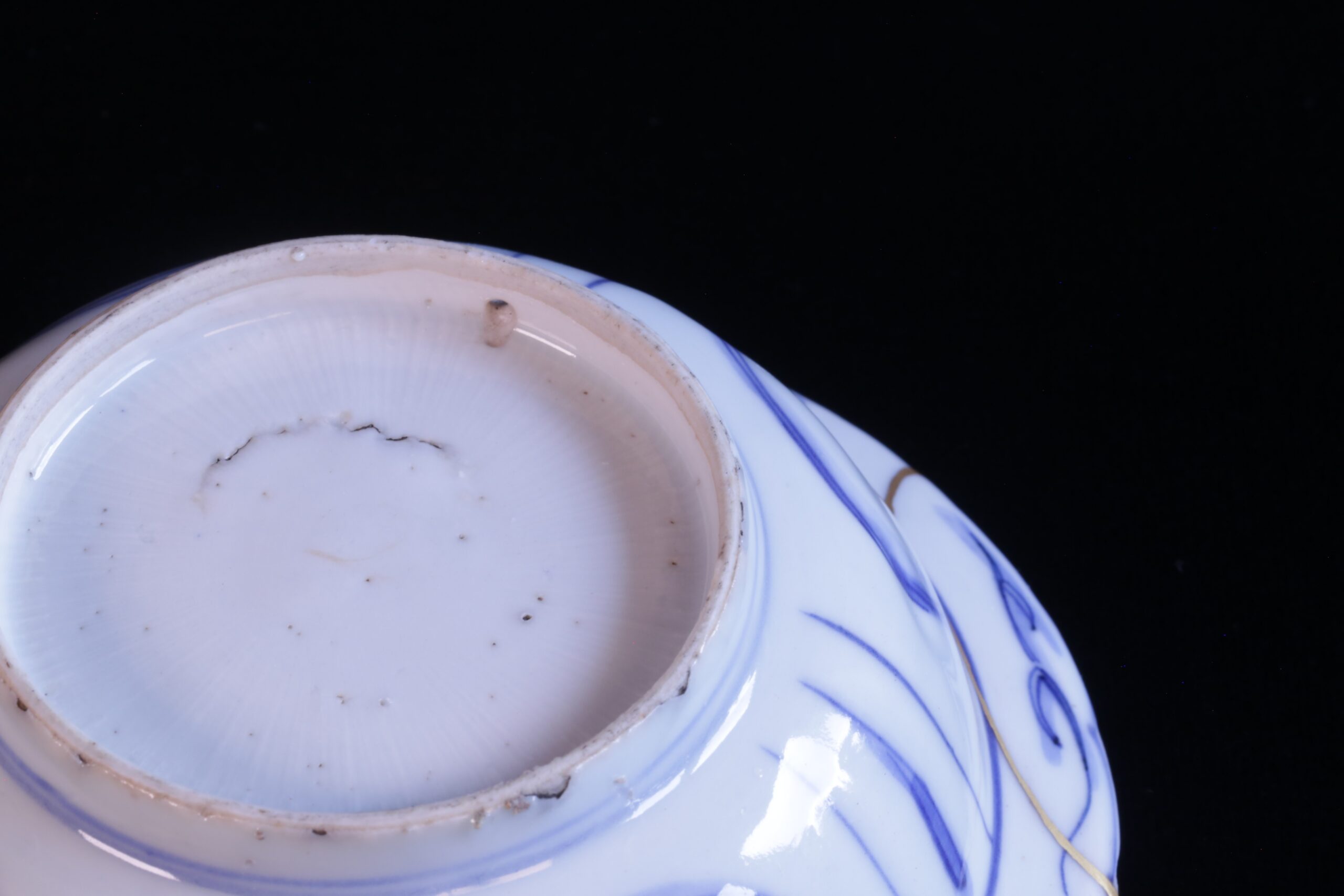
Chinese Kraak Porcelain Klapmuts with kintsugi restoration.
Late Ming dynasty, c. 1604–1645 (Wanli–Chongzhen periods)
This Kraak porcelain piece exemplifies a distinctive export form known in Dutch as a “klapmuts”, named for its resemblance to an upside-down woollen cap with an upturned edge. The shape, intermediate between a deep dish and a shallow bowl, may have been adapted to accommodate European metal spoons, reflecting early cross-cultural design considerations in Chinese export wares (Mirandi 1989).
The decoration identifies it as a Group IV klapmuts. The rim is divided into four reserves containing peach or flower sprays set against diaper patterns. The cavetto and walls feature ogival panels, characteristic of early examples, filled with peach and flower motifs. The central medallion depicts a bird perched on a rock with a butterfly, showcasing the refined underglaze blue painting typical of the period.
The term “Kraak porcelain” itself likely derives from the Dutch word for the cargo ships that transported these wares to Europe, highlighting the crucial role of maritime trade in shaping global taste.
Some kiln grit on the rim.
A break in the rim has been restored using the traditional kintsugi technique (urushi and gold powder).
Dimensions: D. 14.3 cm; H. 5 cm.
Reviews
There are no reviews yet.