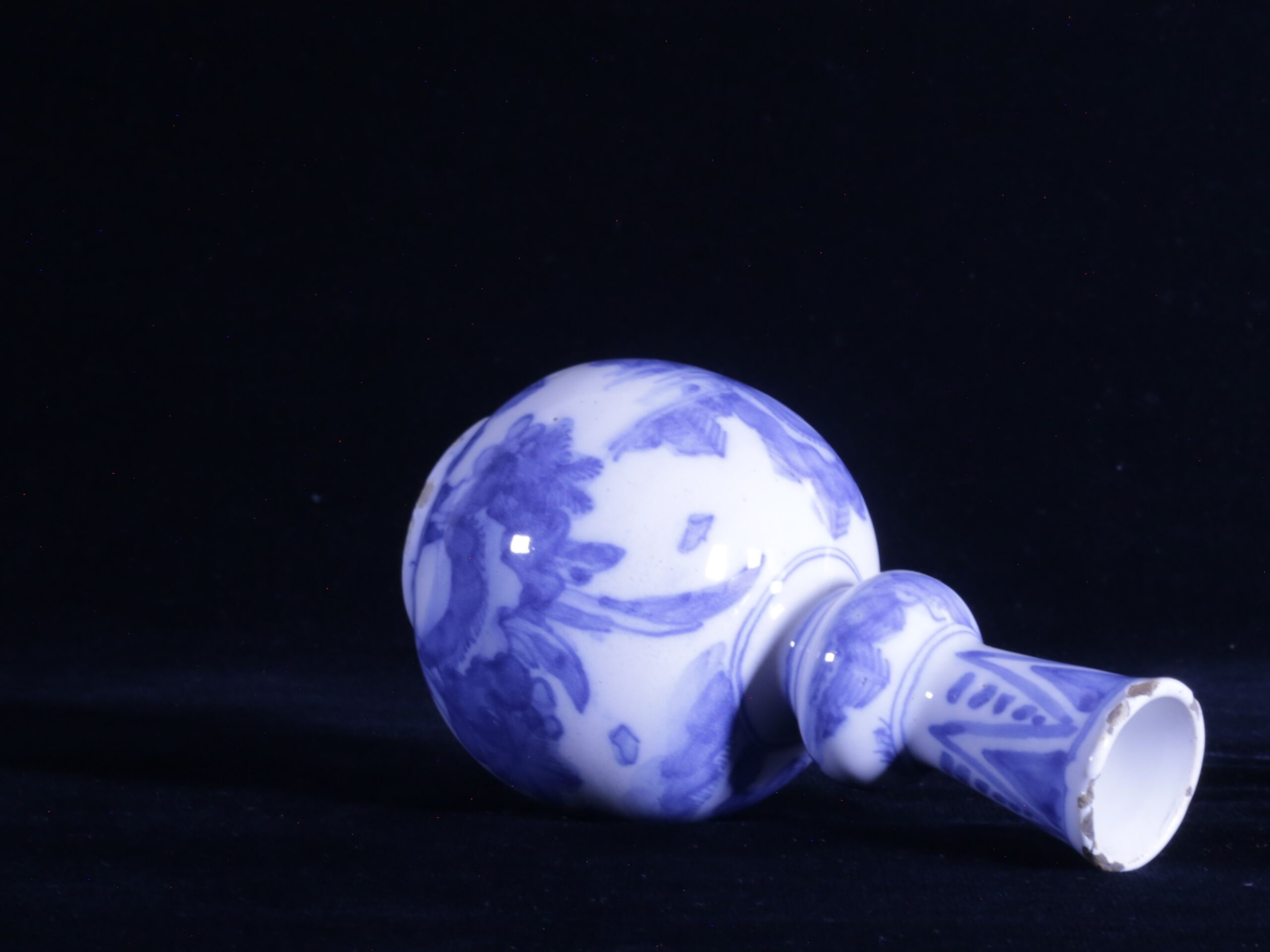
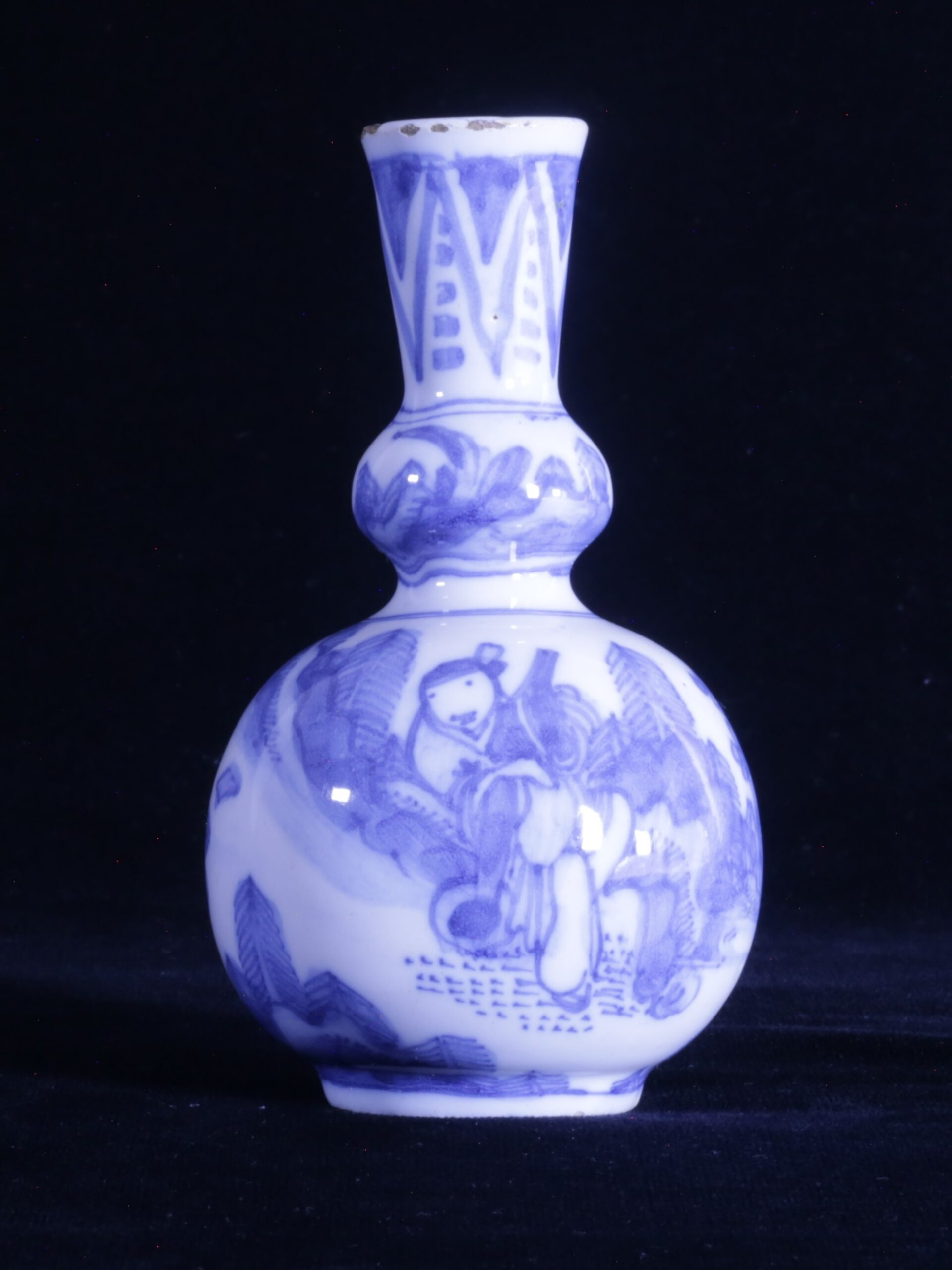
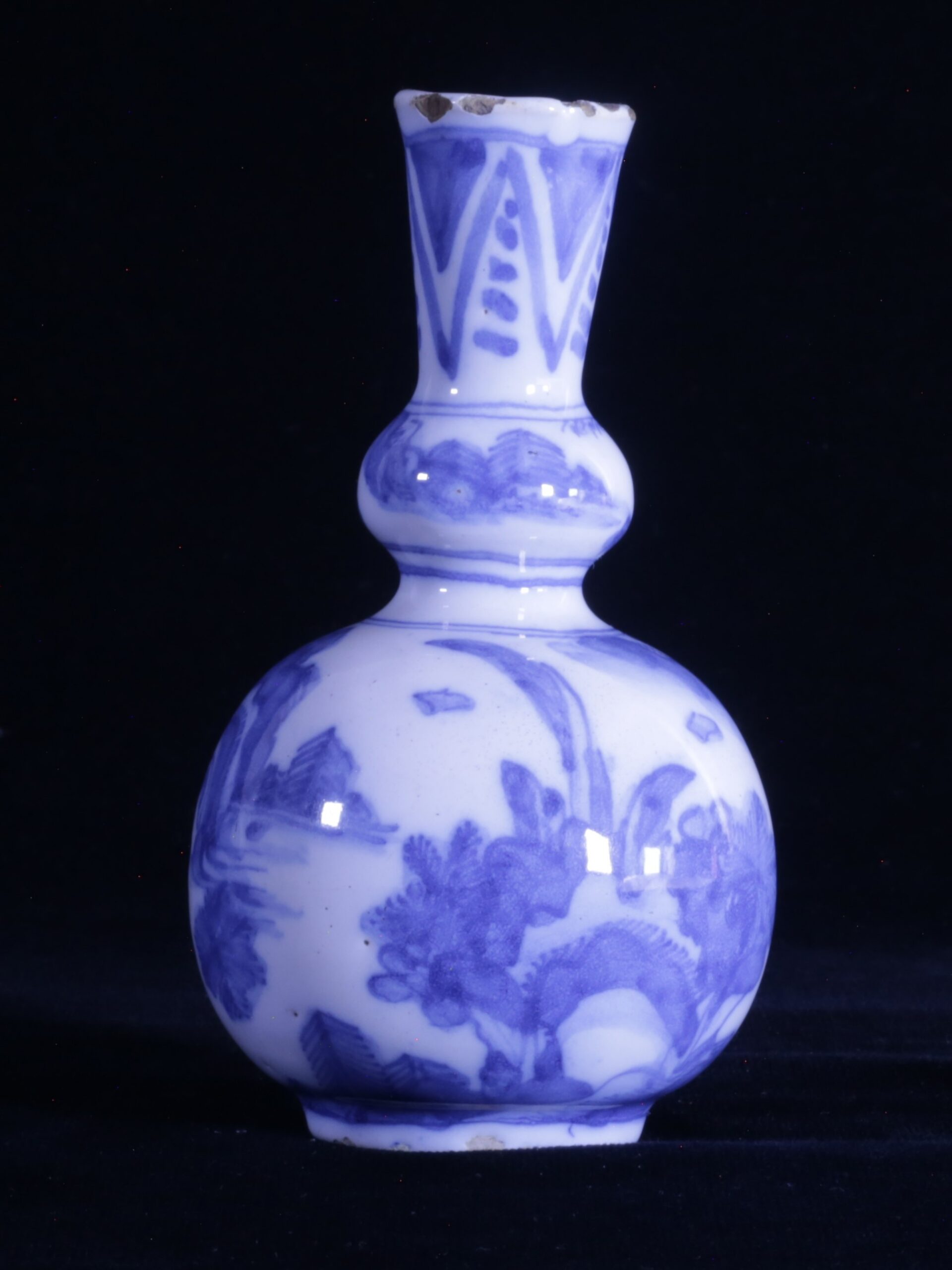
Rare Delftware Japanese-Style Double-Gourd Vase (c. 1660–1680)
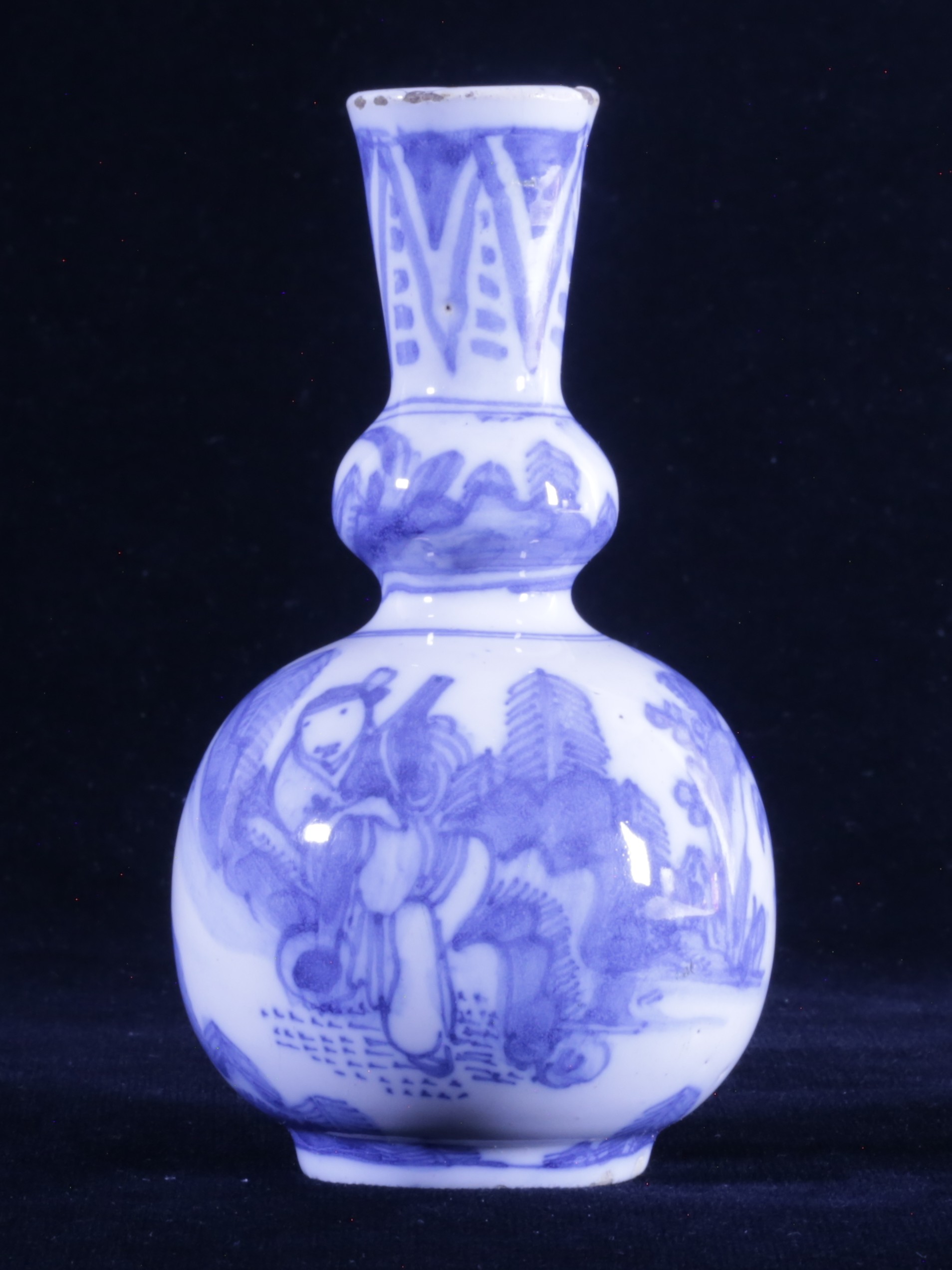
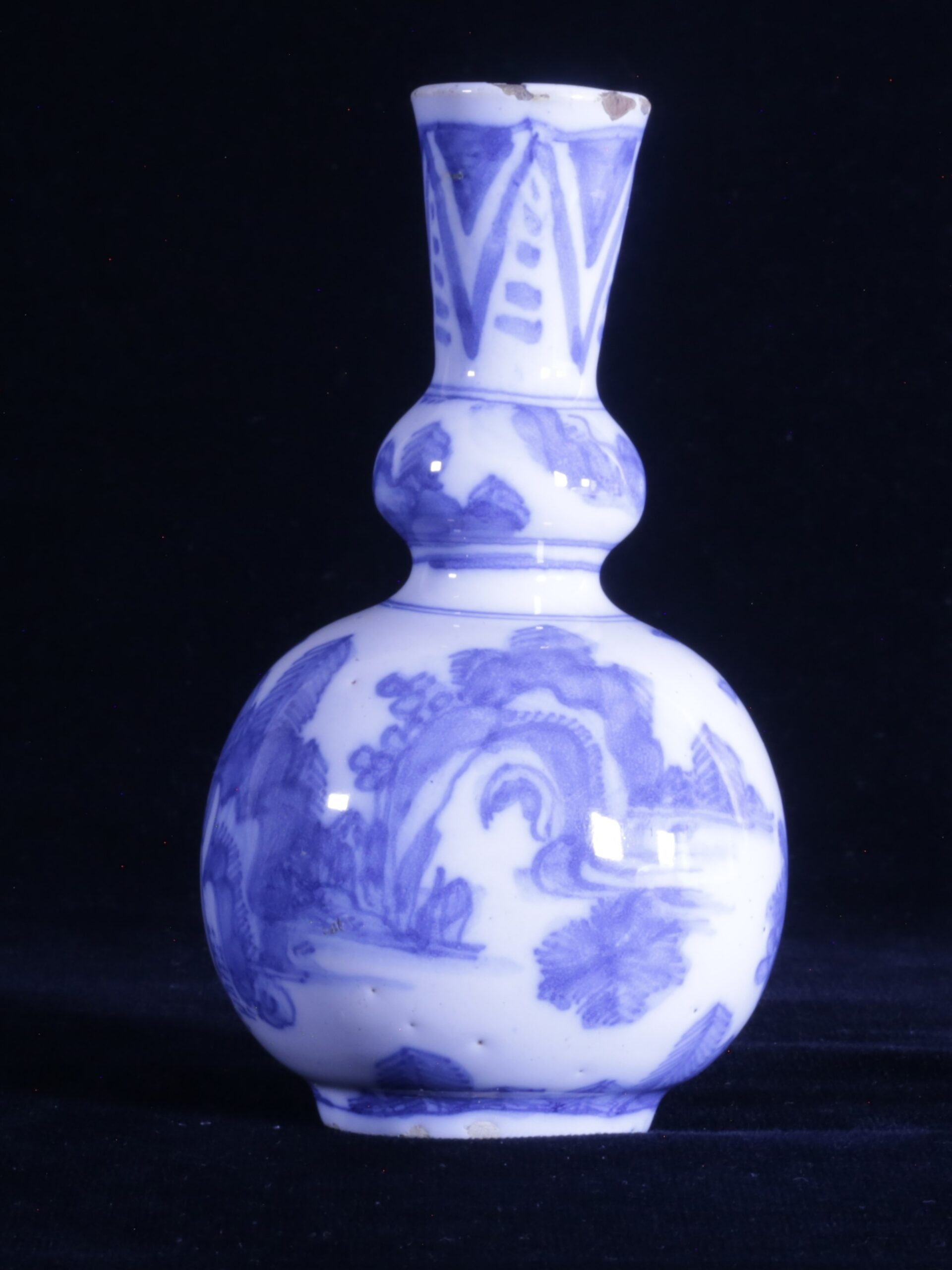
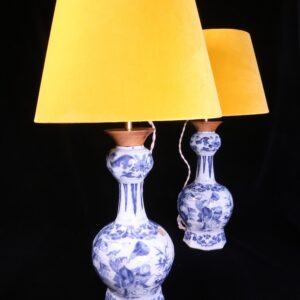
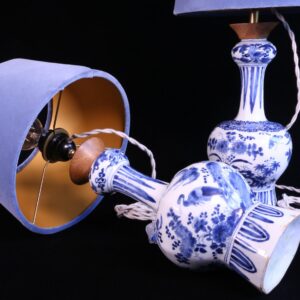
Discover a highly collectible piece of Dutch ceramic history: a small, early Delftware double-gourd bottle vase (c. 1660–1680), decorated in the sought-after Japanese style.
Product Overview
-
Title: Rare Small Delftware Double-Gourd Bottle Vase
-
Origin: Delft, Dutch Republic (Netherlands)
-
Period: Dutch Golden Age, circa 1660–1680
-
Style: Japanese-inspired
-
Height: 14 cm
-
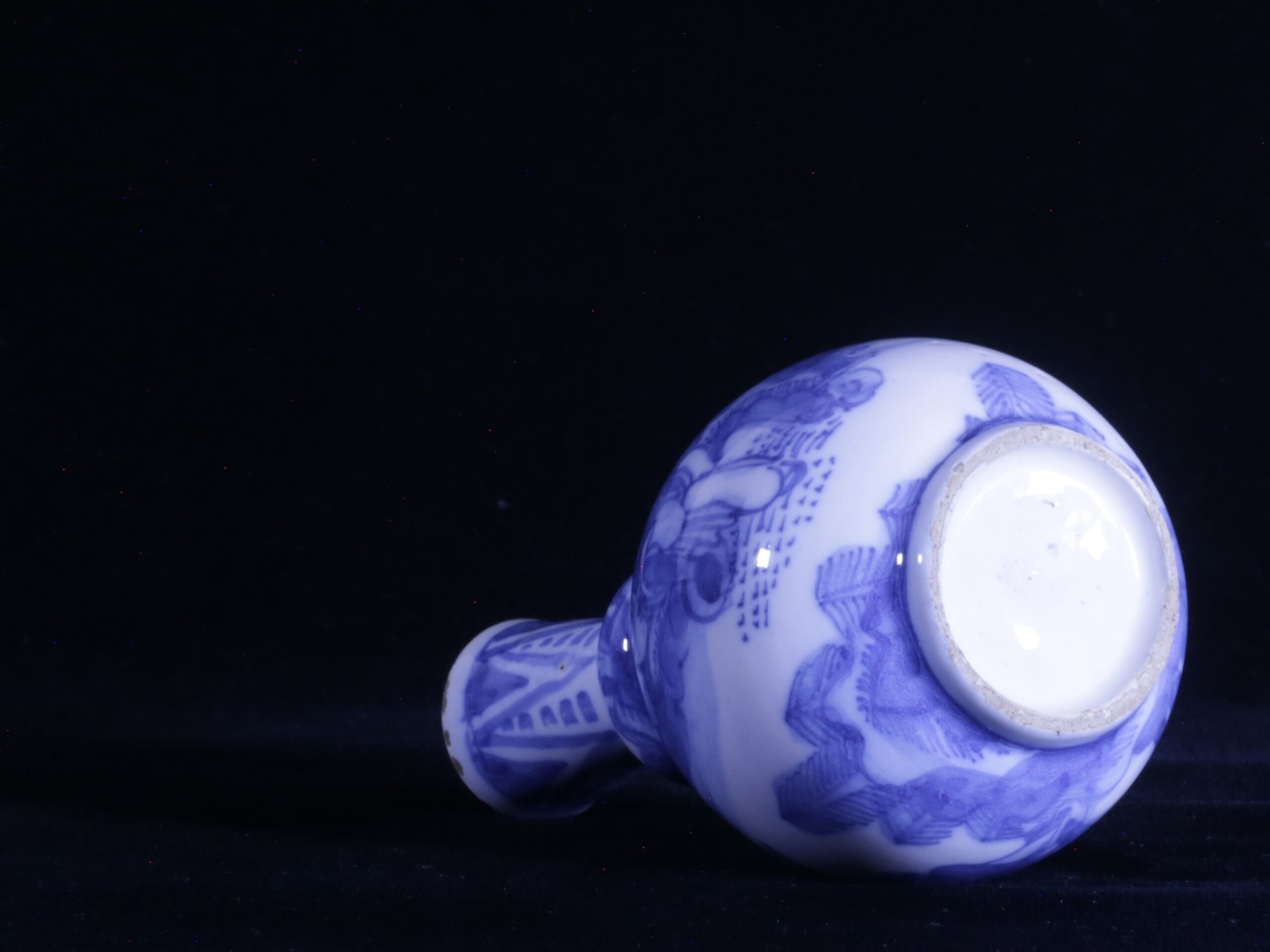
Maker’s Mark: Unmarked (typical for early Delftware prior to the widespread adoption of factory marks around 1680)
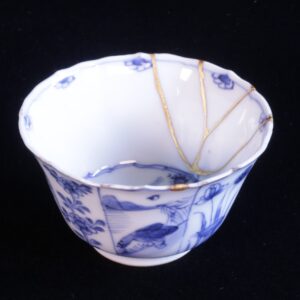
- Condition: Overall good antique condition. Minor rim fritting typical for tin-glazed earthenware of this period, and a small hairline crack at the top rim.
History & Provenance
1. The Delft vs. Frankfurt Attribution
Vases of this specific japanese-style decoration were historically misattributed to Frankfurt. Thanks to research efforts by scholars and the Dutch Ceramic Society (Vrienden van de Ceramiek / Vormen uit Vuur), these unmarked pieces are now confidently recognized as early Delftware from the 1660–1680 period. For a comparable 17th-century example from the same era, see this Blue and White Double-Gourd-Shaped Vase (c. 1670) at Aronson Antiquairs.
2. Rare Form & Japanese Influence
While Chinese Transitional motifs dominated early Delft production, a small number of workshops experimented with Japanese porcelain designs. The unusual garlic-neck bottle form—characterized by its bulbous swelling near the top of the neck—is a remarkably rare shape for a small-scale Delft vessel of this period.
3. Unmarked Authenticity
The base bears no factory mark. This is fully consistent with early Delftware from the 1660–1680 era, as factory logos and owners’ initials only became standard practice in Delft after 1680.
__
🇳🇱
Zeldzame Delftse Kalebas Vaas (ca. 1660–1680)
-
Kenmerken: Een klein (14 cm) faience vaasje uit de Nederlandse Gouden Eeuw met een zeldzame Japanse decoratie en een ‘knoflookhals’.
-
Merk & Authenticiteit: Ongemerkt, wat authentiek is voor vroege Delftse stukken van vóór 1680. Recent onderzoek toont aan dat dit Delfts aardewerk is, en niet afkomstig uit Frankfurt.
-
Conditie: Goede antieke staat met lichte randschilfertjes en een klein haarscheurtje aan de bovenrand.
Reviews
There are no reviews yet.