Rare Delft blue and white tazza (footed Dish) – De Grieksche A (Samuel van Eenhoorn, 1678–1686)
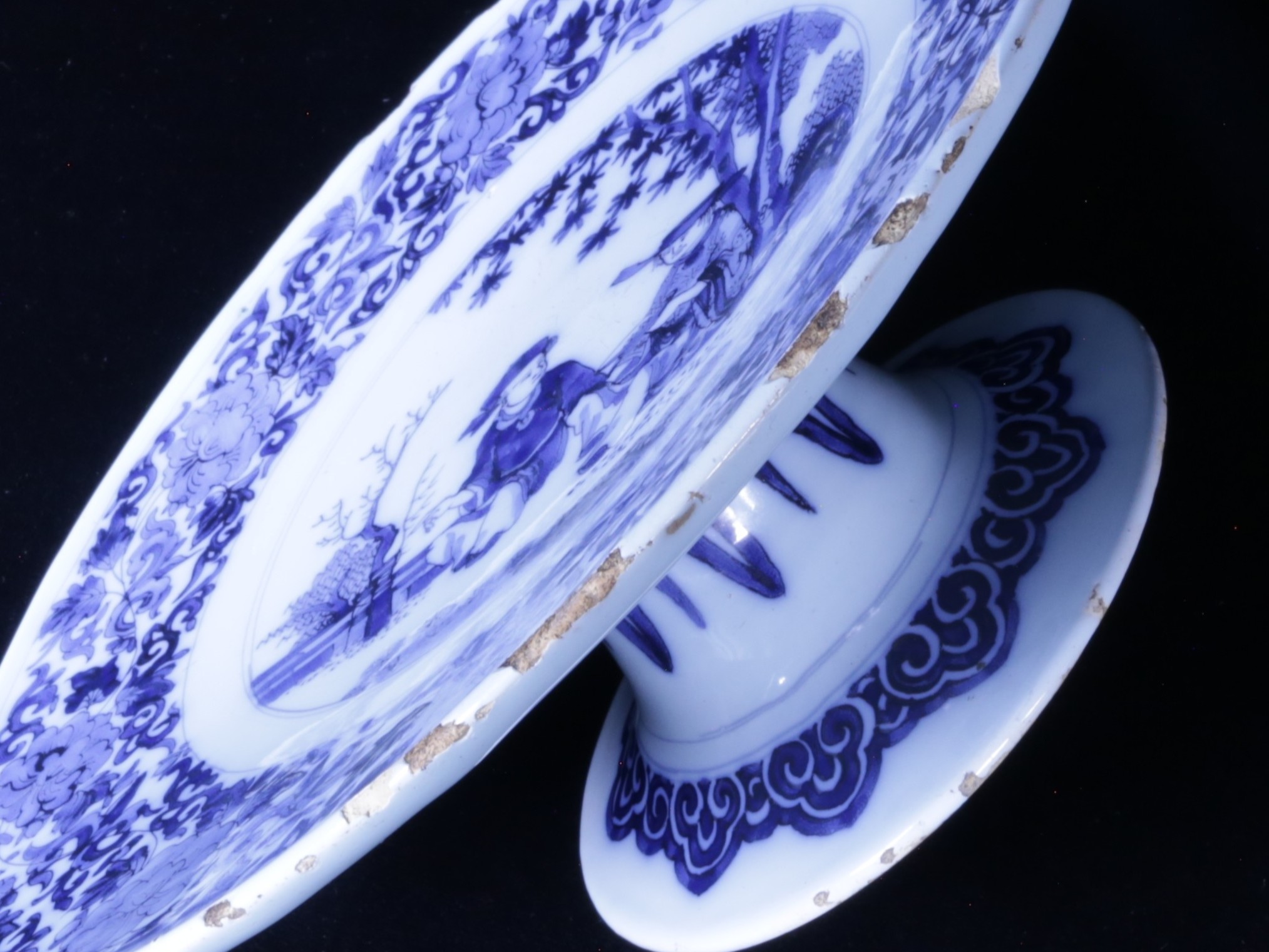
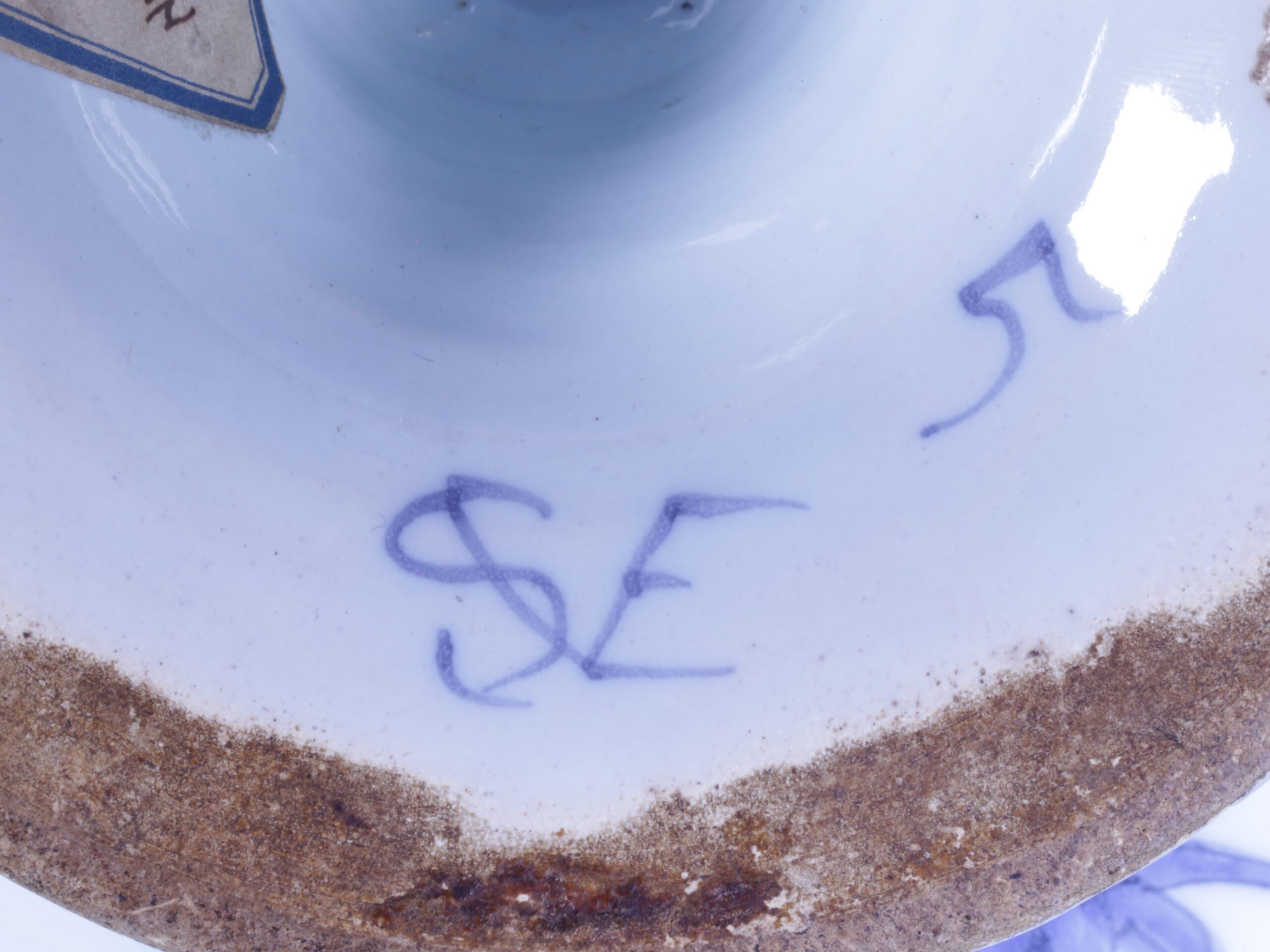
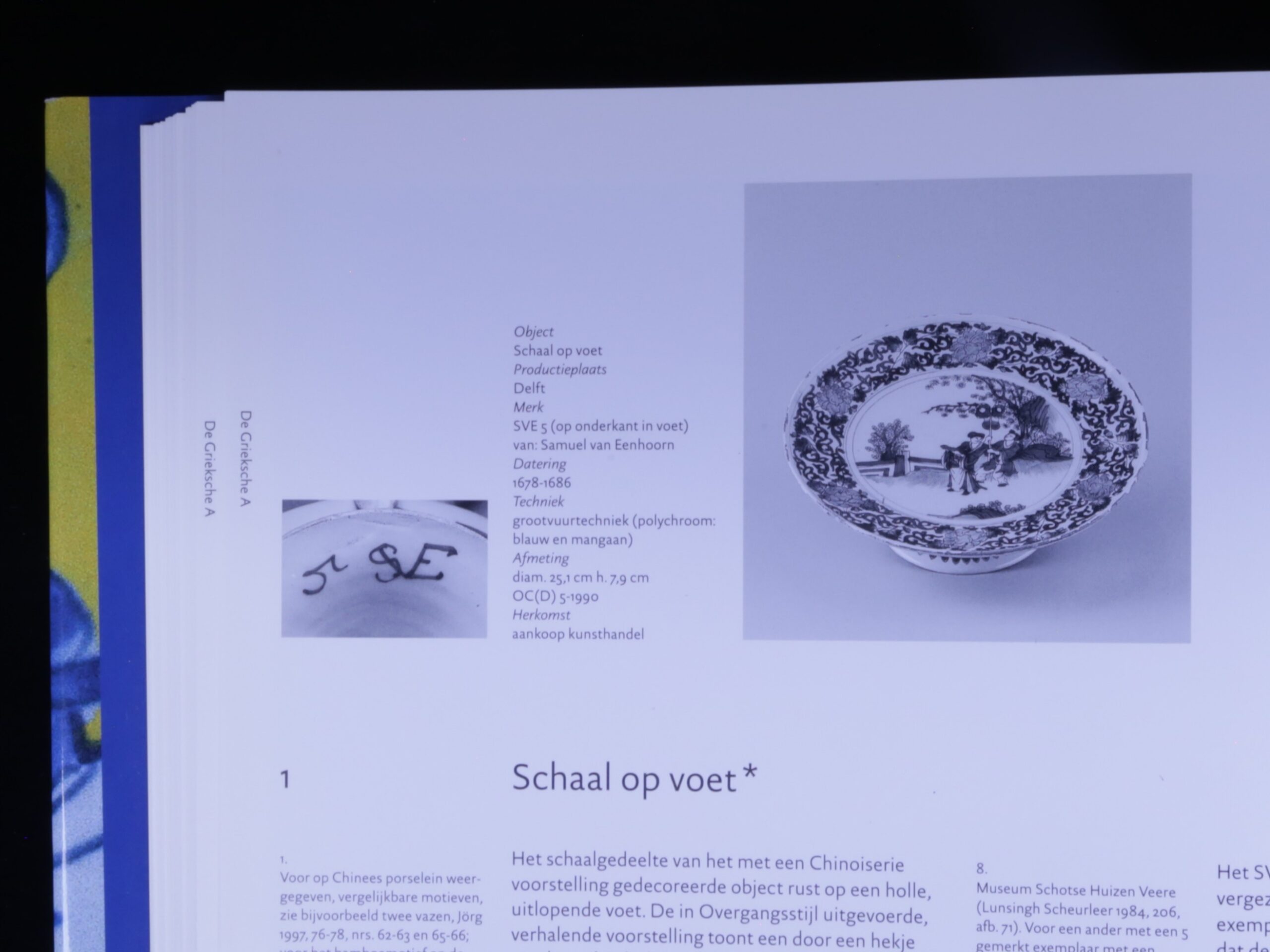
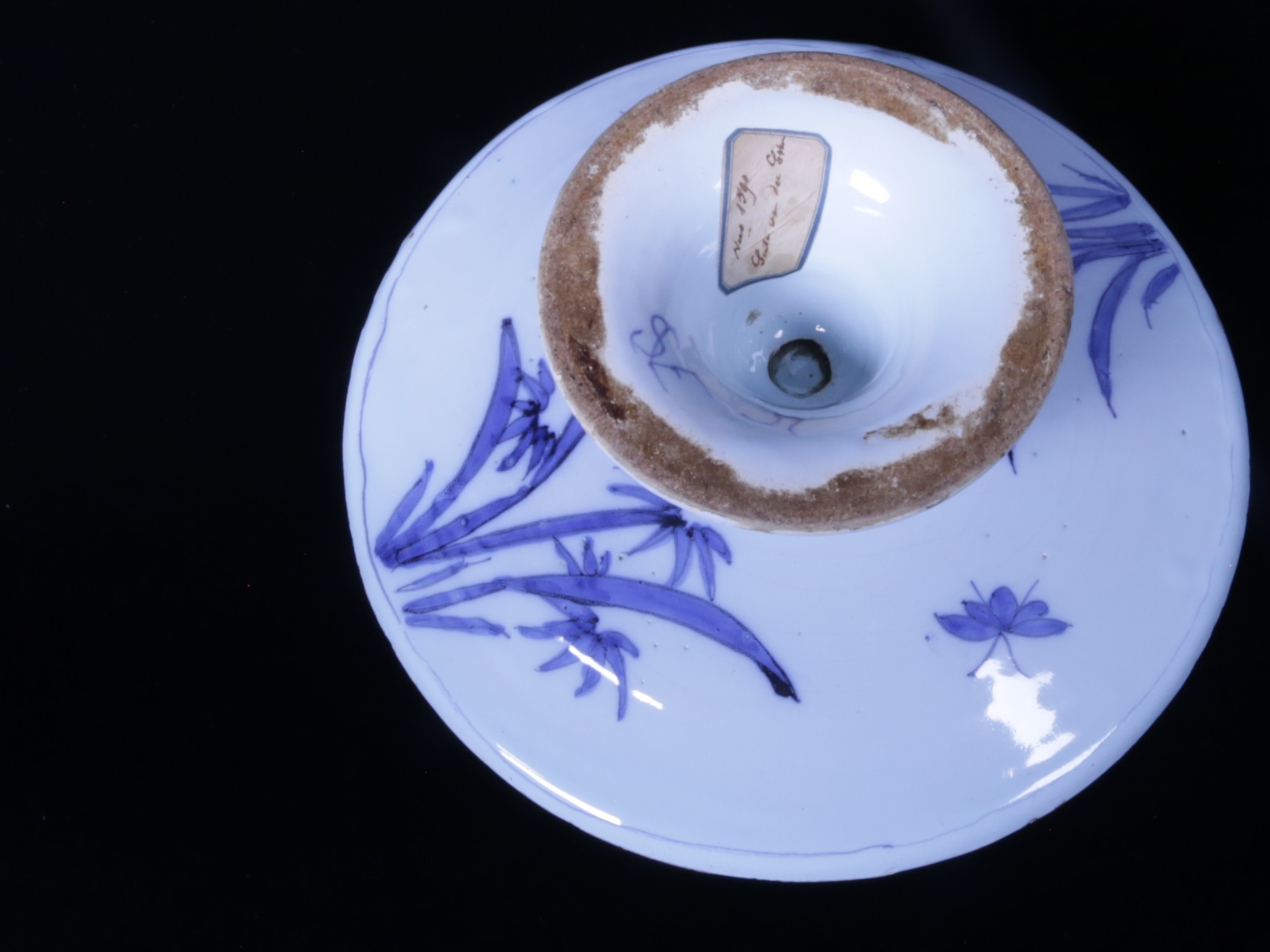
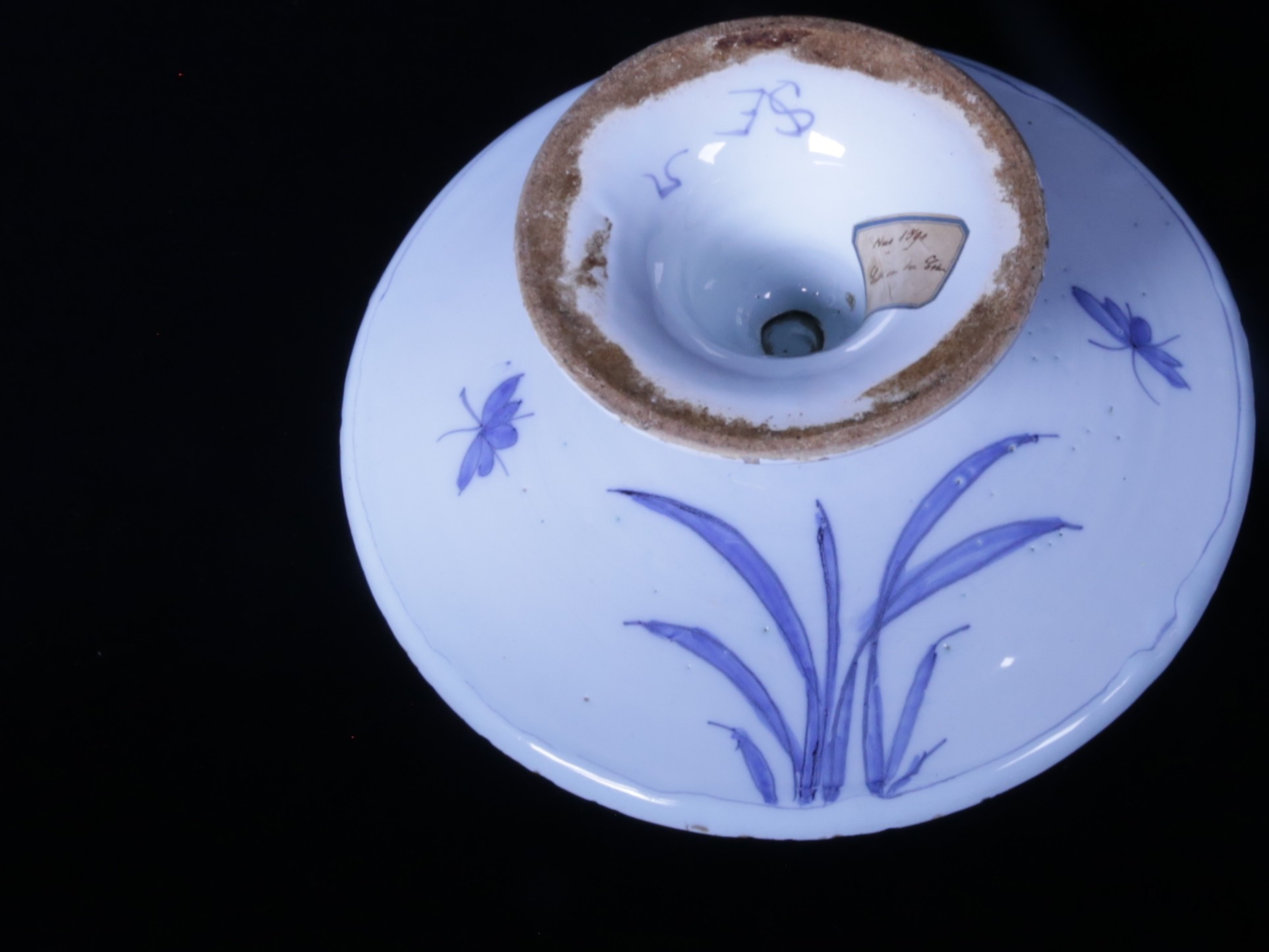
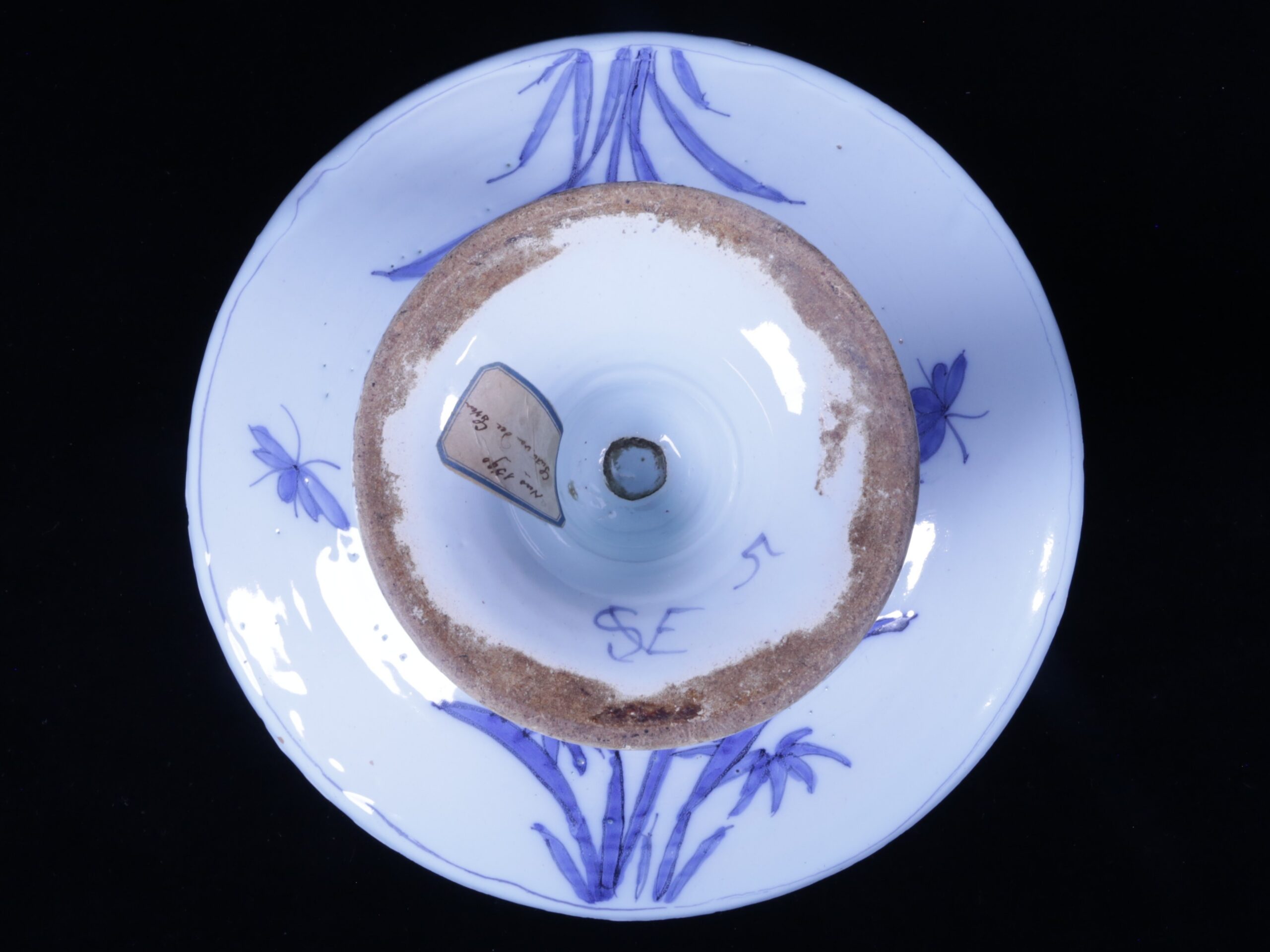
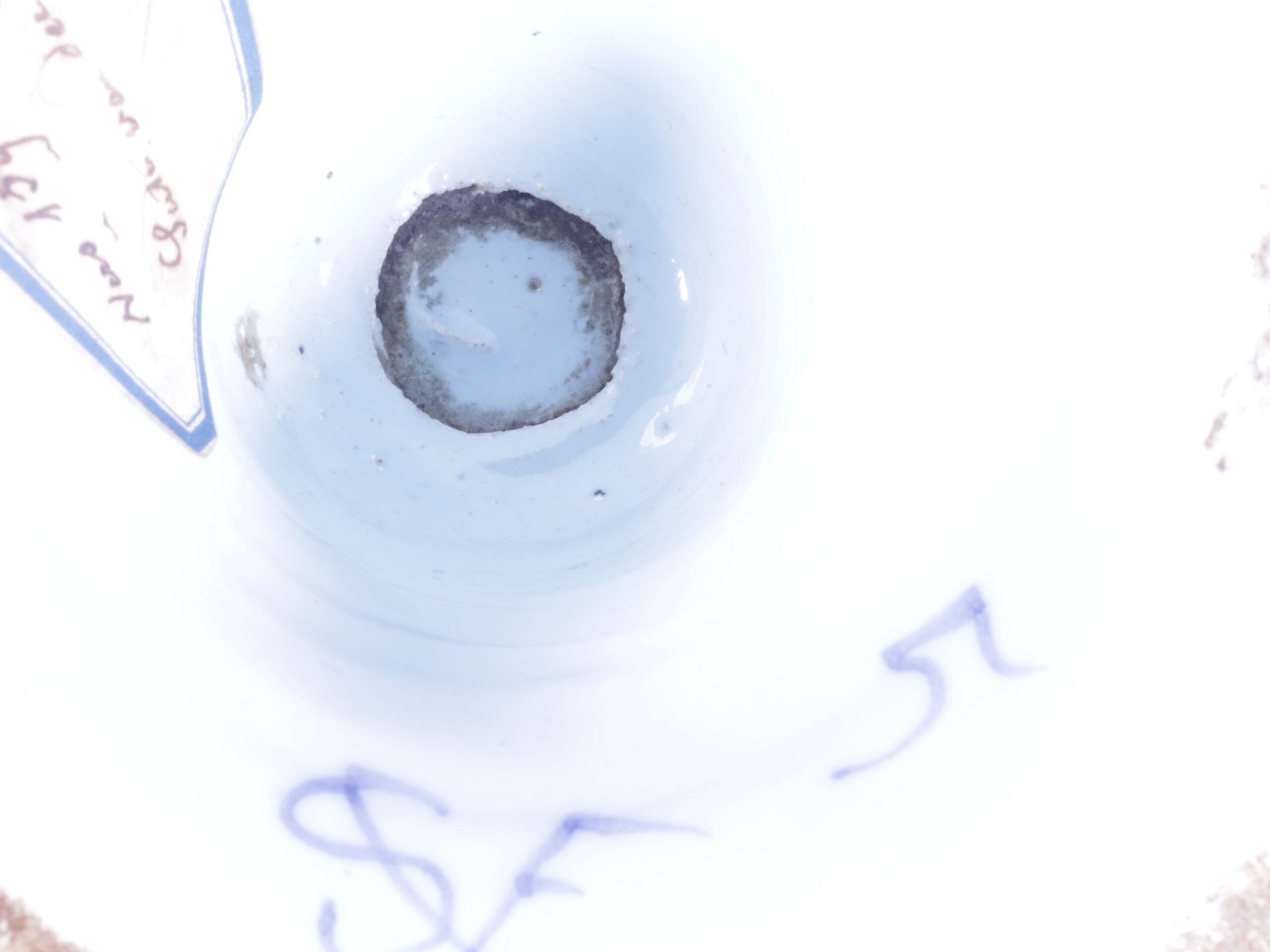
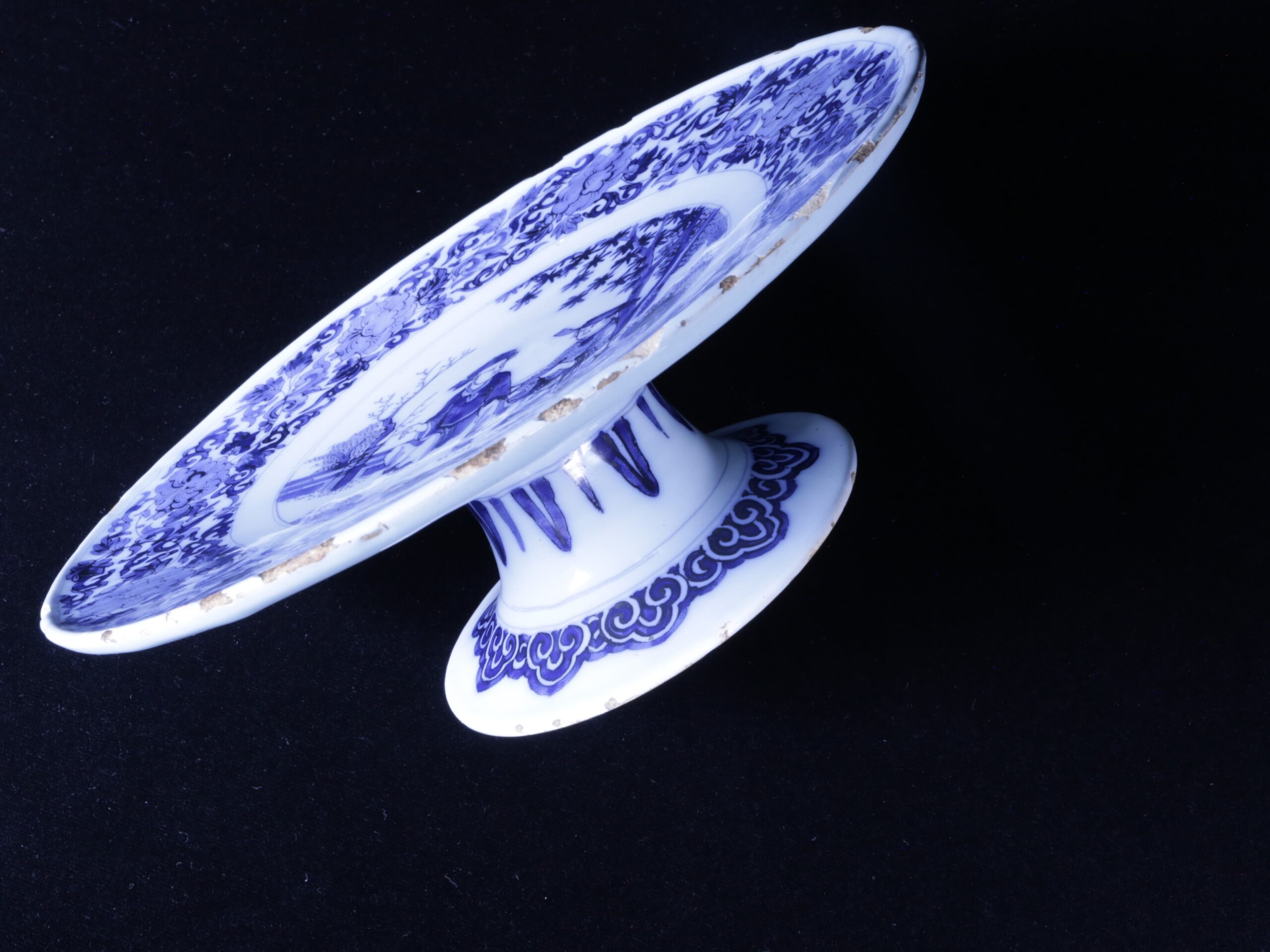
This 17th-century Dutch Delftware blue and white tazza (a raised dish on a profiled pedestal foot) is an exceptional example of fine tin-glazed earthenware produced during the golden age of the Delft pottery industry. The underside of the foot is clearly marked with the painted blue monogram SVE, the mark of Samuel van Eenhoorn, owner of the celebrated Delft workshop De Grieksche A (The Greek A) from 1678 until 1686.
Widely recognized by ceramic historians and specialists as one of the premier and most innovative producers of the era, Samuel van Eenhoorn refined the art of Delftware with exceptional glazing, precise painting, and harmonious adaptations of imported Chinese porcelain prototypes.
Decoration & Style
-
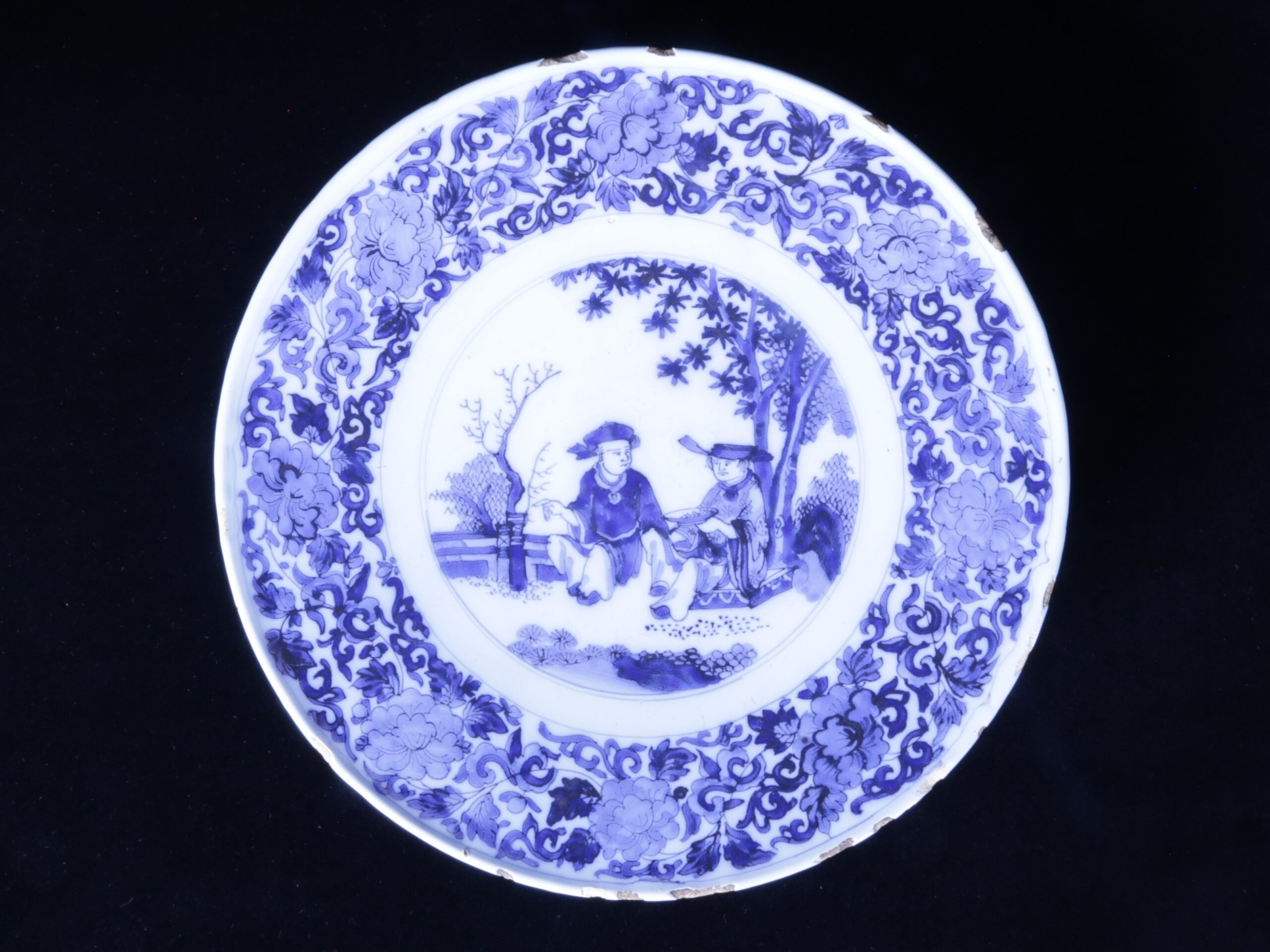
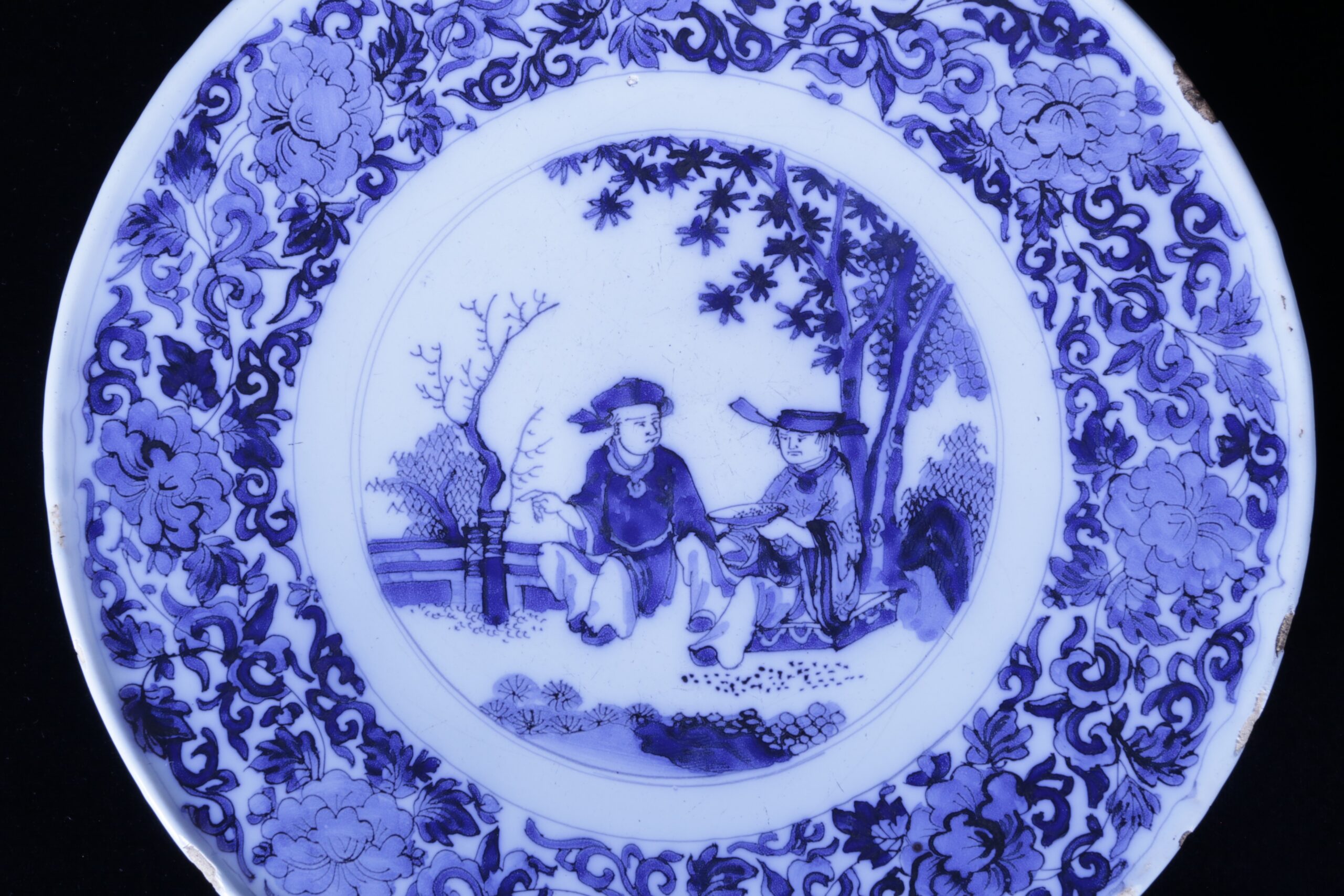
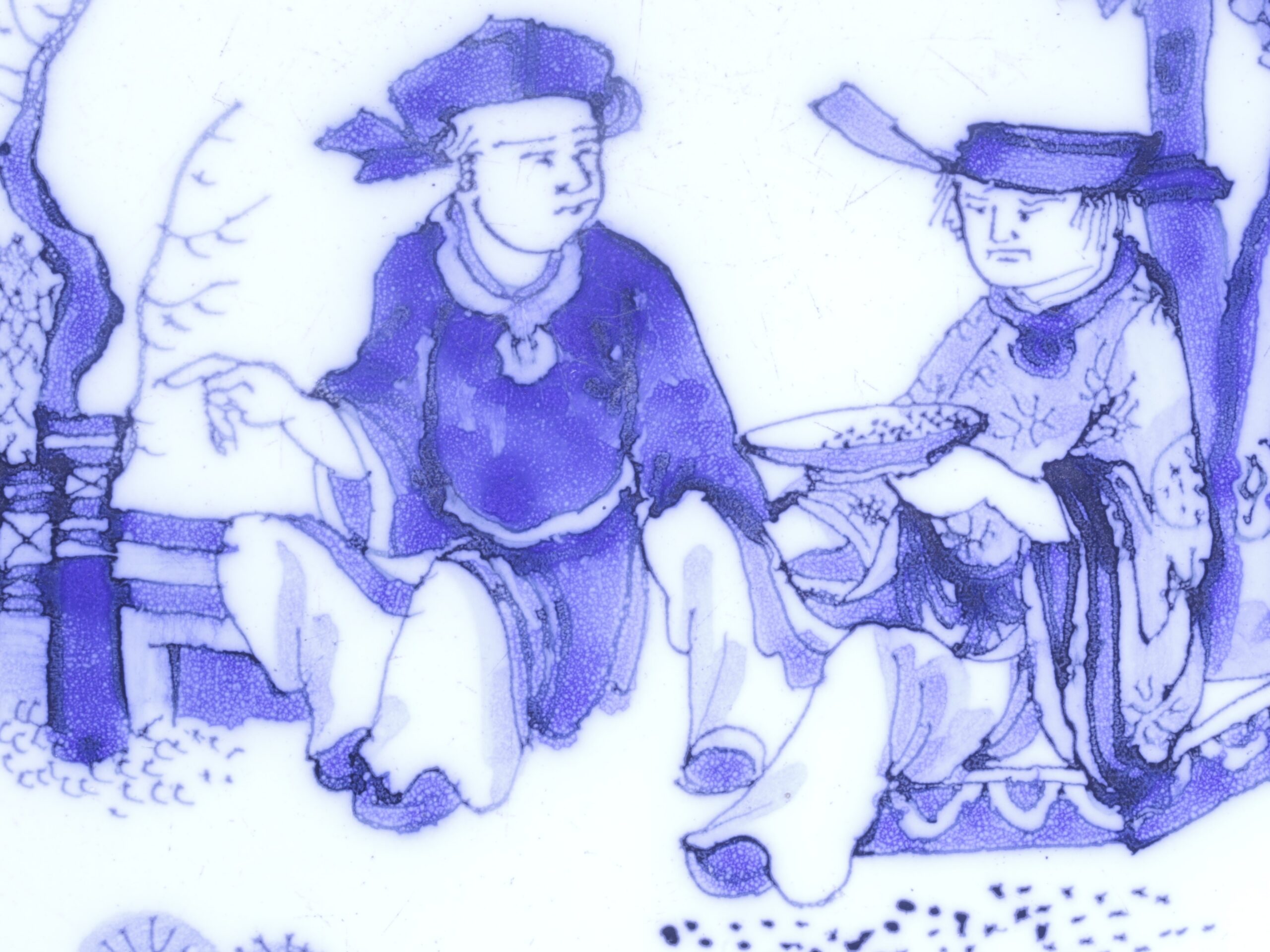
Central Medallion: Painted in the Chinese Transitional style, the center depicts two seated figures in a garden setting beneath leafy trees, framed by a balustrade fence and rockwork.
-
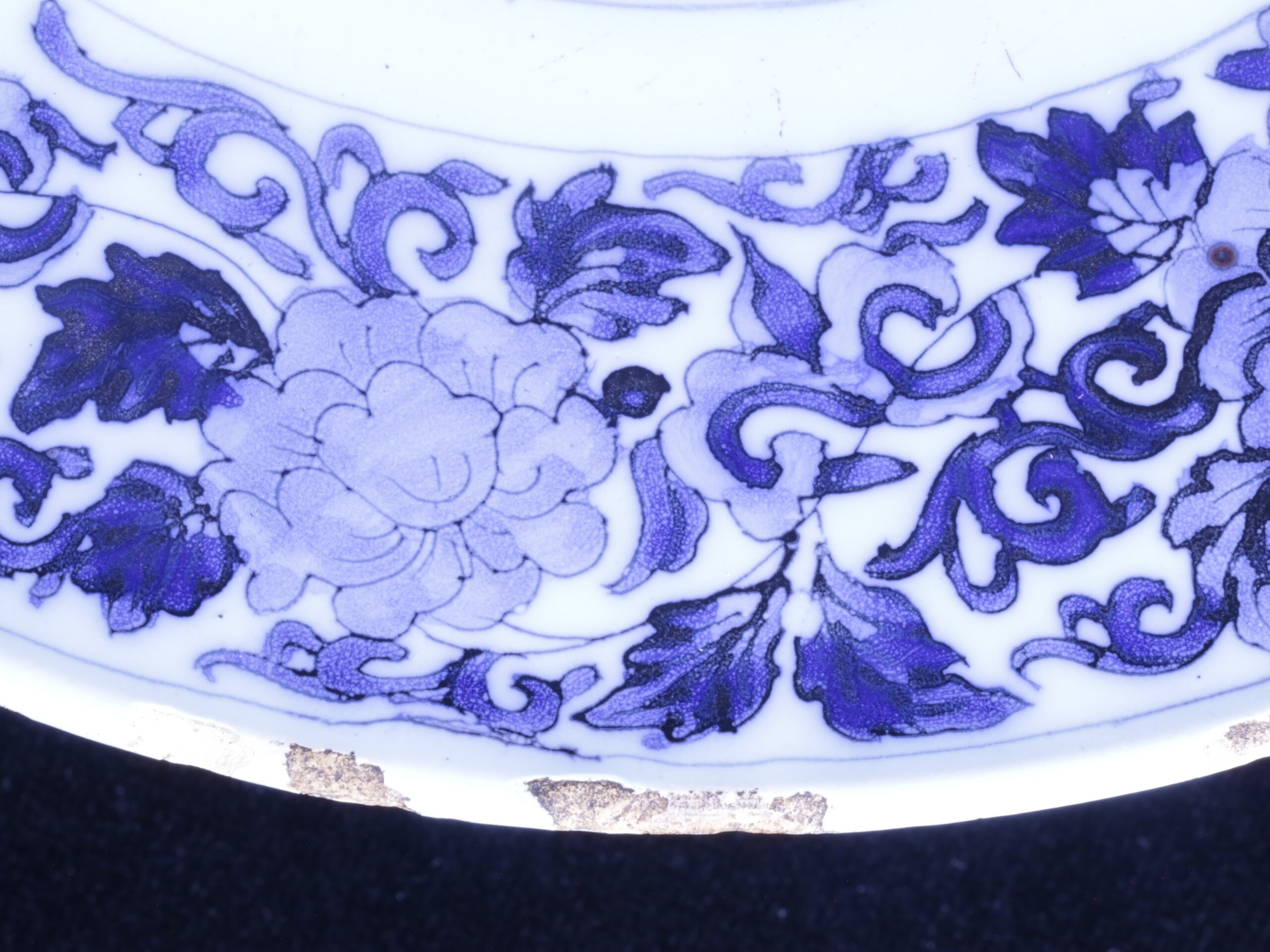
Rim Decor: Executed in the Kangxi style, featuring a continuous band of leaf-and-rank motifs with peony-like flowers.
-
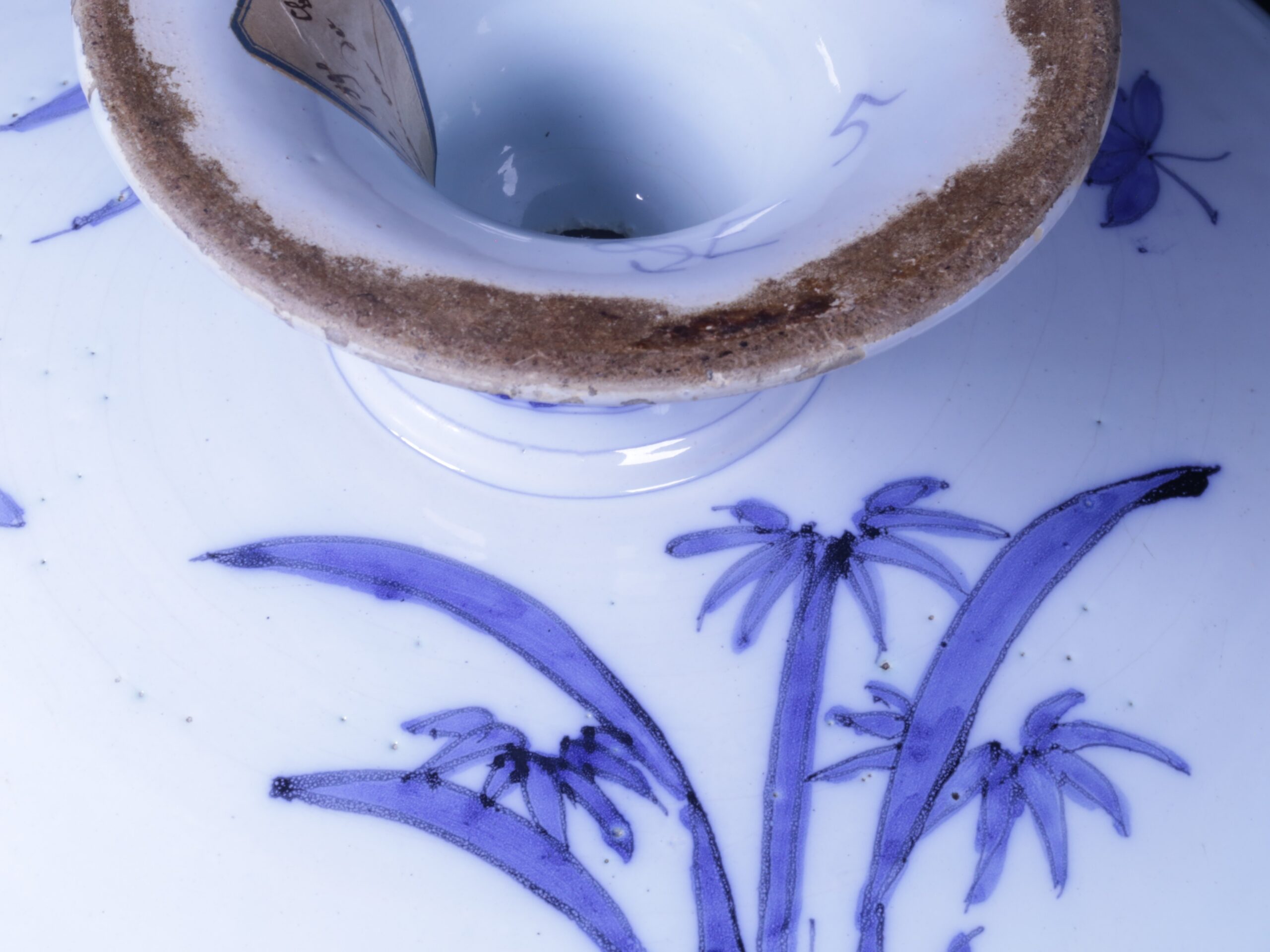
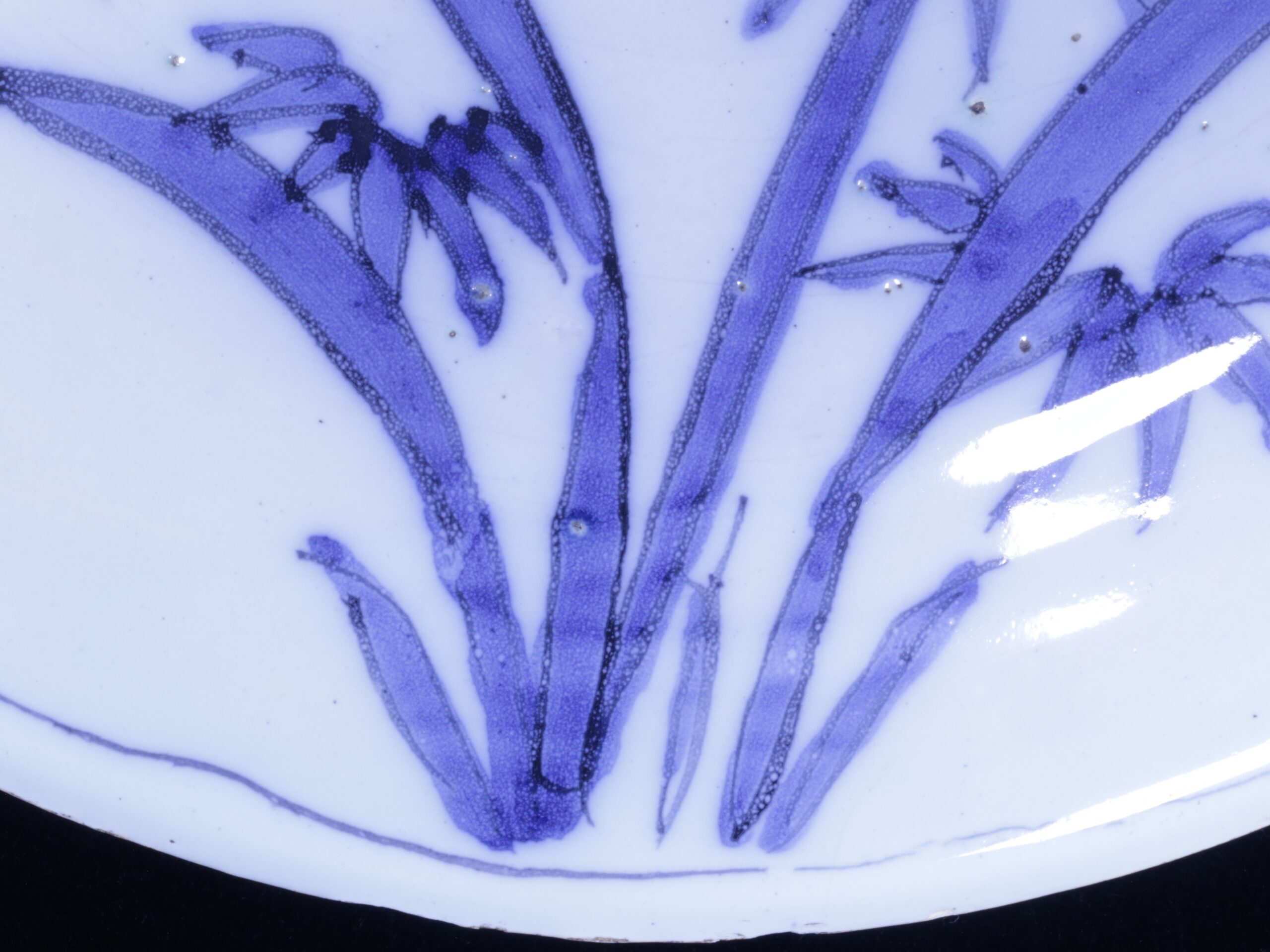
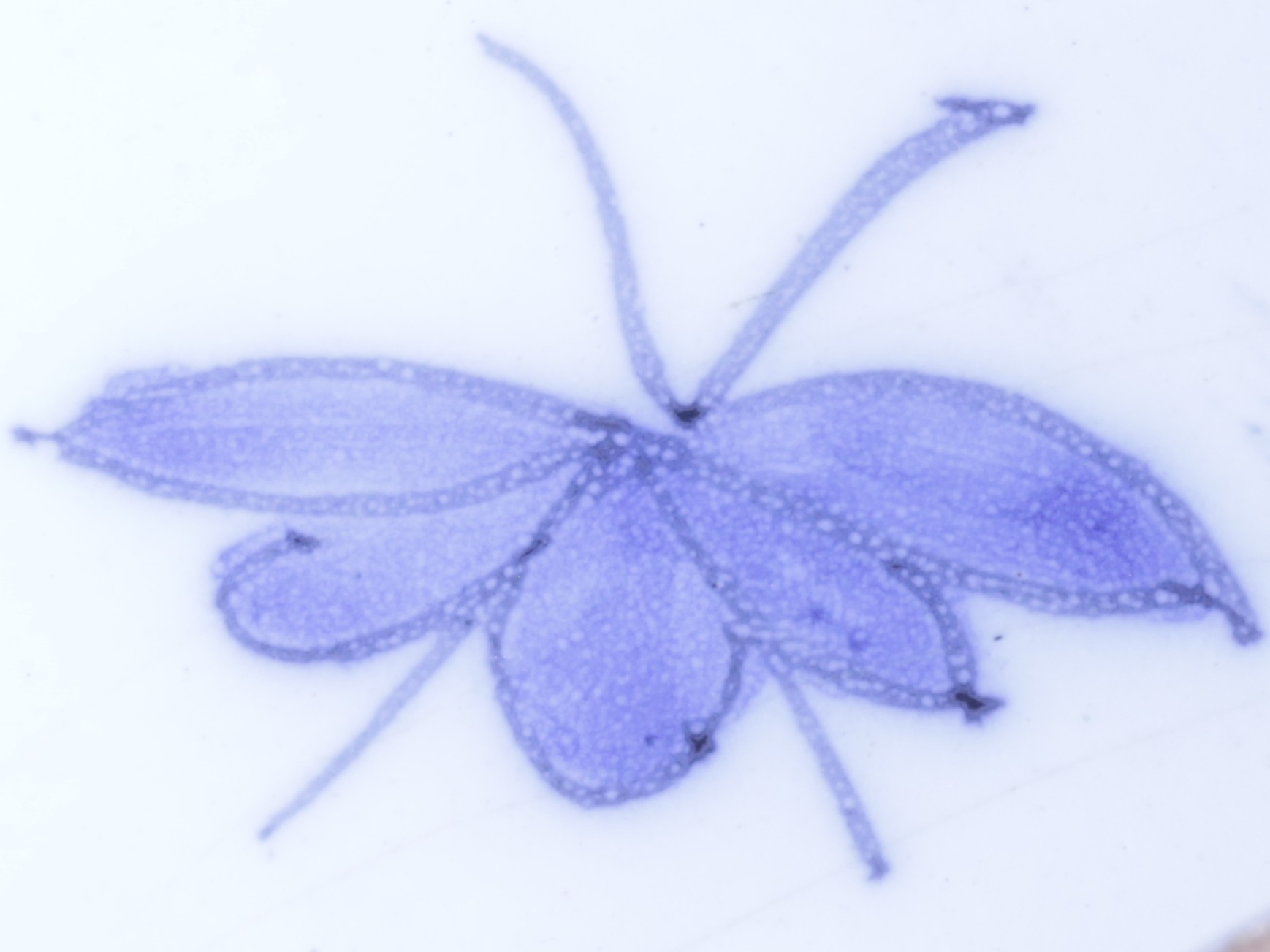
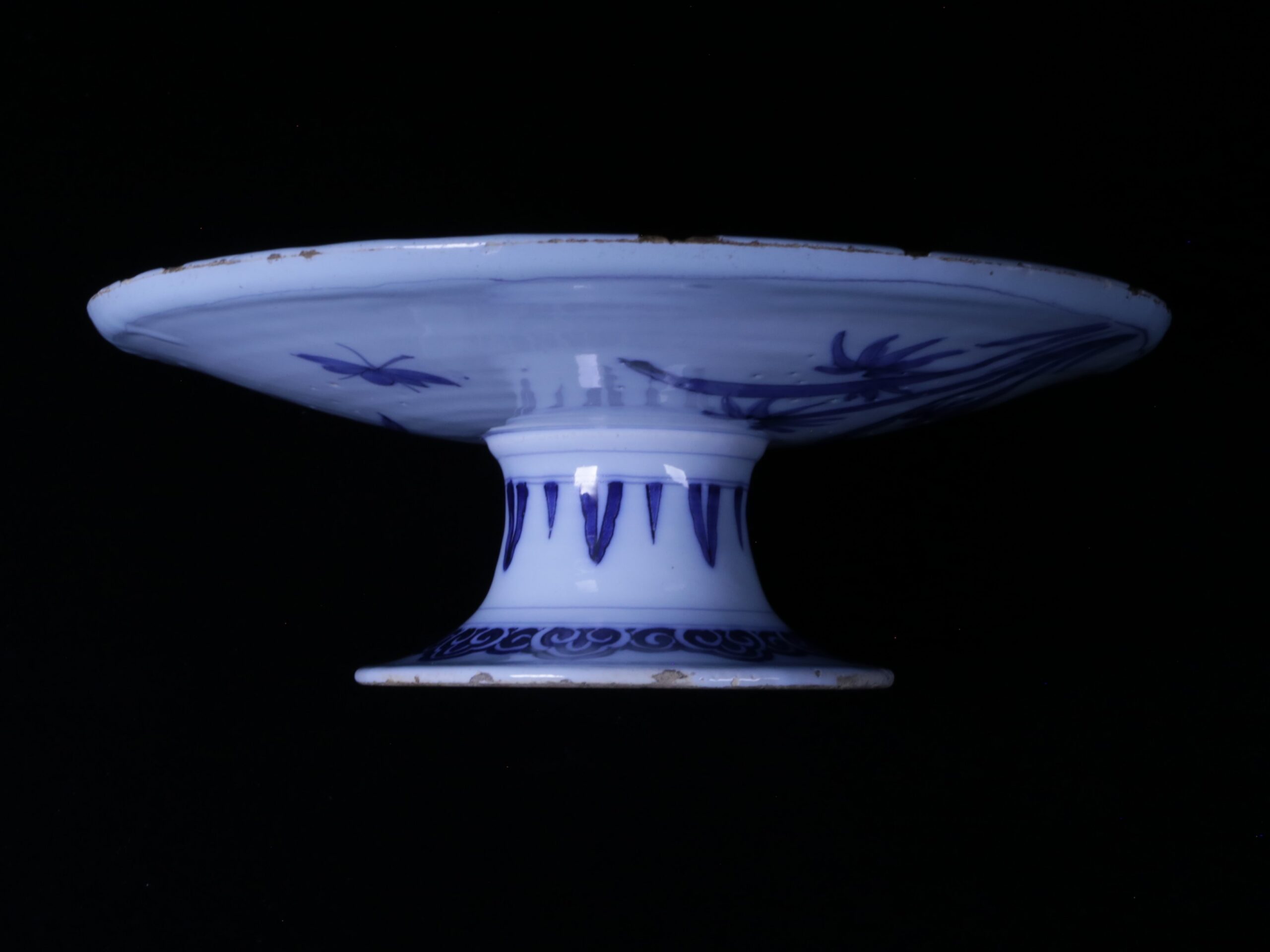
Underside of the Dish: Decorated with bamboo leaves and butterflies.
-
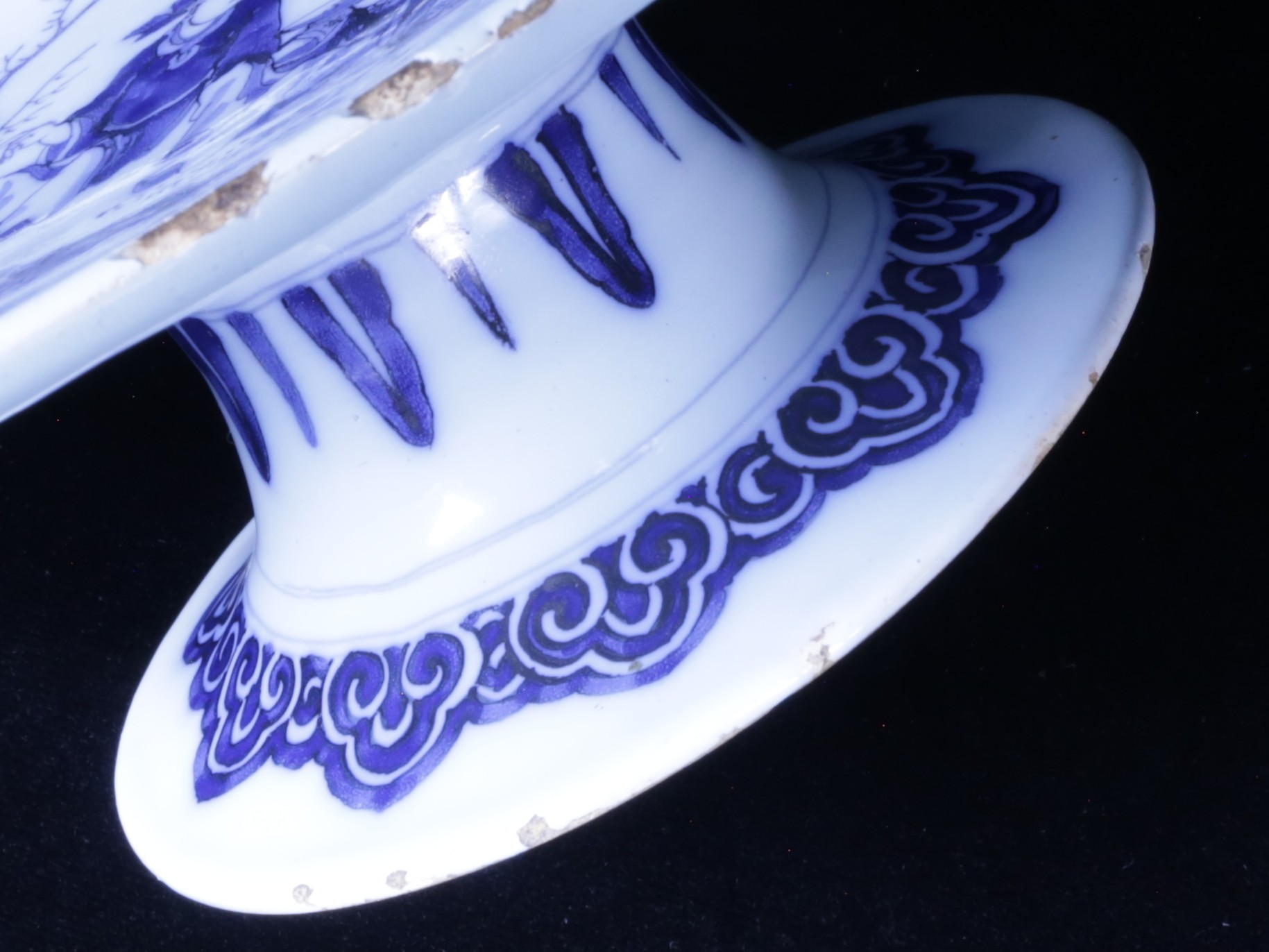
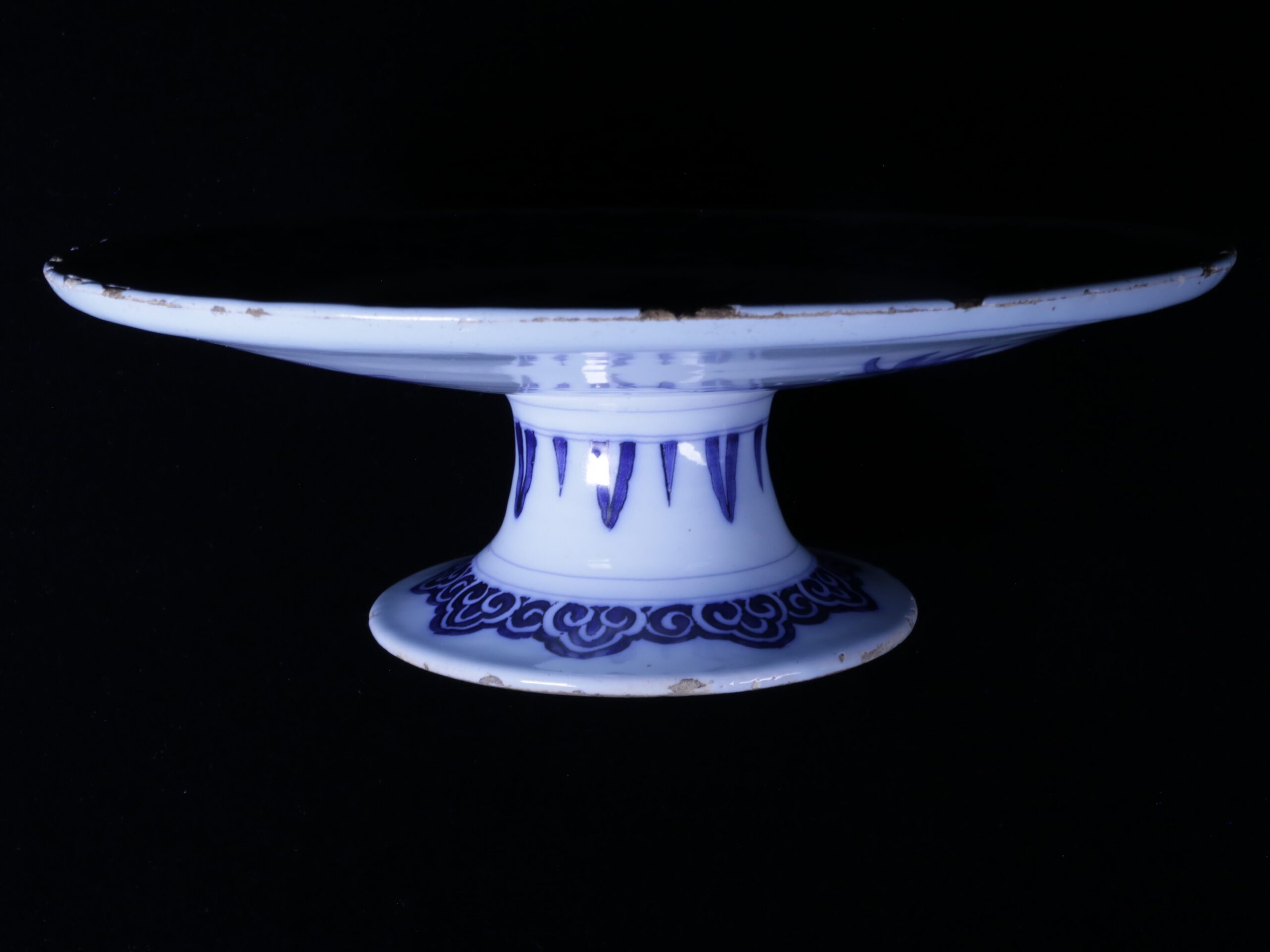
Stem & Foot: The stem is painted with banana leaf motifs, above a hollow foot adorned with a band of stylized ruyi-head motifs along the rim.
Specifications & Details
-
Origin: Delft, Dutch Republic (The Netherlands)
-
Factory: De Grieksche A (The Greek A)
-
Owner / Master Potter: Samuel van Eenhoorn (active 1678–1686)
-
Mark: Blue painted monogram “SVE” beneath the foot (and “5”)
-
Period: 1678 – 1686
-
Diameter: 25.7 cm
-
Height: 8.5 – 9.0 cm (exhibits a slight tilt)
-
Condition: Light rim wear along the outer lip and foot rim, typical and expected for 17th-century Delft earthenware. Otherwise in very good condition.
Literature & References
-
Literature Reference: A virtually identical specimen is illustrated and documented in Delfts aardewerk: geschiedenis van een nationaal product (Cat. No. 1, p. 90). Interestingly, this catalogued tazza is also marked “SVE 5”. The numeral “5” does not refer to the vessel shape, as e.g. a jug bearing the exact same marks is also known (Cat. No. 7 in the same work). Furthermore, contrary to a suggestion in the book, it does not denote the color scheme, given that the catalogued tazza also incorporates manganese. A designation for decoration type also seems unlikely, considering a SVE 5 marked blue and white pear-shaped vase depicting birds with plants and rocks, rather then seated figures.
-
Museum Reference: A comparable tazza by Samuel van Eenhoorn is held in the permanent collection of The Art Institute of Chicago (Reference No. 1932.14).
-
Further Context: For additional insights on this rare form, see Aronson Antiquairs’ article: Delftware Delights: Discovering a Unique Tazza.
__
🇳🇱 Nederlandse Samenvatting
Zeldzame 17e-eeuwse Delfts blauwe tazza (schaal op voet), vervaardigd in de beroemde Delftse plateelbakkerij De Grieksche A onder leiding van meester-plateelbakker Samuel van Eenhoorn (1678–1686).
Dit stuk is aan de onderzijde van de voet gemerkt met het blauwe monogram “SVE” (en het cijfer “5”). Samuel van Eenhoorn staat internationaal bekend om zijn verfijnde glazuurkwaliteit en harmonieuze interpretatie van Chinees porselein.
-
Decoratie: Centraal medaillon in Chinese Overgangsstijl (Transitional style) met twee zittende figuren in een tuin. De rand is gedecoreerd in Kangxi-stijl met pioenachtige bloemen. De onderzijde van de schaal is verfijnd beschilderd met bamboebladen en vlinders; de voet met bananenbladeren en ruyi-motieven.
-
Herkomst & Datering: Delft, Republiek der Zeven Verenigde Nederlanden, 1678–1686
-
Merkteken: Blauw geschilderd monogram SVE 5 onder de voet
-
Afmetingen: Ø 25,7 cm | Hoogte 8,5 – 9,0 cm
-
Conditie: Lichte glazuurslijtage langs de randen (karakteristiek voor 17e-eeuws Delfts aardewerk), verder in zeer goede staat.
-
Referenties: Een vrijwel identiek exemplaar (eveneens gemerkt “SVE 5”) staat gedocumenteerd in het standaardwerk Delfts aardewerk: geschiedenis van een nationaal product (Cat. nr. 1, p. 90). Een vergelijkbare tazza bevindt zich in de vaste collectie van The Art Institute of Chicago (Ref. nr. 1932.14).
Reviews
There are no reviews yet.