
Handwritten Meiji Era Flower Arrangement Notebook (明治時代生け花手稿)
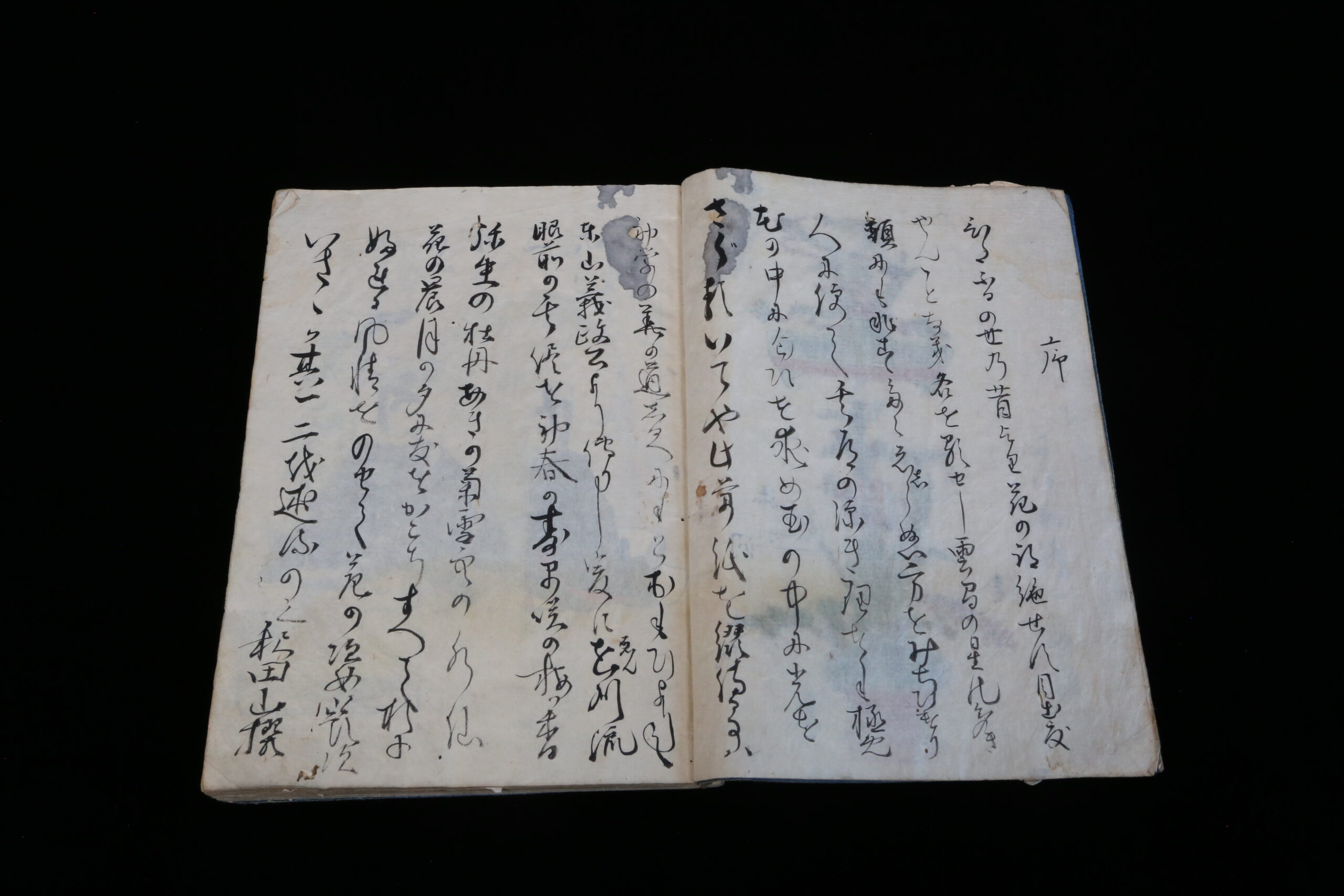
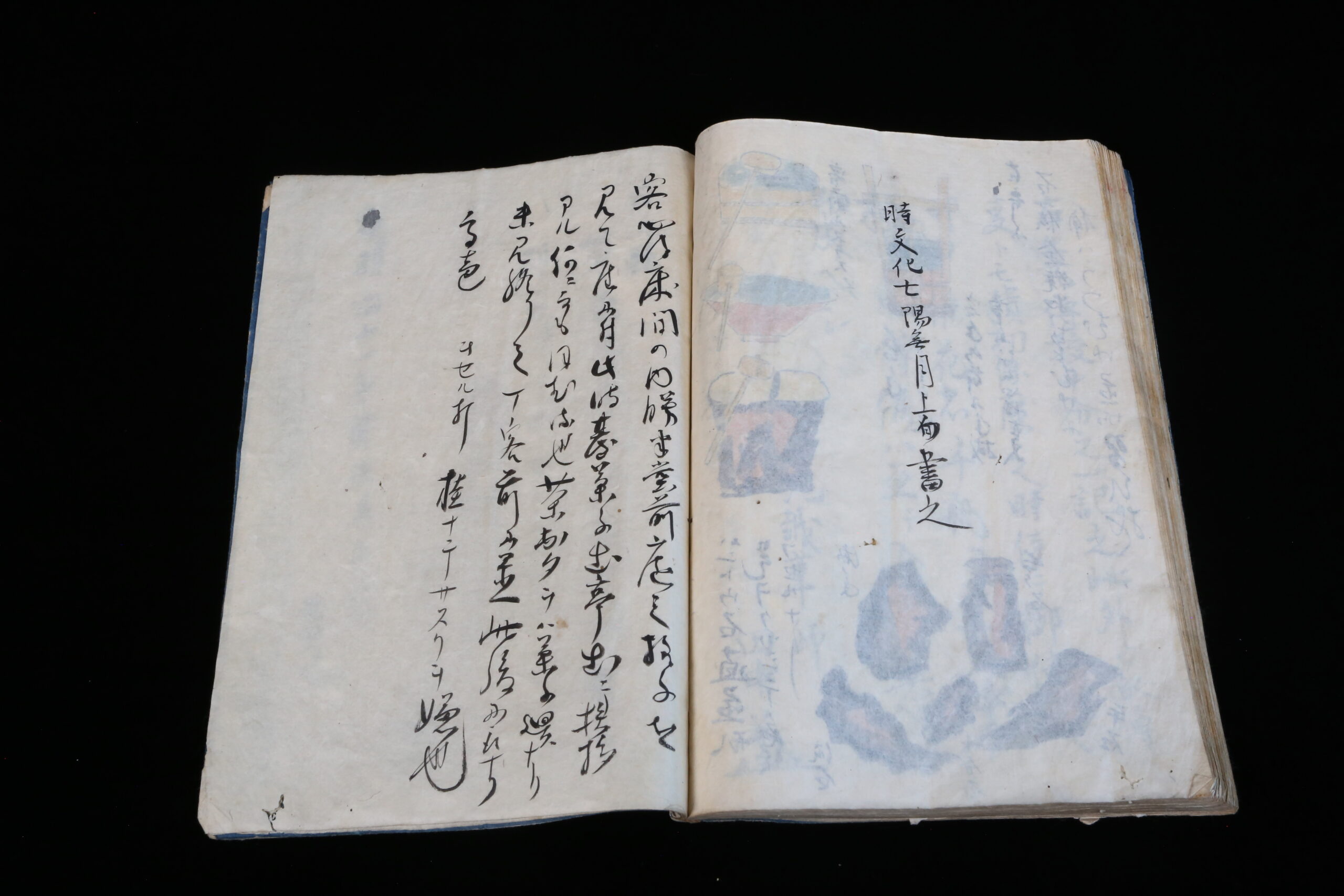
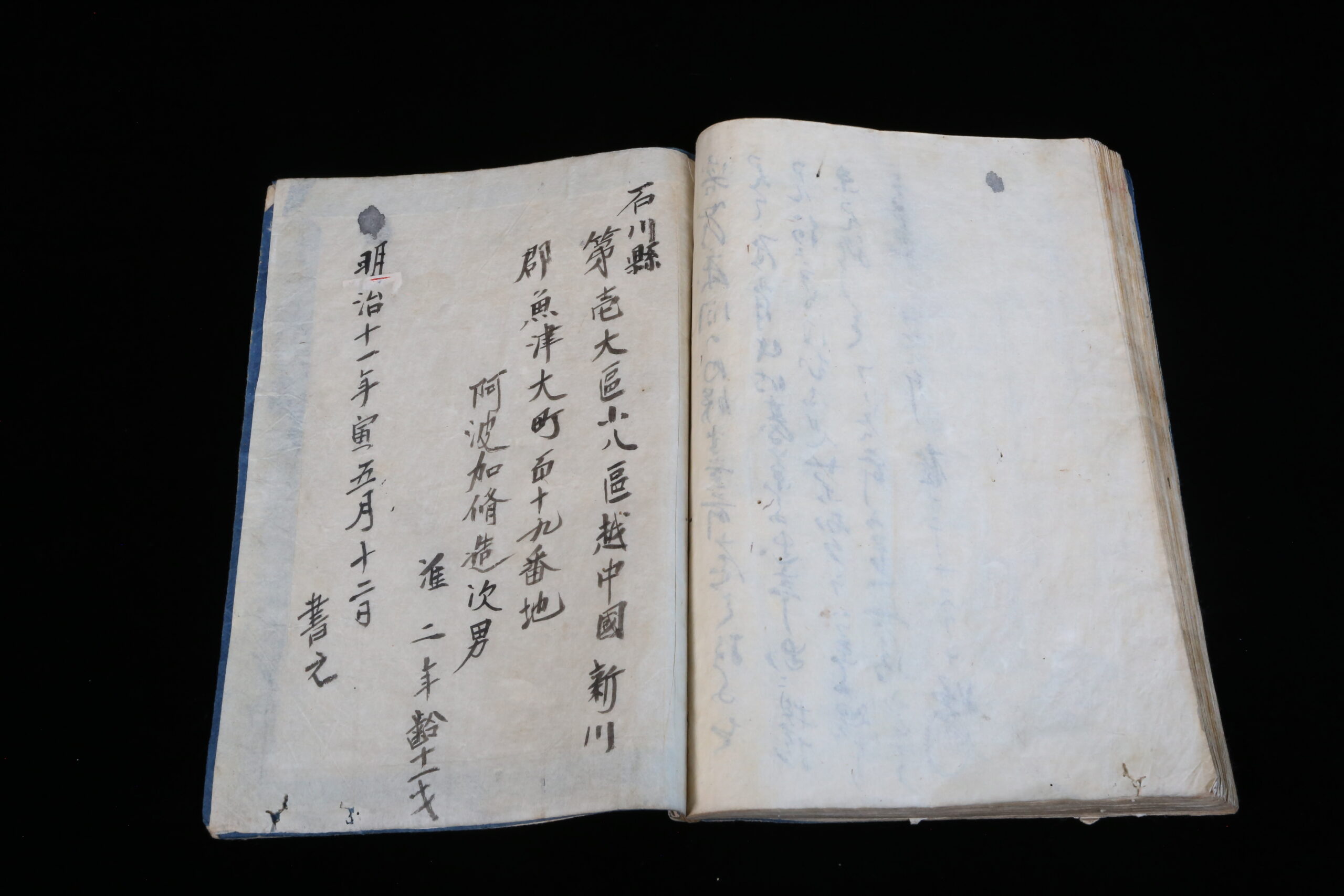
This authentic antique Japanese manuscript is a personal handwritten notebook on ikebana (生け花), the traditional art of flower arrangement also known as kadō (華道). Dated to Meiji 11 (明治十一年, 1878) in the colophon, it was compiled or copied by Kaiji (淮二) in Uozu (魚津), who identifies himself as the second son (次男) of Awaka Shūzō (阿波加修造), who appears to be a historical physician in Uozu, Etchū Province (越中国, now part of Toyama Prefecture). Awaka Shūzō is documented in local histories for his medical work, including treating cholera outbreaks in the mid-19th century, and his family was involved in scholarly and cultural pursuits during the transition from Edo to Meiji eras.
The content incorporates earlier teachings from Bunka 7 (文化七年, 1810), suggesting it preserves Edo-period traditions. It includes a poetic preface referencing Ashikaga Yoshimasa (足利義政, 1436–1490), the 8th Muromachi shogun and a key patron of ikebana, who promoted its development alongside other arts like tea ceremony. Based on the preface and arrangements depicted, the manuscript appears influenced by the Ikenobō school (池坊), the oldest ikebana lineage tracing back to the Heian period but formalized in the Muromachi era—though this is an educated interpretation from the content, not explicitly stated.
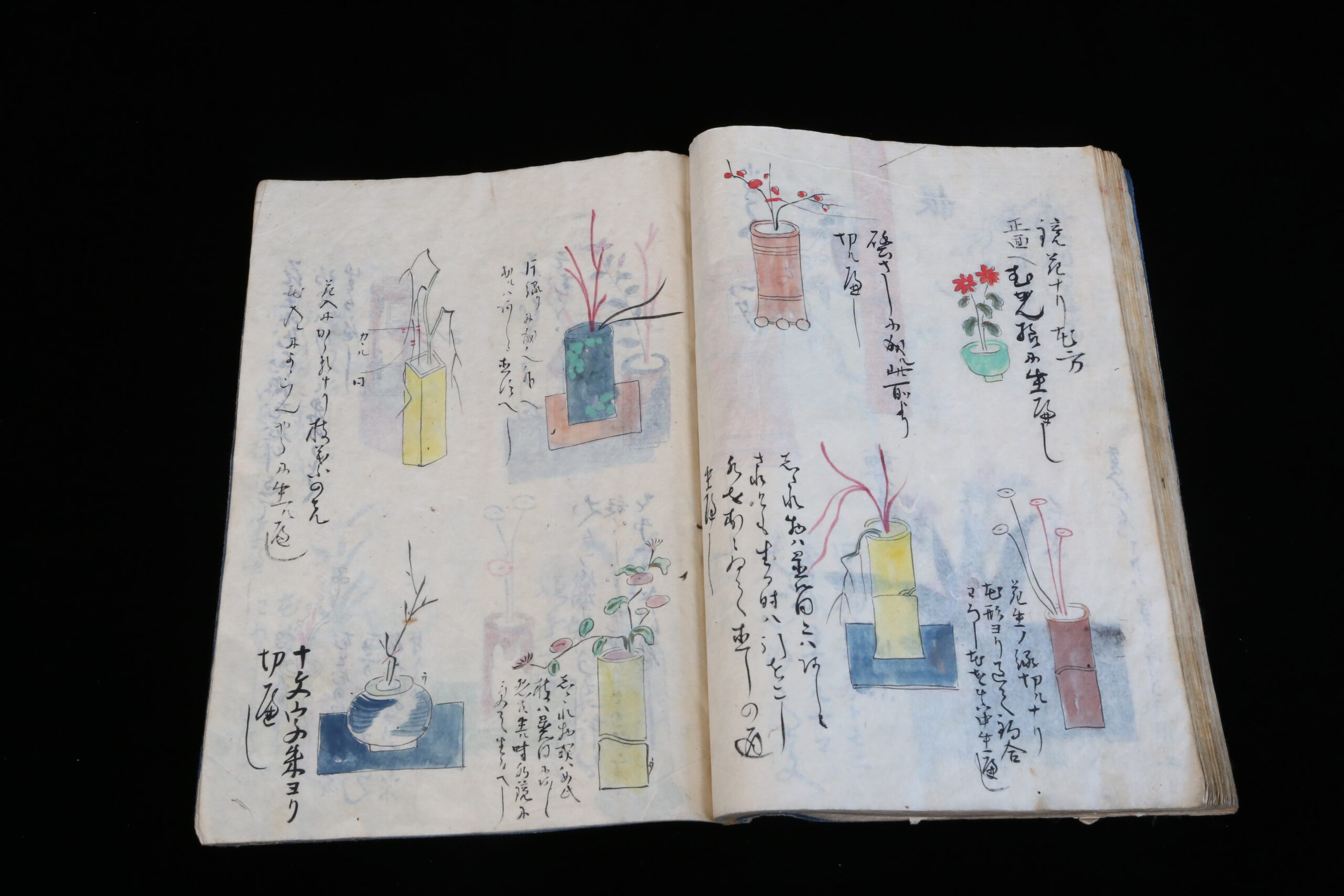
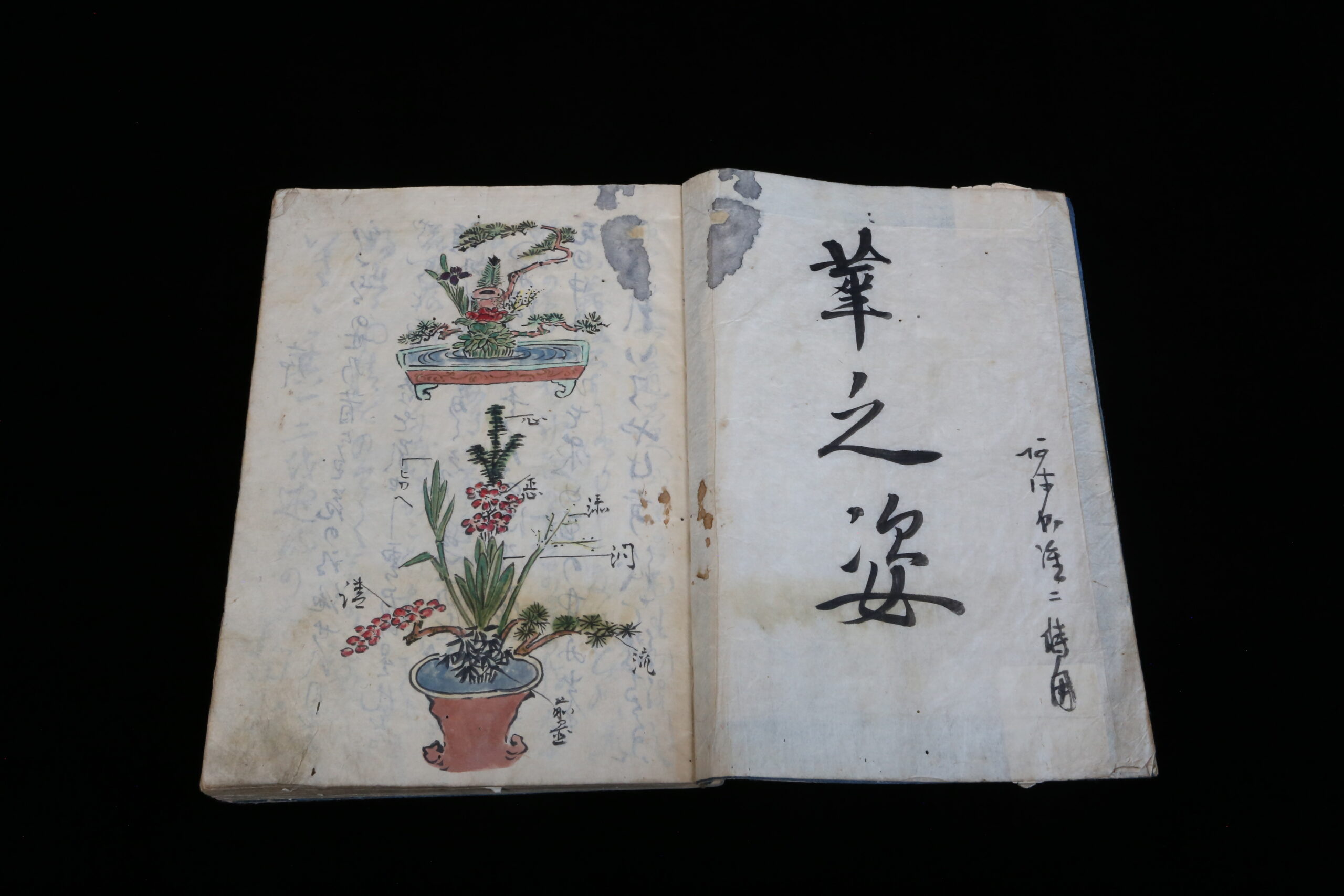
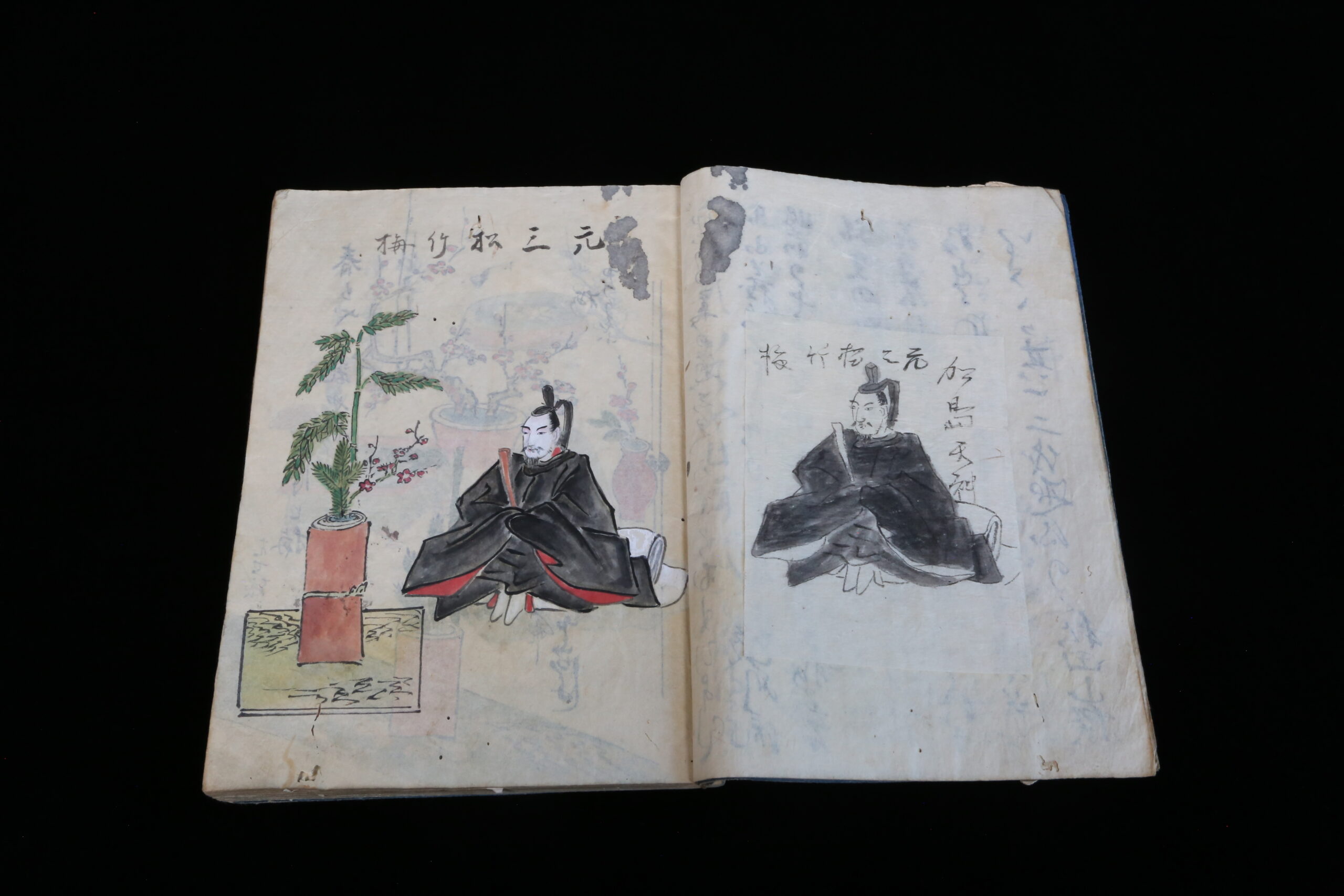
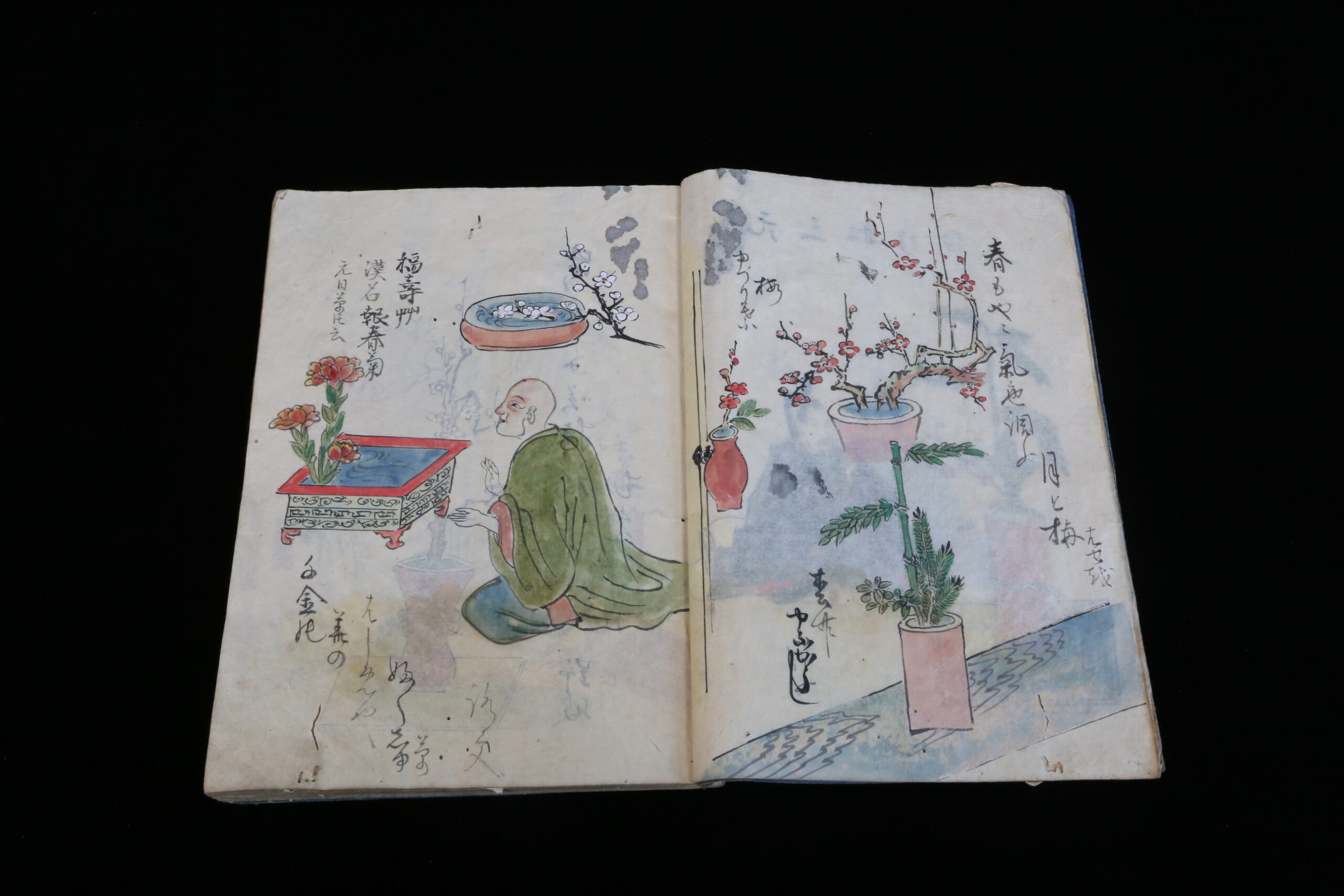
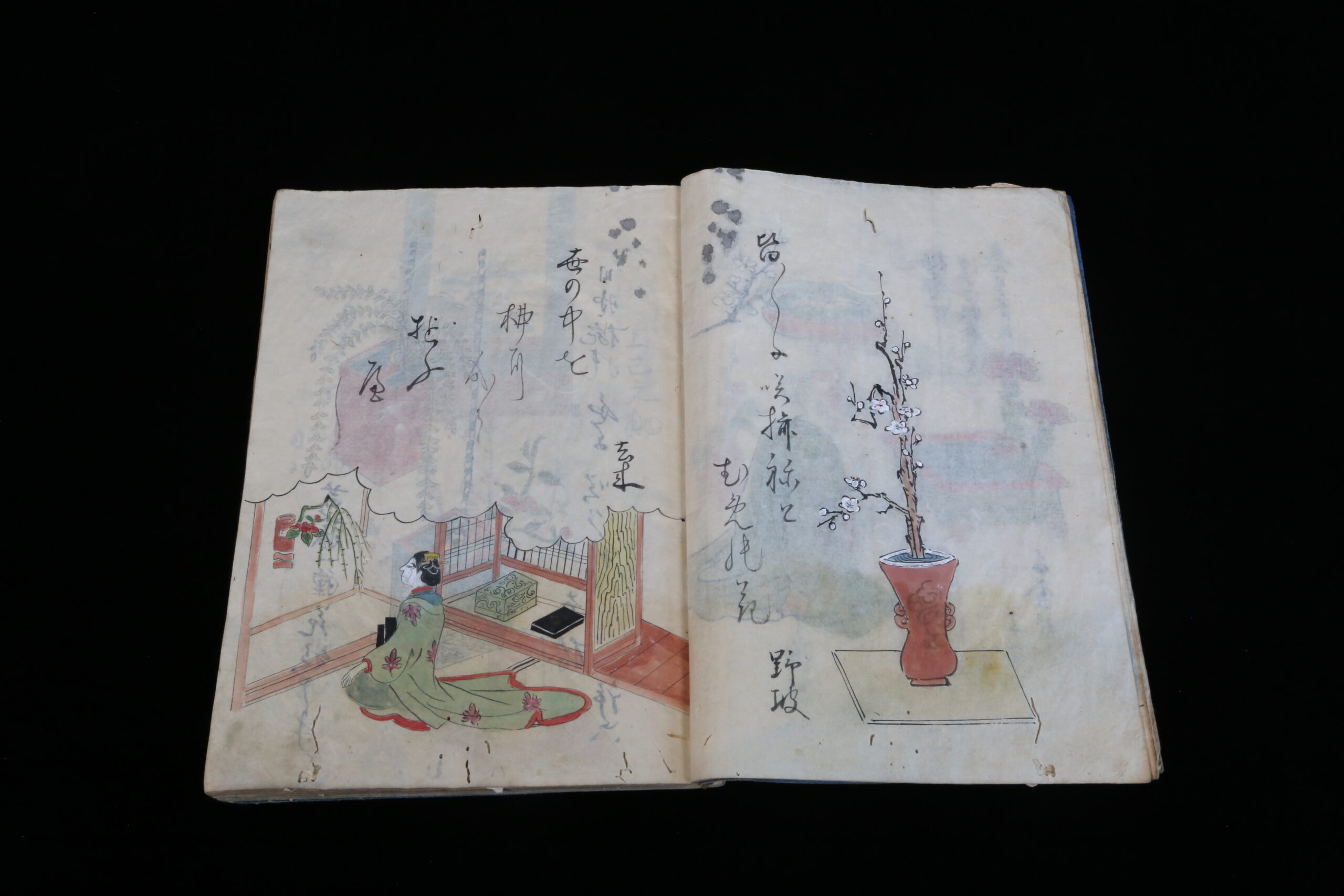
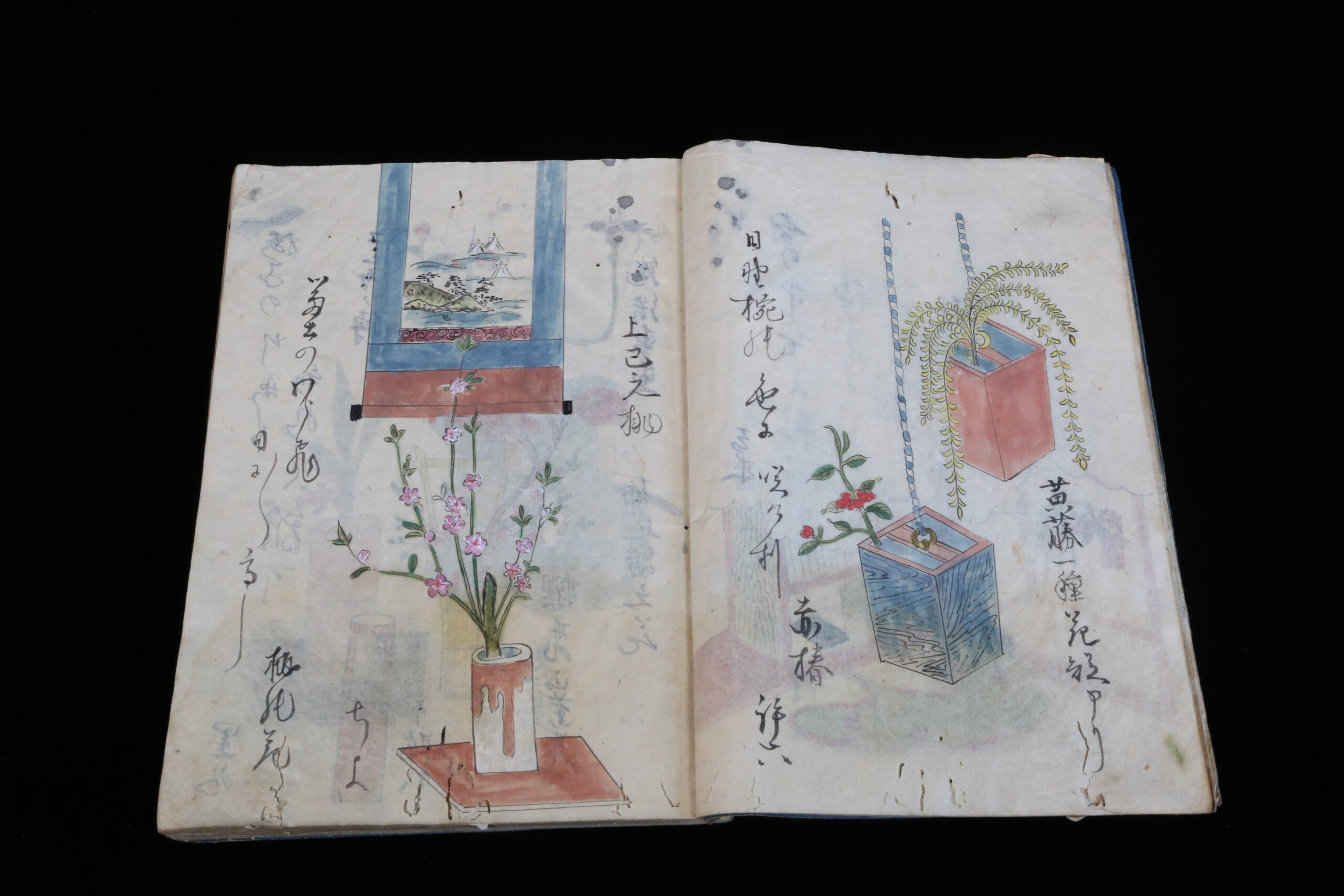
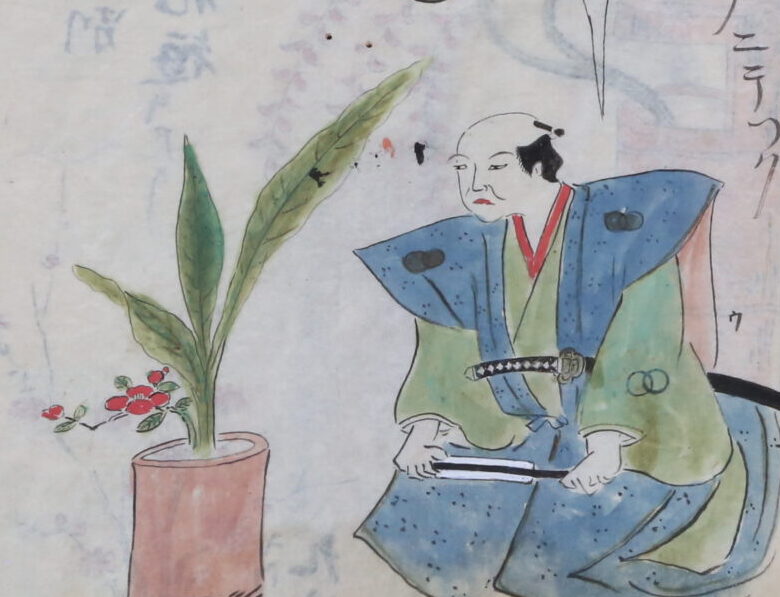
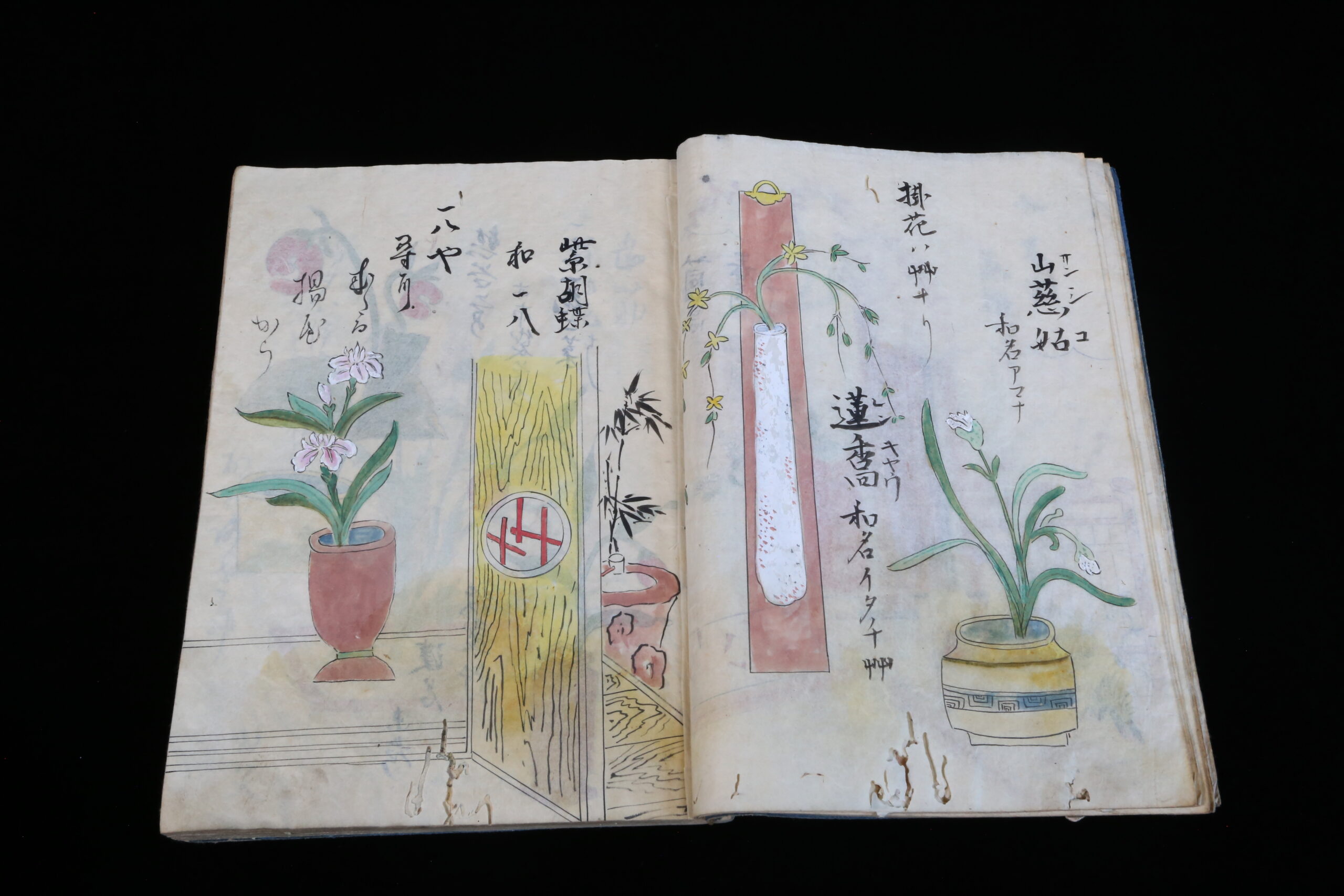
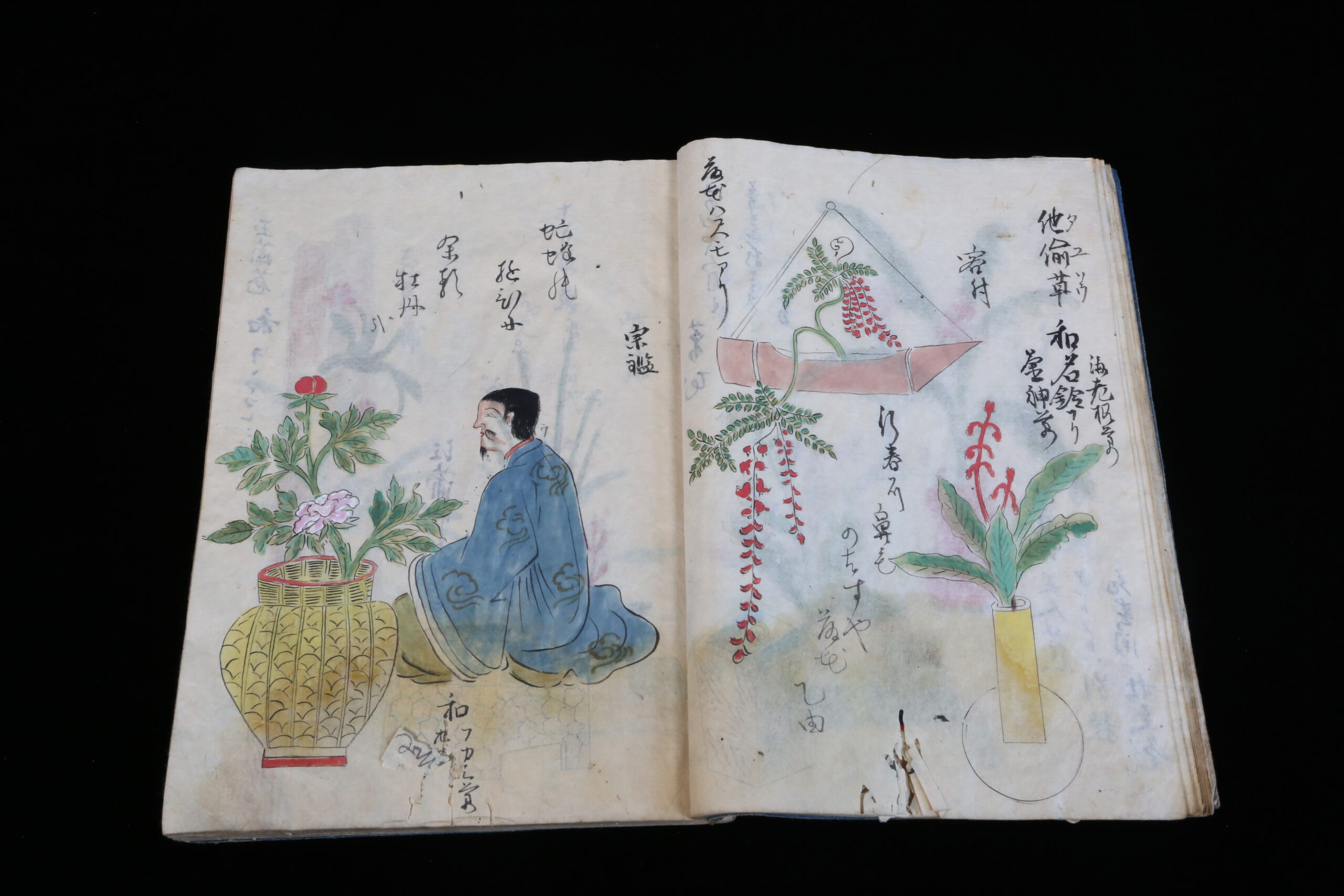
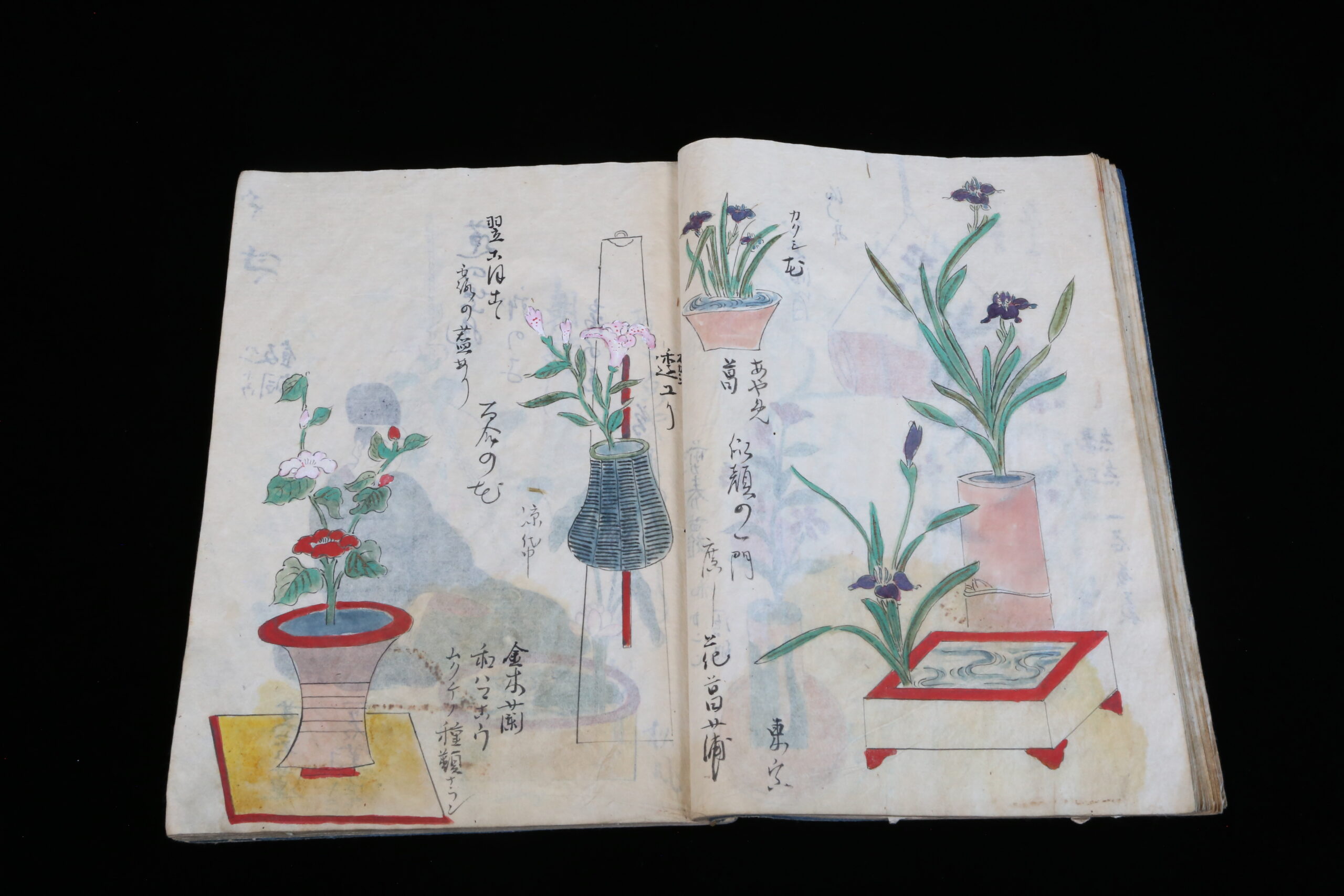
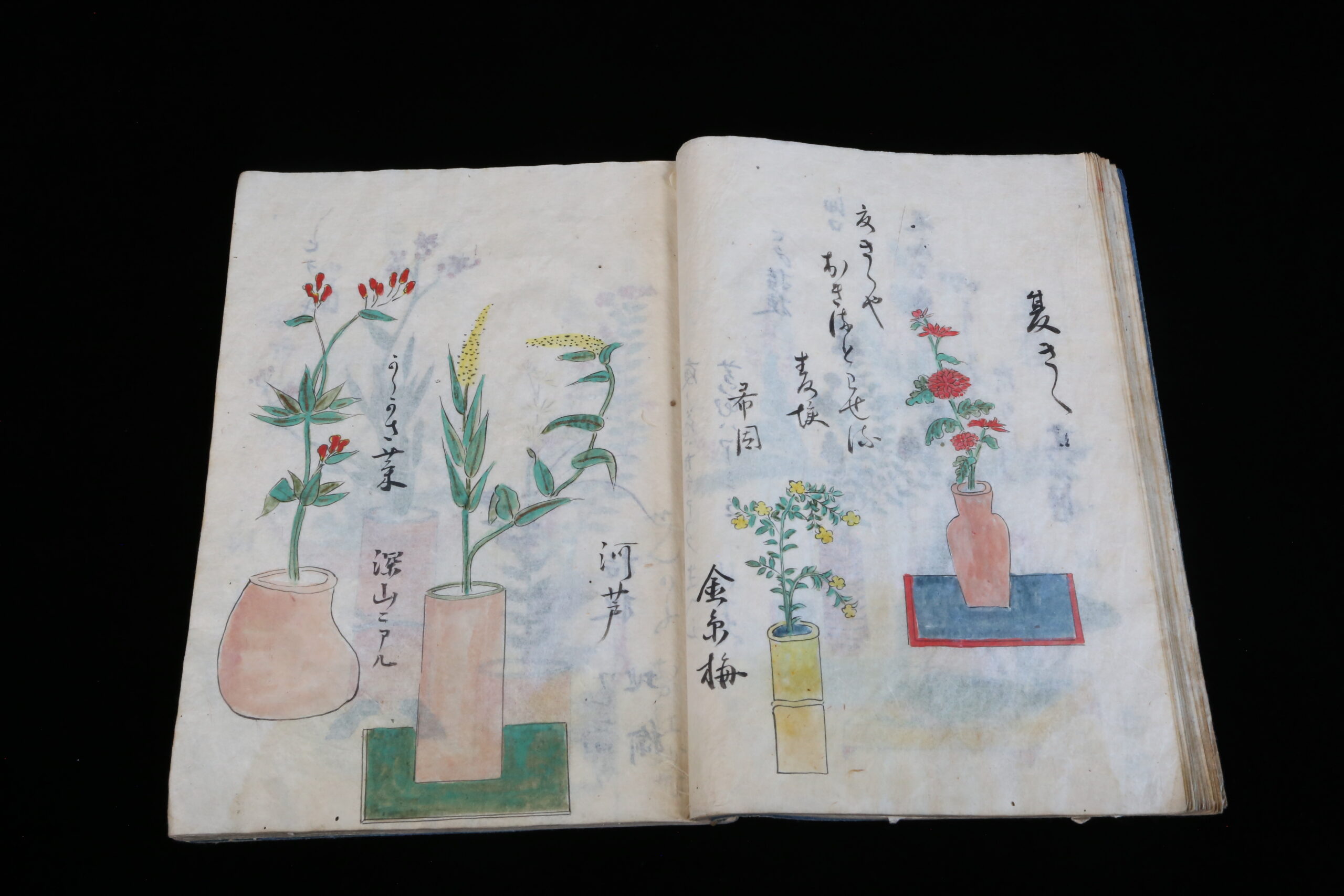
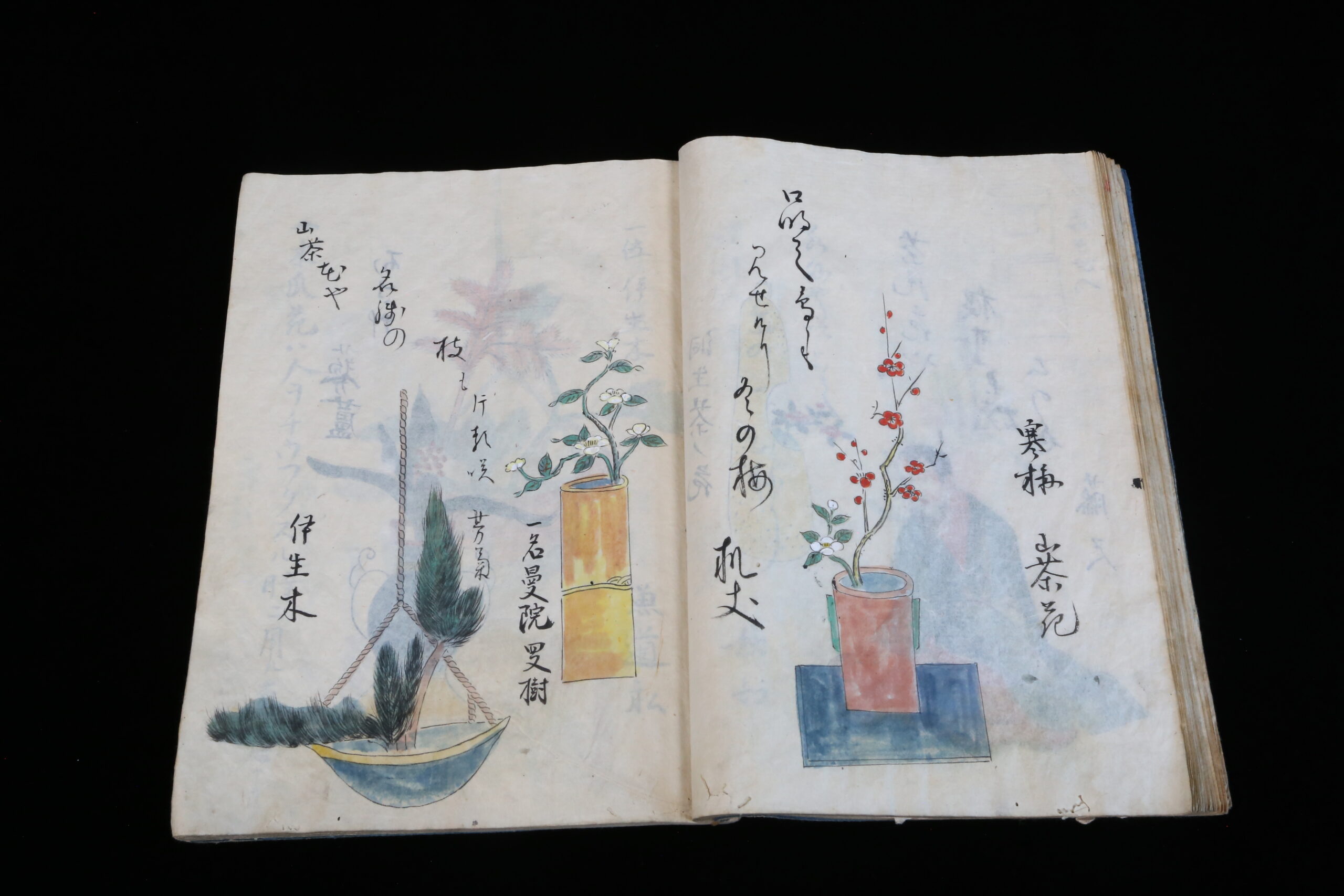
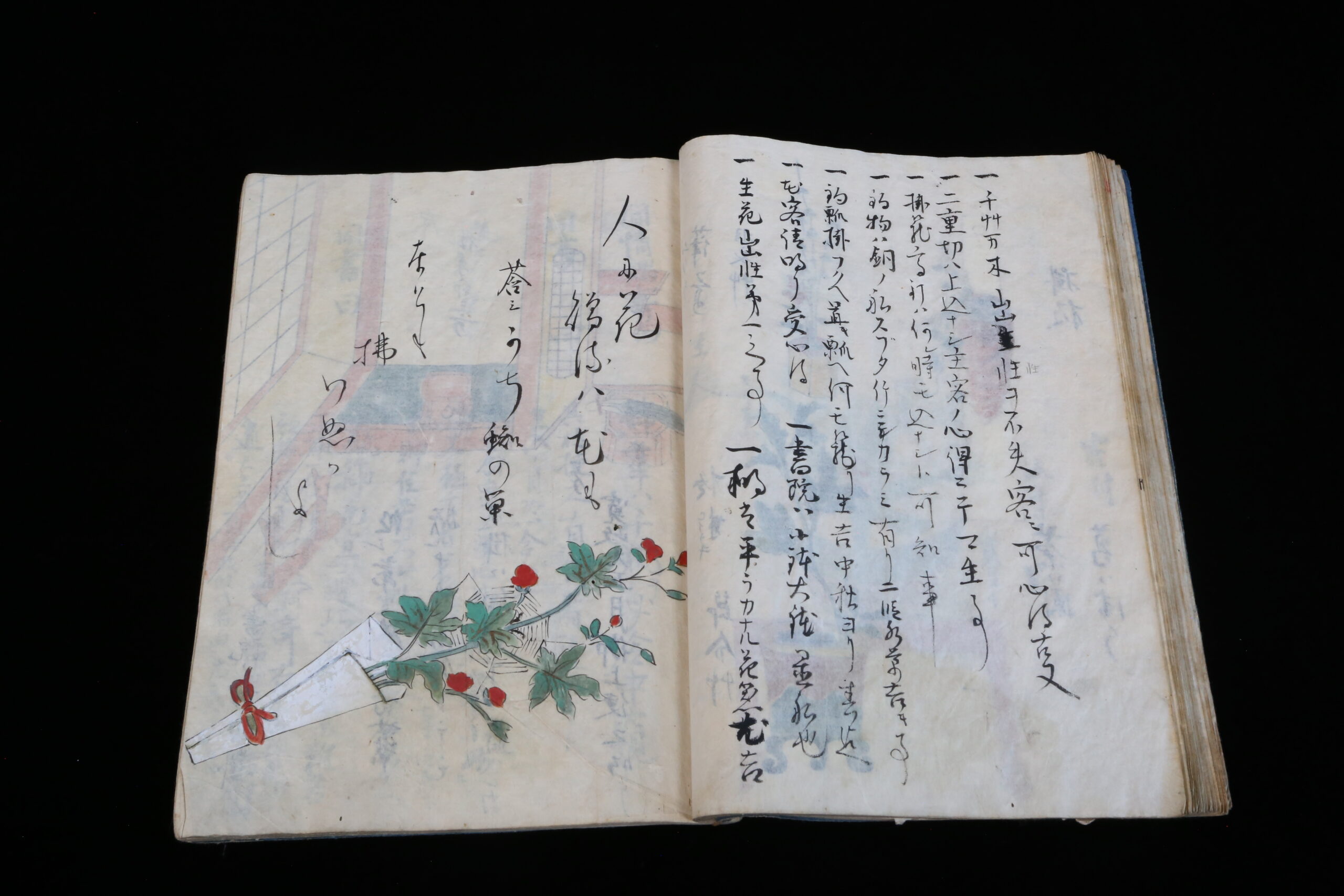
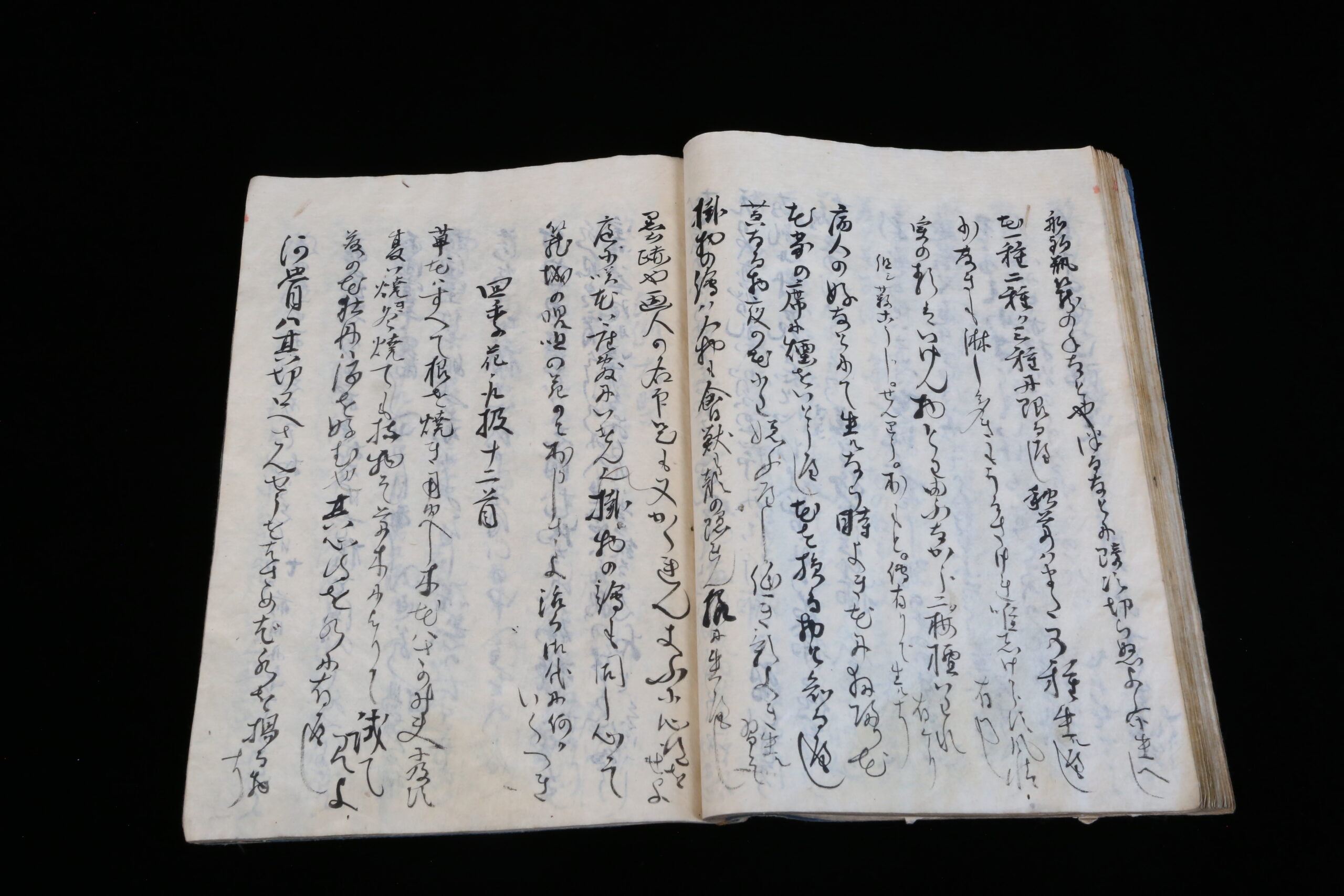
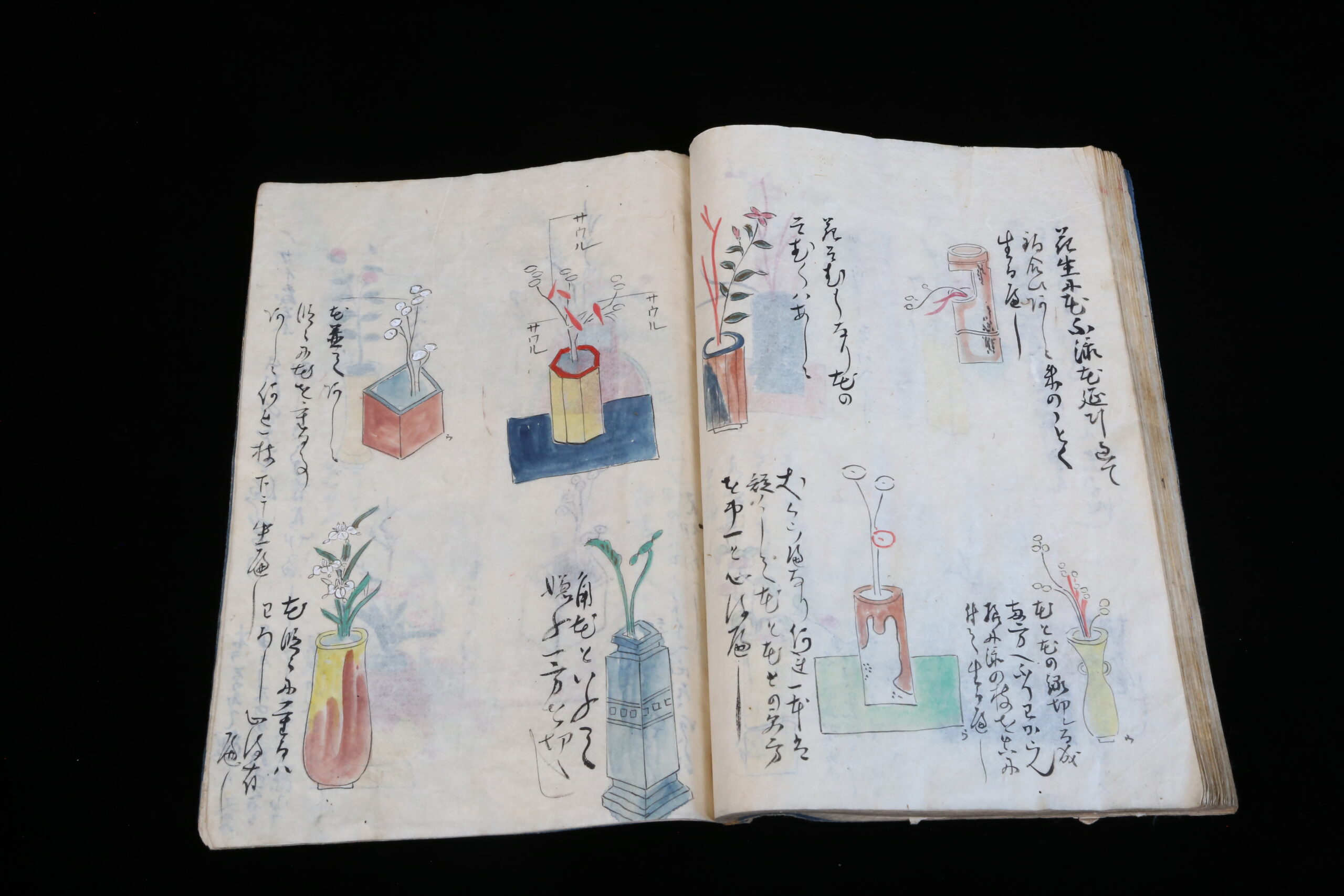
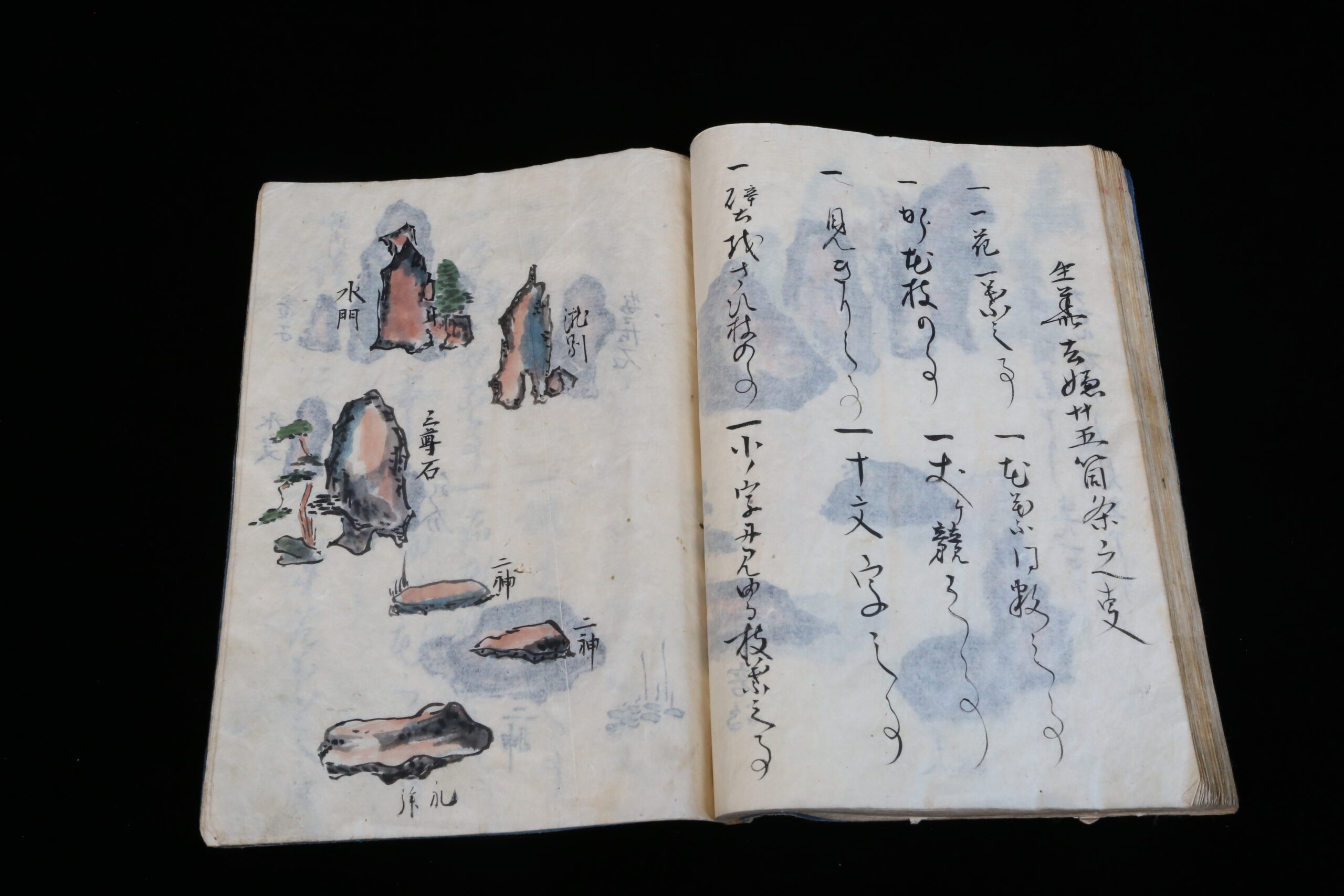
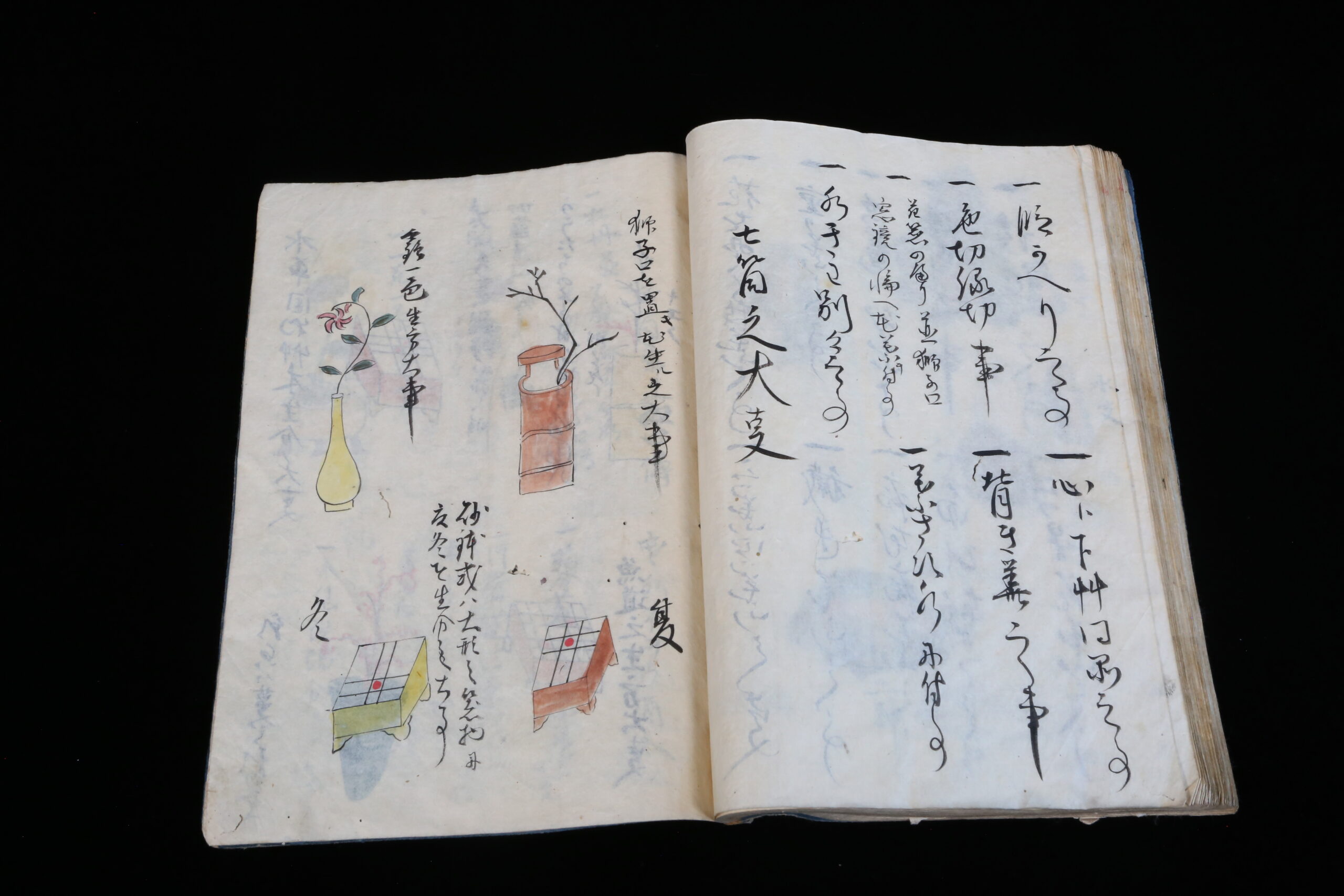
Spanning approximately 126 pages, the notebook features elegant brush calligraphy, philosophical notes on arrangement etiquette (e.g., facing flowers toward guests to “enter the heart”), and beautiful hand-painted illustrations with vivid ink and color washes. Examples include auspicious early-spring motifs like shō-chiku-bai (松竹梅, pine-bamboo-plum symbolizing resilience), ume (梅, plum blossoms), and fukujusō (福寿草, adonis flower for happiness and longevity). The illustrations show different styles, with symbolic figures (e.g., contemplative monks) emphasizing the art’s spiritual roots in Buddhist offerings.
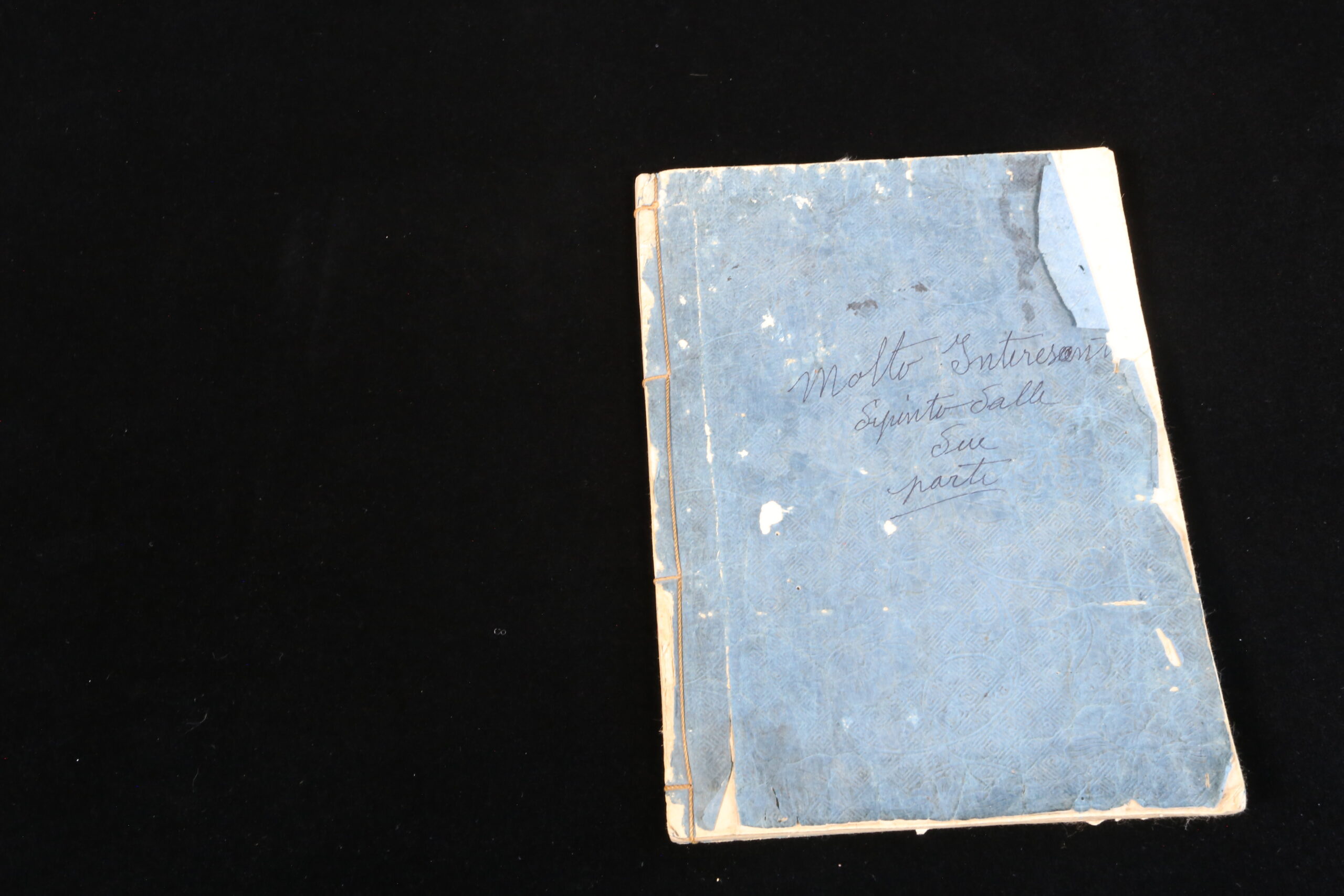
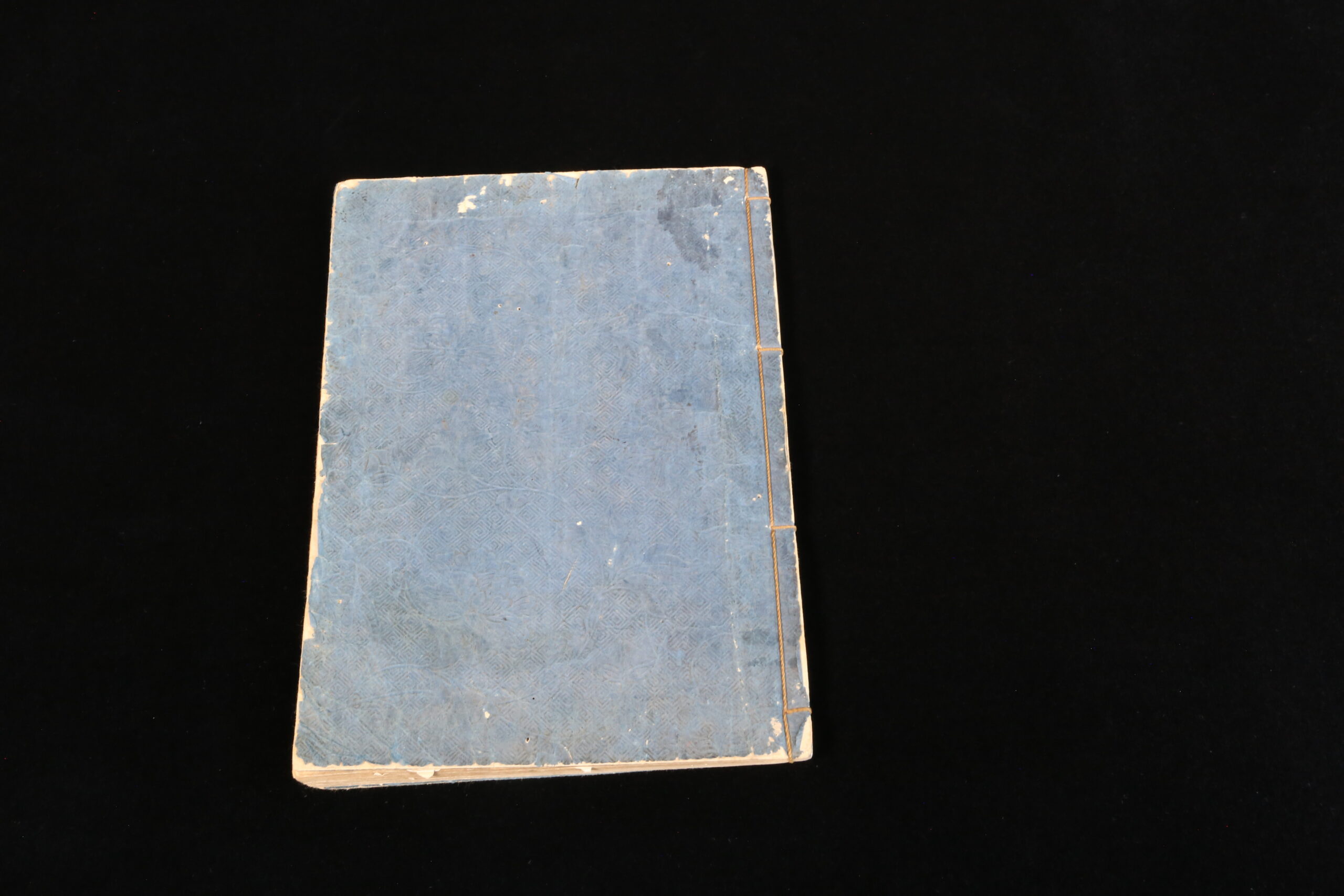
Measurements: 17 x 23.5 cm. The paper is traditional washi (和紙), partly in double-sheet folded format.
Condition: Overall good for its age, with vivid colors retaining their brightness. Minor imperfections include some wormholes, staining, and edge wear, typical of 19th-century handmade items stored in humid environments, but these do not significantly affect legibility or structural integrity.
This manuscript provides a tangible link to Japan’s cultural history, capturing the blend of artistry, seasonality, and mindfulness in ikebana during a period of rapid modernization. It’s a compelling piece for collectors of Japanese antiques, practitioners of floral arts, or those interested in Meiji-era provincial scholarship.
A full scan of the manuscript is available here: Ikebana 1878 Manuscript full copy_Antefact. Important remark: the scanning color tone is not correct, please consult the product photo’s instead.
Note
All interpretations, translations, dates, names, and explanations in the description are based on the best available online resources, translation tools, and research. While Antefact aims for accuracy, the cursive handwriting and antique nature of the text mean some parts may involve educated guesses or minor uncertainties. Thank you for your understanding.

Reviews
There are no reviews yet.