Brussels Faience Cooler/Basin with “La Haie Fleurie” Decoration, Attributed to Joseph-Philippe Artoisenet (18th Century)
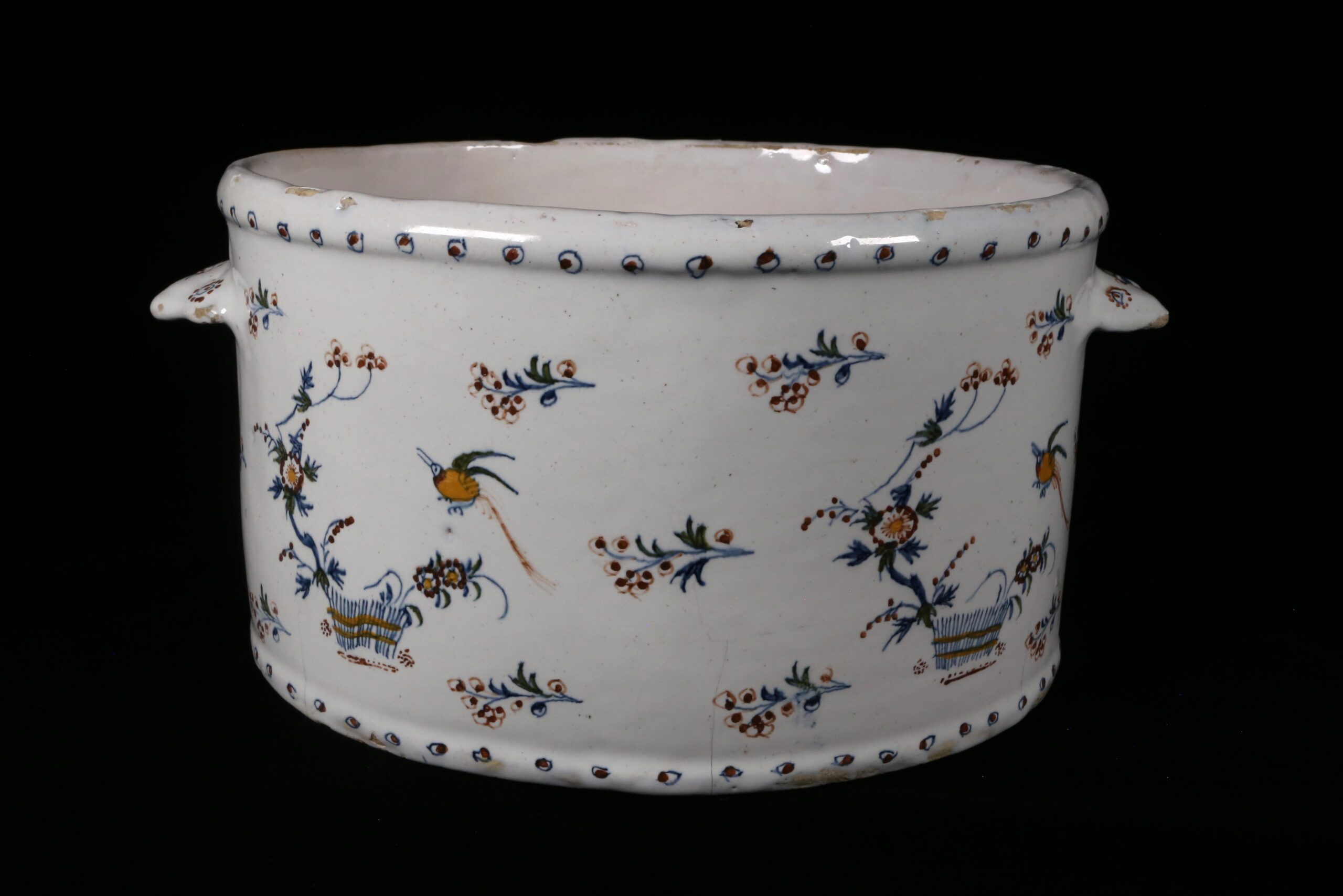
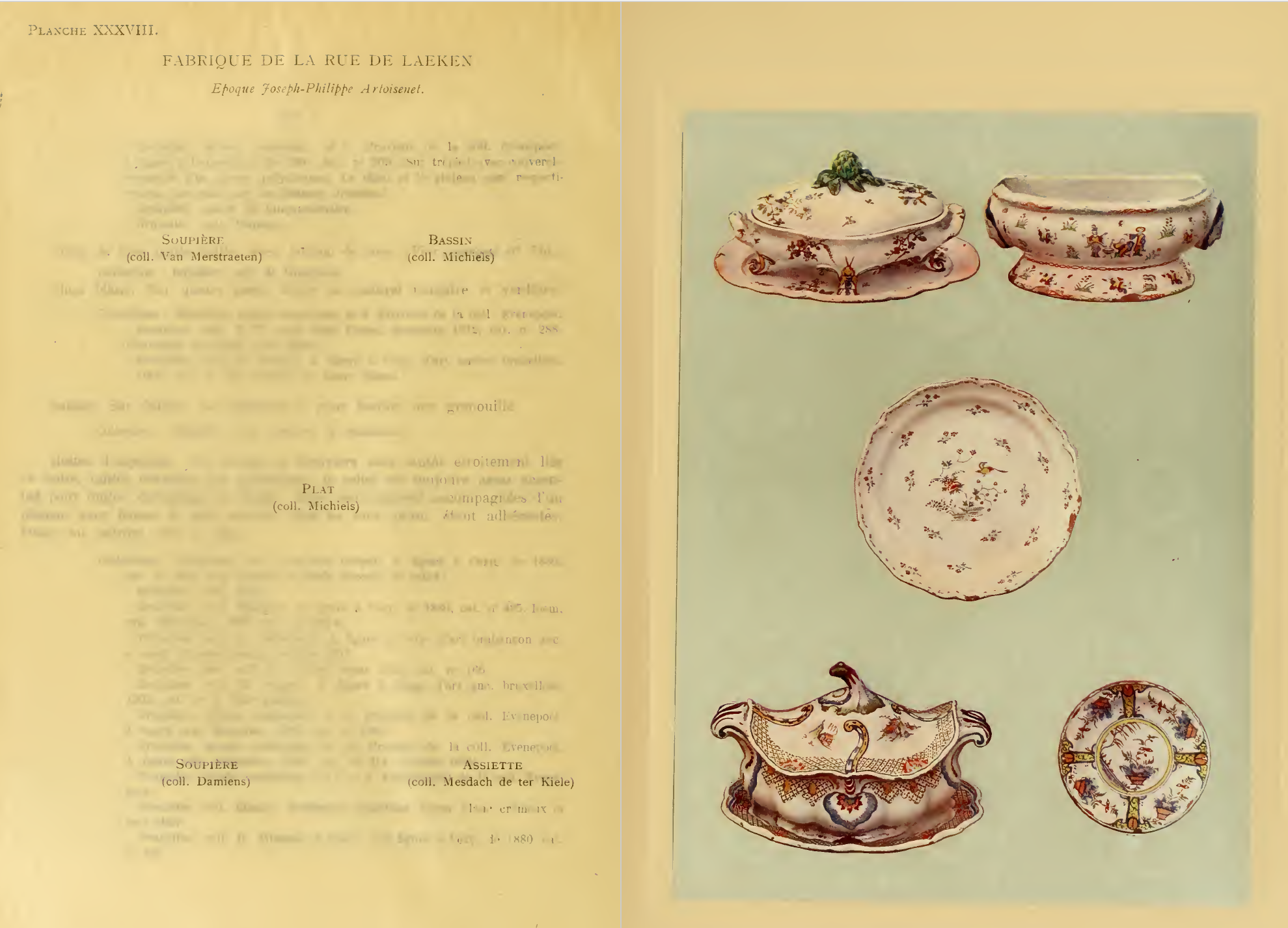
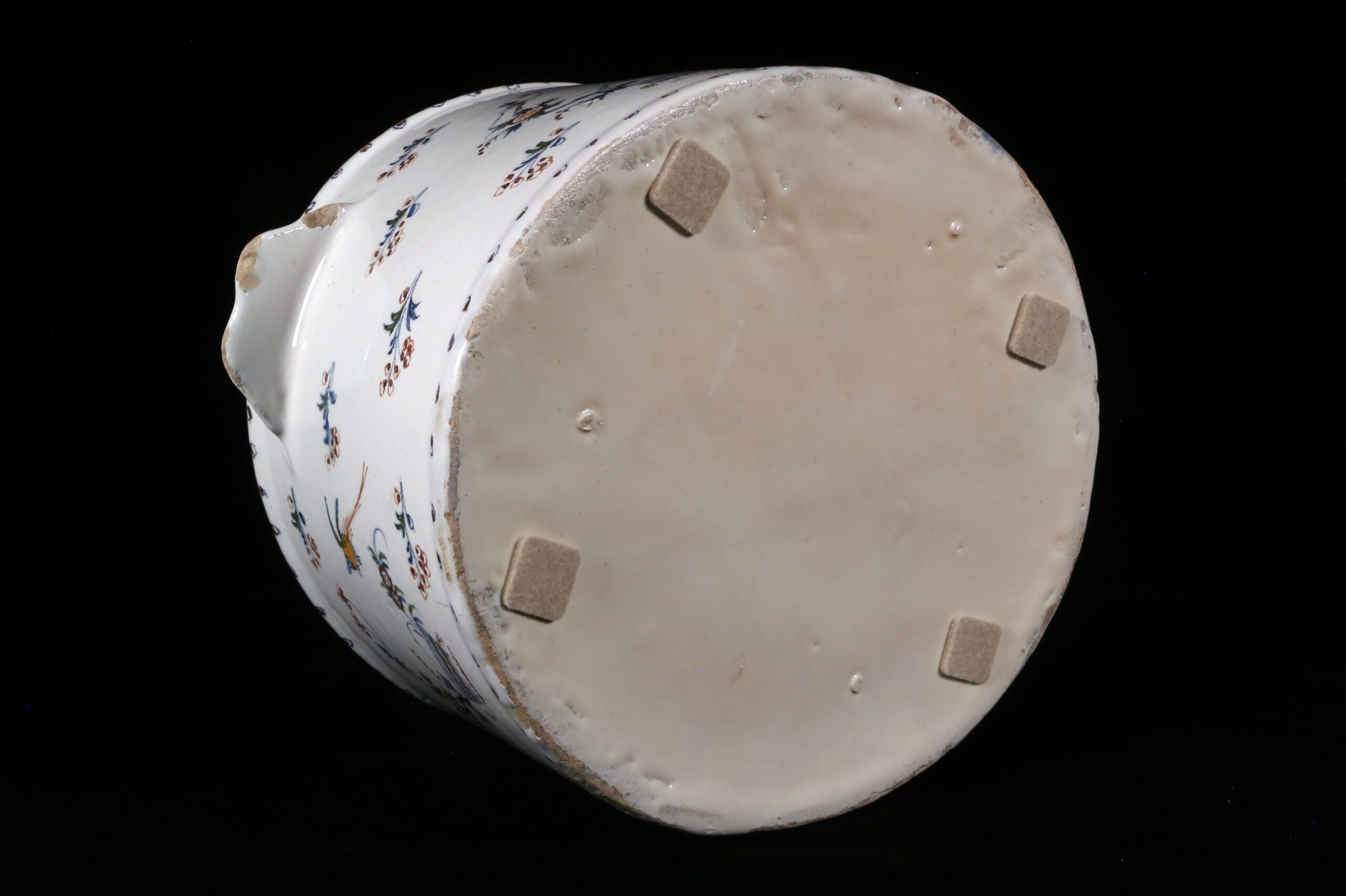
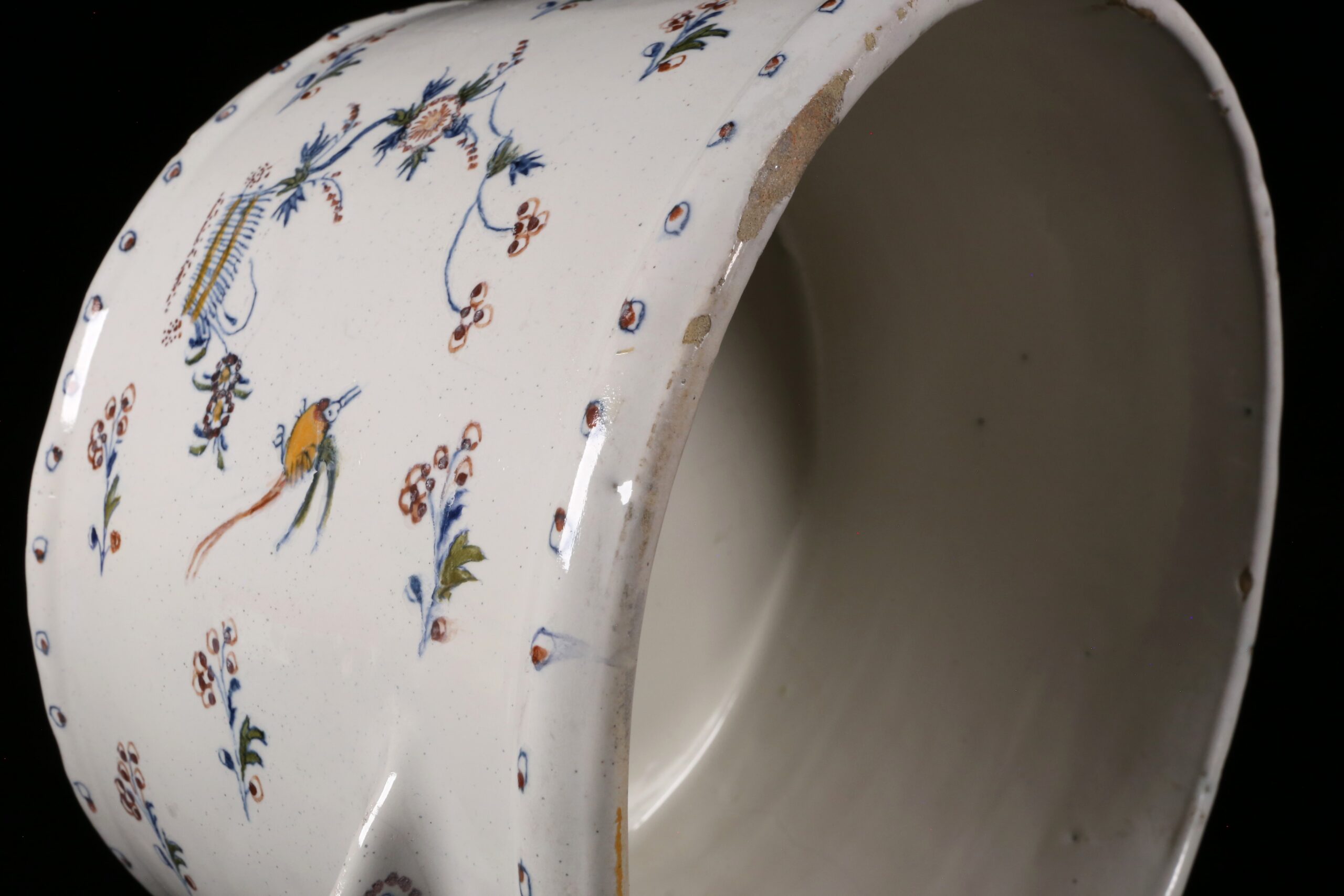
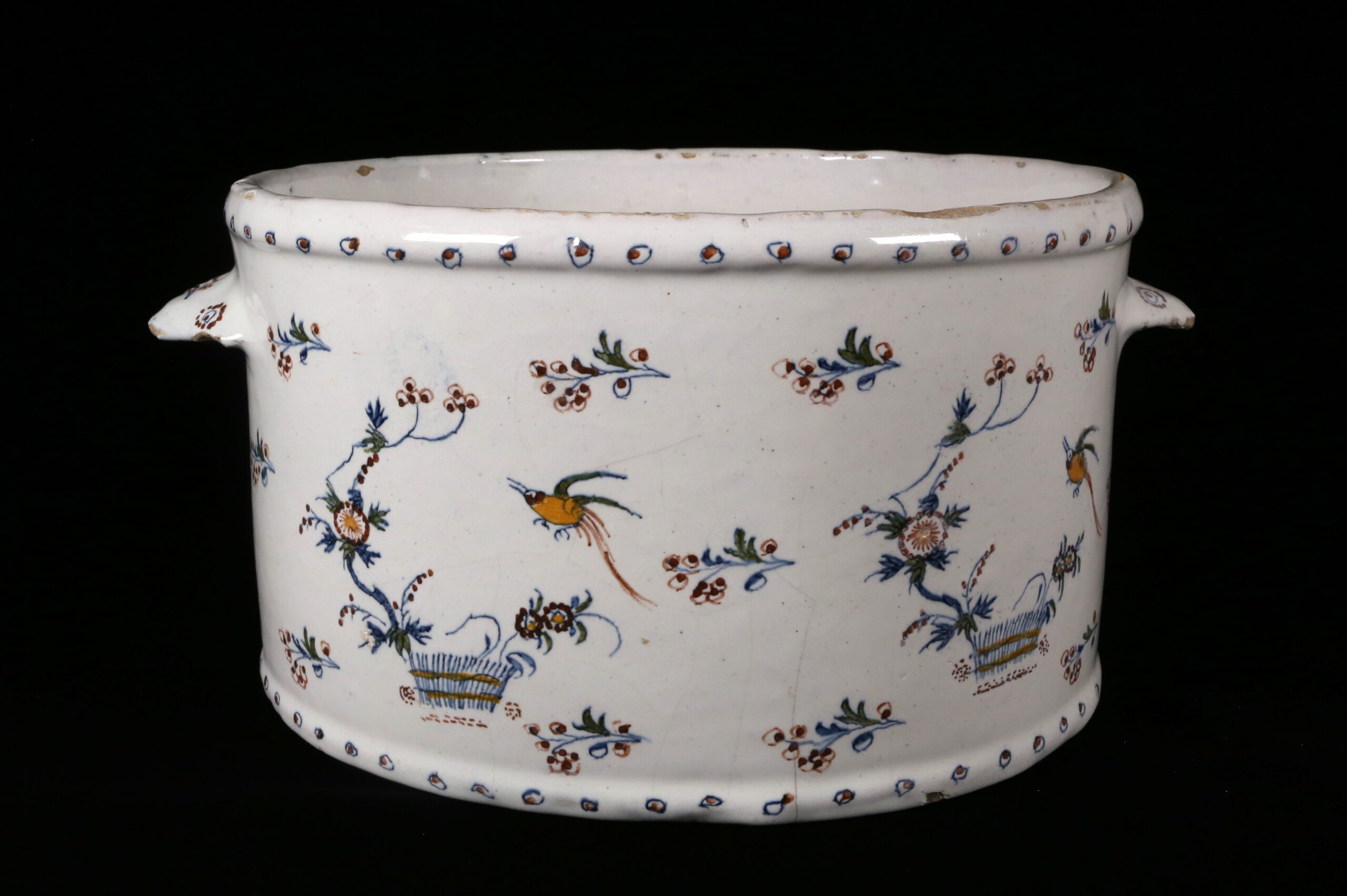
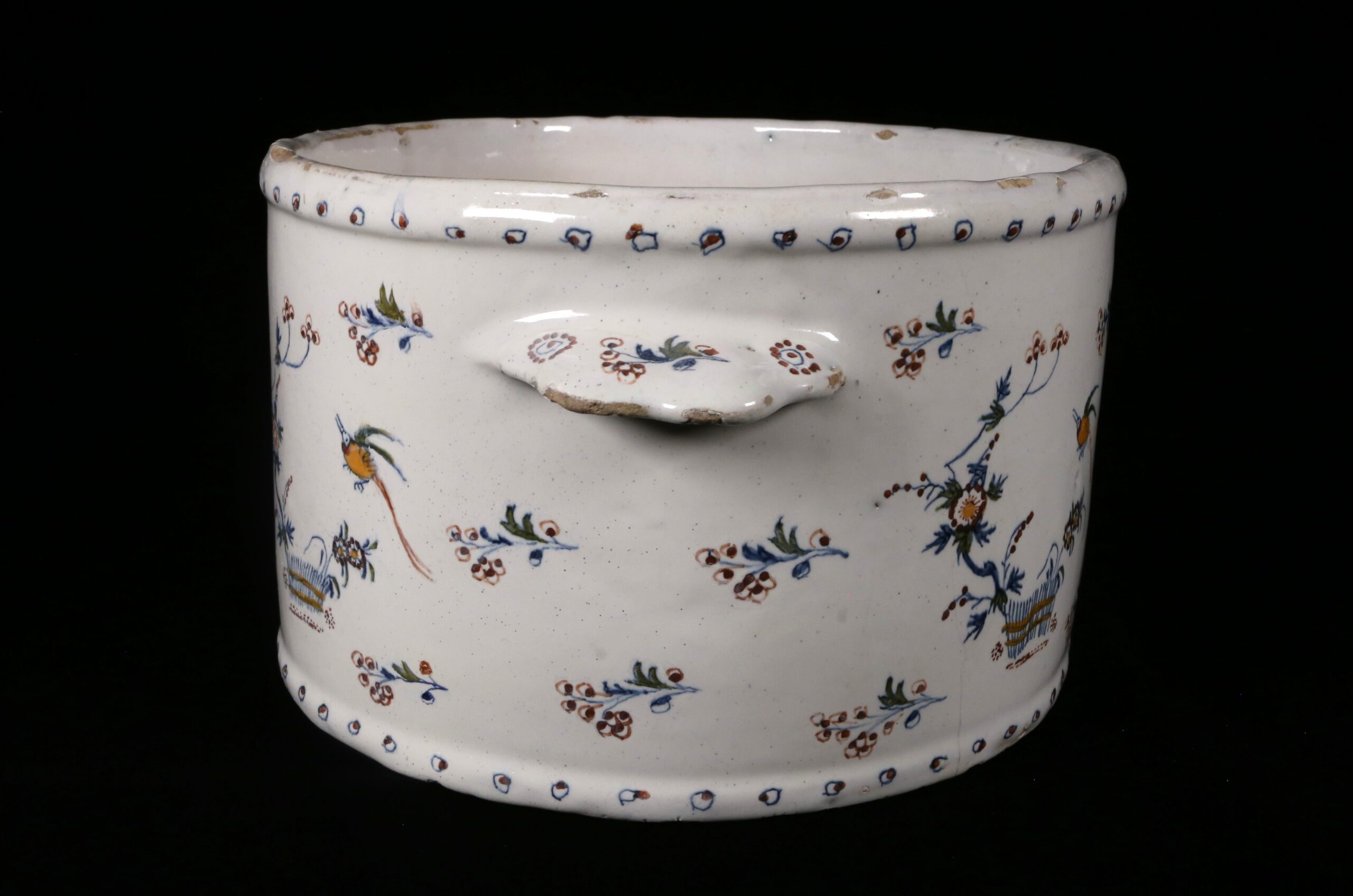
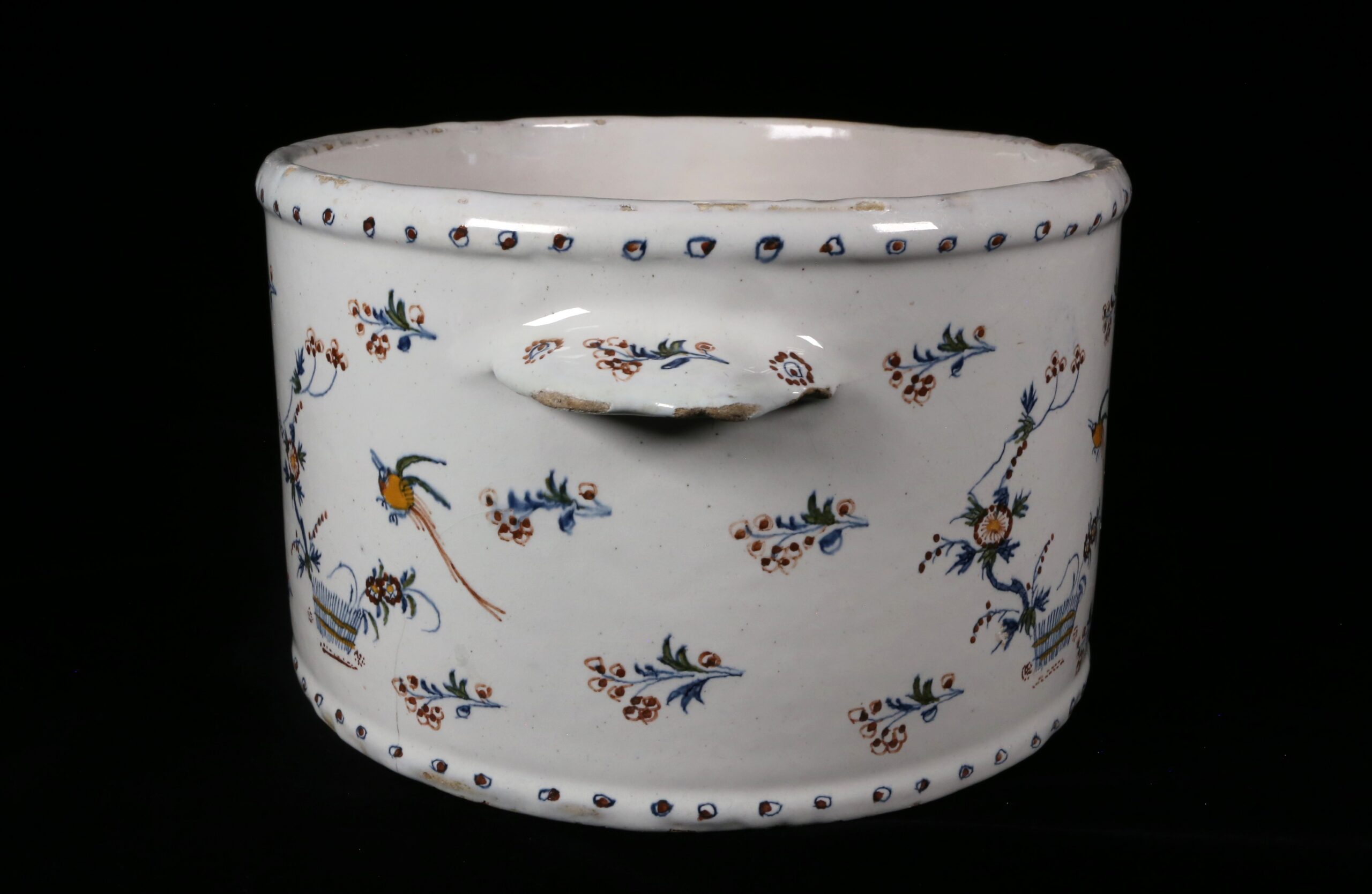
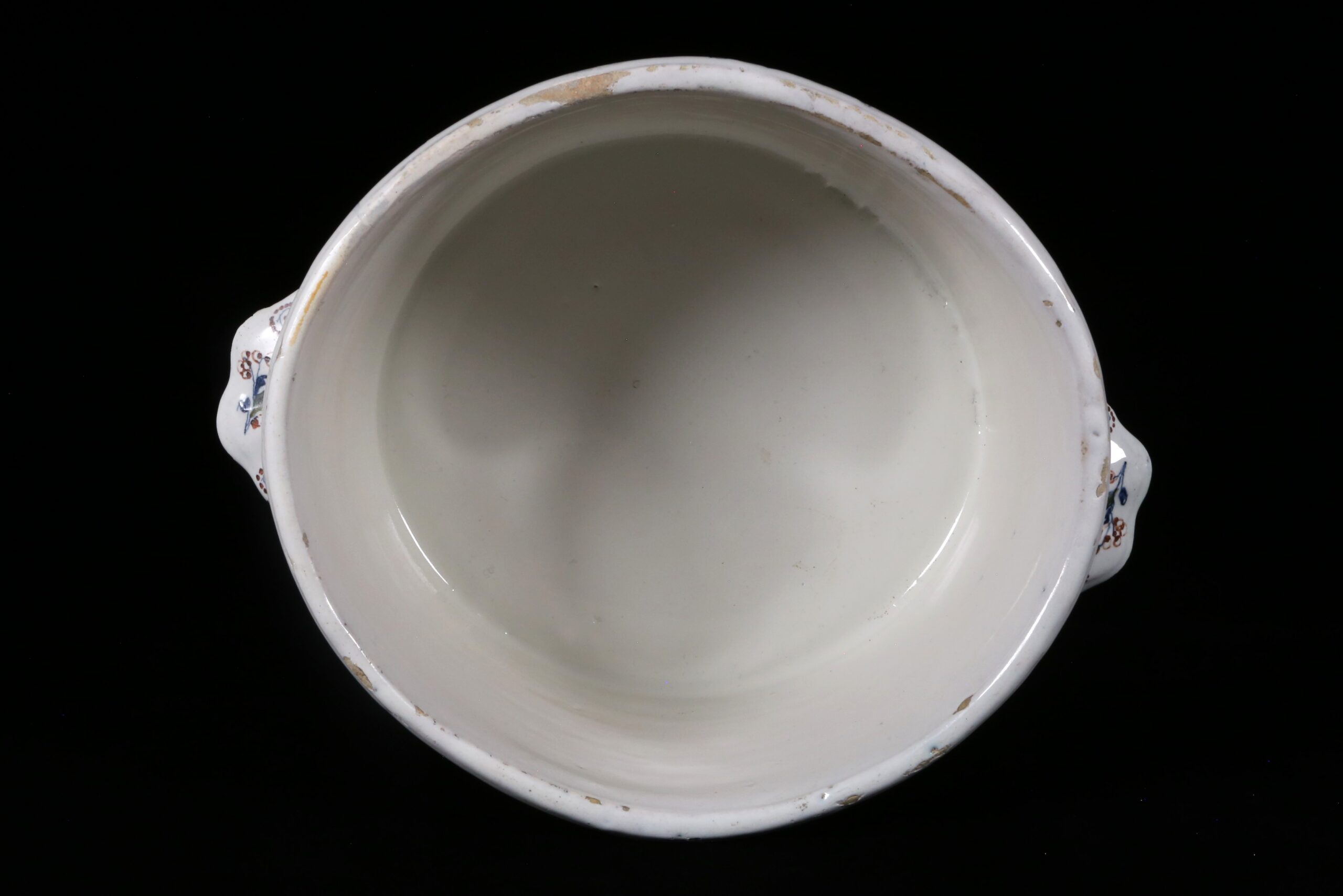
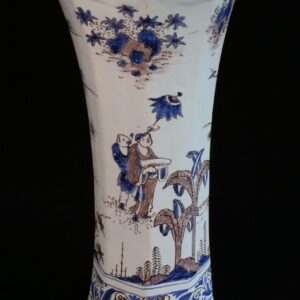
This exquisite Brussels faience cooler/basin (H. 15 cm, Dia. 30 cm), dating to the 18th century, features a distinctive polychrome “La Haie Fleurie” decoration. The piece can be attributed to the “rue de Laeken” factory during Artoisenet’s active years (circa 1765-1783), as suggested by its distinctive decoration (see Plate XXXVIII, G. Dansaert, Les anciennes faïences de Bruxelles, 1922). It embodies the elegance of the period with vibrant, hand-painted floral motifs. On the glazed bottom, three spur marks (supports during firing) are visible .
The “Décor à la Haie Fleurie” design originates from Korea and was later adapted by Japan. Upon being imported to Europe, it was reproduced in both porcelain by Chantilly and in earthenware by Brussels. In his reference work, G. Dansaert (1922) notes the misconception among some collectors that the design depicts a basket. In reality, the hedge motif—faithfully replicated from its Korean counterparts—lacks a terrace and features protruding branches of flowers, with scattered blossoms and a long-tailed bird of paradise.
The cooler’s polychrome decoration, in rich tones of brown-red, blue, yellow, and green, stands out against an iridescent white background. Pieces with this rare design are finely crafted, typically on a sturdy, white-glazed earthenware base that highlights the intricacy of the decoration (G. Dansaert, 1922).
For a similar example, refer to Rob Michiels Auctions 1 (Sale 07/10/2018, Lot 1034), where a comparable piece, described in Dansaert’s work as a “basket-shaped cooler with blue rope twist handles (H. ca. 20 cm)”, was sold.
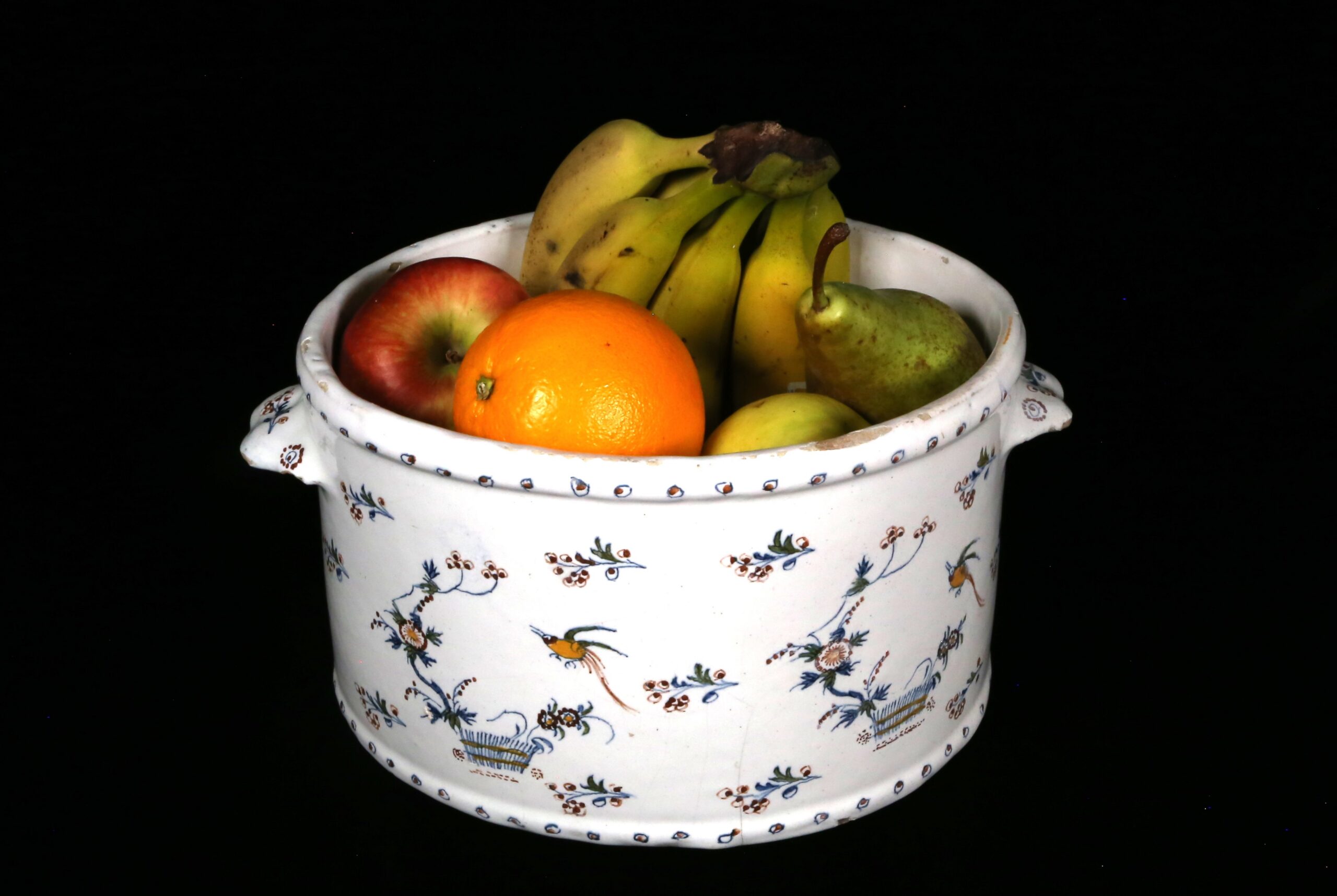
Filled with cold water or ice, it was once used for cooling wine bottles, or for rinsing wine glasses. Nowadays, this elegant piece can serve perfectly as a fruit bowl.
Reviews
There are no reviews yet.